

Best CNC Milling Machine: Top Picks for Precision and Performance
2026-07-21
Finding the perfect CNC milling machine is no small feat when precision and performance are non-negotiable. Whether you're upgrading a prototyping lab or scaling production, the right machine transforms complex designs into flawless reality. Enter WINNRUI CNC — a brand that’s been quietly redefining what’s possible in subtractive manufacturing. But with a flood of options on the market, how do you separate the game-changers from the gimmicks? In this guide, we’ve handpicked the top contenders that promise to deliver accuracy without compromise, and why understanding your own shop’s heartbeat is key to making the smartest choice.
Getting Started with CNC Milling: What to Look For
Before you even power on the machine, take a hard look at the workspace. CNC milling isn't just about the cutter meeting metal—it's about how everything around it holds up. Is your table rigid enough to absorb vibration without transferring it back into the cut? Are your vises or clamps truly flat and parallel, or will they introduce subtle misalignments that snowball as you move from roughing to finishing passes? Many beginners obsess over spindle speeds and forget that the foundation matters more. A machine that can't stay square under load will never deliver consistent results, no matter how fancy the controller is.
Another early pitfall is treating tooling as an afterthought. How you hold the tool is often more critical than which tool you choose. Look closely at collet condition—worn or over-tightened collets develop runout that chews through end mills and leaves scalloped walls. And don't just default to the biggest end mill that'll fit; a smaller cutter with a higher flute count can often clear material faster if you're willing to adjust stepover and depth of cut. The key is to match the tool's helix angle and coating to your specific material. For example, a chipbreaker geometry in aluminum keeps stringy chips from clogging, while a variable helix design in steel quiets chatter that ruins surface finish.
Finally, get comfortable with probing early on. Manual edge finding with a wiggler feels nostalgic, but it's slow and leaves room for error. A simple touch probe not only saves time on job setup but gives you in-process feedback that transforms how you approach workholding. Combined with a post-processor that outputs clean, efficient code—free of unnecessary retracts and air cuts—you'll spend less time hovering over the cycle start button and more time improving your designs. The real skill isn't just making parts; it's building a workflow where each step naturally informs the next, so you're not fighting the machine but working with its tendencies.
Precision and Repeatability: The Heart of CNC Performance
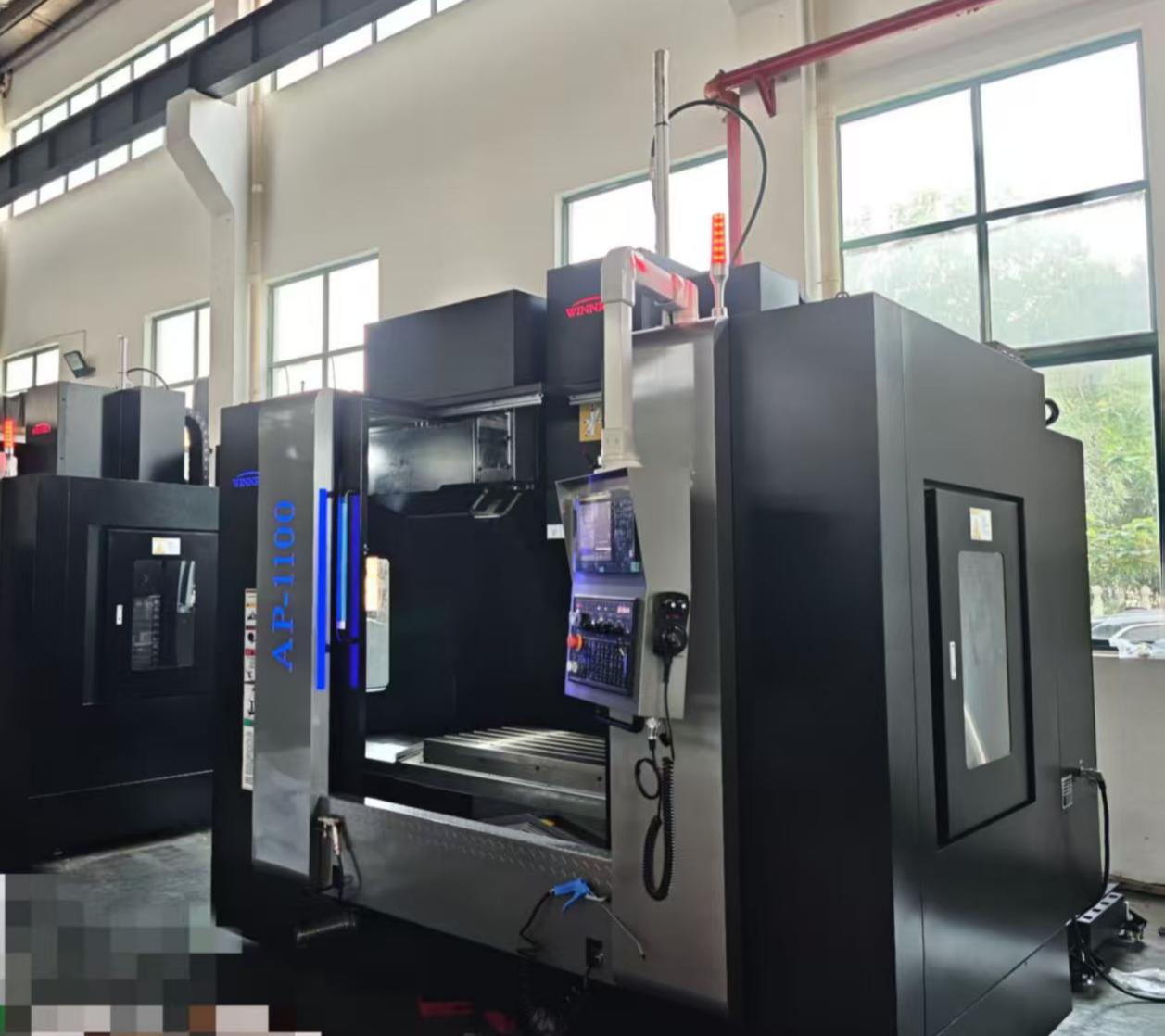
When we talk about CNC machining, two terms constantly surface: precision and repeatability. Precision refers to how closely a machine can hit a specified dimension, while repeatability measures its ability to return to that same position over and over again. Without both, even the most advanced machine becomes unreliable.
These two qualities form the backbone of any production environment. A CNC that can hold tight tolerances today but drifts tomorrow is essentially useless for serious manufacturing. It's the combination of consistent accuracy over time that allows shops to run lights-out operations and deliver parts that meet quality standards batch after batch.
Achieving true precision and repeatability isn't just about the machine itself. It involves thermal stability, rigid construction, high-quality ball screws, and proper calibration. Many overlook the control system's role, but advanced algorithms for path smoothing and vibration suppression make a noticeable difference. In the end, a machine that can reproduce the same result predictably is what separates high-end CNC equipment from the rest.
Balancing Budget and Capability in Your CNC Purchase
Striking the right balance between what you spend and what your CNC machine can actually do is rarely a straightforward numbers game. It's tempting to chase the highest specs you can afford, but overshooting lands you with unused complexity that drains your budget and learning time. Instead, ground your decision in the materials and tolerances your work truly demands—if you're only milling aluminum and plastics, a heavy-duty 5-axis powerhouse built for titanium might be an expensive mismatch. List the three toughest jobs you'll routinely run, then shop for a machine that handles them comfortably without the excess.
On the flip side, pinching pennies on a stripped-down model often backfires when you outgrow it in six months. The missing features—rigid tapping, a larger work envelope, or better chip management—create daily friction that eats productivity. Factor in the hidden costs: time wasted on manual workarounds, tool breakage from less precise control, and the eventual need to farm out work that exceeds your machine's limits. A capable used machine can sometimes bridge the gap, delivering professional-grade features at a price closer to entry-level, but only if you verify its condition meticulously.
A practical approach is to set a hard budget, then prioritize the capabilities that directly affect your throughput and part quality. Think in terms of payback: if a faster spindle or automatic tool changer saves two hours a day, what does that mean for your delivery times and profit over a year? Often, stretching slightly for one or two high-impact upgrades transforms a machine from a bottleneck into a profit center. And remember that software, support, and training are part of the capability equation—they don't show up on a spec sheet but can be the difference between a machine that collects dust and one that pays for itself ahead of schedule.
Choosing the Right CNC Mill for Your Workshop
Picking a CNC mill that fits your workshop isn't just about horsepower and price tags. Start by thinking about the materials you actually plan to cut most often. If you're mainly working with soft metals like aluminum or brass, a lower-torque spindle might be fine, but for steel or titanium, you'll need something with real rigidity and torque at low RPMs. Also consider the physical footprint: a full-size knee mill might look capable, but if it leaves no room to walk around your bench, it becomes a daily frustration. Measure your space carefully, and don't forget to account for clearance for tool changes and material loading.
Control software and workholding are easy to overlook when you're fixated on spindle speed or axis travel. The mill's controller should feel intuitive to you, not something you dread programming. Some machines lock you into proprietary ecosystems, while others work smoothly with popular CAM packages. Try to see a demo or talk to current owners about the learning curve. As for workholding, if you're doing one-off parts, a versatile vise might be enough. But if you're running production or need repeat part setups, you'll want to check if the machine accepts standard T-slot fixtures or vacuum tables without fuss.
Finally, pay attention to how the machine routes swarf, coolant, and noise. In a residential or small workshop, a mill that flings chips everywhere or requires a complex coolant setup will quickly wear you down. Enclosures, chip pans, and sound levels matter more than most spec sheets admit. And think about your future needs: is the control upgradeable? Can you add a fourth axis later without a major rebuild? Buying a little more capability now can save you from outgrowing the mill in two years.
Materials Matter: Matching Your Mill to Your Projects
Picking the right mill isn’t just about horsepower or brand—it’s about understanding what you’re feeding into it. Softwoods, hardwoods, composites, and even reclaimed lumber each have distinct personalities that can make or break your tooling and finish quality. Think of your mill as a dance partner: if it can’t keep up with the material’s rhythm, you’ll end up with tearout, chatter, or worse, a ruined workpiece.
Density, grain orientation, and moisture content all demand specific cutter geometries and feed speeds. A mill that sails through cedar might choke on hard maple, leaving burn marks or forcing you to slow production to a crawl. That’s why experienced woodworkers often keep multiple mills on hand—one set up for rough dimensioning of wet or abrasive stock, another for delicate final passes on figured woods. It’s not about having the most expensive machine; it’s about pairing the tool’s strengths with the material’s demands.
Don’t overlook the impact of coatings and substrate layers either. Plywood and MDF contain adhesives that dull cutters faster than natural timber, while laminates require sharper edges to avoid chipping. If your projects jump between solid woods and sheet goods, consider mills with easily swappable inserts or dedicated setups. By matching the mill to the material, you’ll extend cutter life, reduce waste, and uncover the true potential of every board that crosses your bench.
The Software Side: Controller Choices and Compatibility
The heart of any digital setup beats through its controllers—the software that translates intention into action. Compatibility here isn't just about plug-and-play; it's about how seamlessly your operating system, device drivers, and creative applications converse with each other. Windows often grants broader hardware support out of the box, while macOS leans heavily on class-compliant drivers that demand less from third-party installers. Linux, on the other hand, offers a mixed bag: some controllers thrive under open-source communities, while others remain stubbornly silent. The choice, then, becomes a delicate dance between the ecosystem you inhabit and the tools you trust.
Beyond basic recognition, the real nuance lives in how controllers handle latency, mapping flexibility, and firmware updates. A controller might boast universal compatibility on paper, yet stumble when asked to juggle low-latency MIDI streams or high-resolution haptic feedback across different software versions. Some manufacturers lock advanced features behind proprietary apps that only run on certain platforms, leaving power users to weigh raw versatility against platform-locked perks. This quiet tug-of-war shapes not just your immediate workflow, but the longevity of your hardware investment.
Community-driven workarounds often fill the gaps where official support fades. From custom drivers that breathe life into older devices on new systems, to user-made mapping profiles that stretch a controller’s purpose far beyond its original intent, the software side is never static. It's a landscape defined as much by tinkerers and open forums as by corporate roadmaps. Diving in means accepting that compatibility is a living conversation, not a one-time checkbox.
FAQ
Rigidity of the frame and quality of linear guides are key. Look for machines with tight tolerances, often specified in microns, and a spindle with minimal runout. Don't overlook the control system — more advanced controllers can compensate for backlash and thermal growth, which directly impacts precision over long runs.
Desktop mills are great for soft materials and small parts, but they usually lack the torque and rigidity for hard metals like stainless steel. Industrial machines offer faster speeds, better chip evacuation, and coolant systems, making them more suitable for continuous production and tighter tolerances. For pure prototyping, a well-built desktop unit can work, but expect more manual intervention and slower feeds.
It varies a lot by brand. Some well-known Chinese manufacturers have improved significantly and use quality components like Hiwin rails and Japanese bearings, rivaling entry-level Western machines at a lower cost. Others may have poor finishes, sloppy assembly, or weak spindles. Always check user reviews on forums and if possible inspect the machine before buying, or go with a brand that has established local support.
Milling machines are built with much higher structural rigidity, often using cast iron frames and low-backlash ball screws. Routers typically have aluminum frames, higher RPM spindles, and less rigidity, which leads to chatter and poor surface finish on metals. True milling machines can handle steel and titanium, while routers are mainly for aluminum at best — and even then, only light cuts.
Power is important, but torque at low RPM matters more for cutting tough materials. A 2.2 kW spindle might be fine for aluminum, but for steel you'd want a spindle that maintains good torque below 5000 RPM. High-speed spindles with low torque can't take deep cuts and may stall. Look at the torque curve, not just the peak kW number.
It's possible, but you'll need quality ball screws, proper motor mounts, and a solid control system like Centroid Acorn or LinuxCNC. Backlash and flex in the original lead screws will kill precision. Many successful conversions use ground ball screws and double ball nuts to minimize backlash. Understand that the result depends heavily on your mechanical skills and budget — sometimes it's cheaper to buy a ready-made CNC mill.
For a tight budget, many hobbyists start with a converted benchtop mill like the Grizzly G0704 with a CNC kit, or buy a small purpose-built machine like the Taig or Sherline. These can handle aluminum and brass well. If you can stretch the budget a bit, the Tormach 440 or 770 are often recommended for their out-of-the-box capability and support. Avoid ultra-cheap eBay engravers — they're not true mills.
Regularly check and adjust gibs, keep linear rails clean and lubricated, and verify spindle tram every few months. Thermal expansion can throw off dimensions — let the machine warm up before critical jobs. Also, replace worn ball screws or spindle bearings as soon as you notice increased backlash or surface finish deterioration. Using a probing routine to auto-calibrate offsets before each job helps maintain consistency.
Conclusion
When you're stepping into CNC milling, the sheer variety of machines can feel overwhelming. It's not just about finding the sturdiest frame or the fastest spindle—precision, repeatability, and how a mill handles the materials you plan to cut are what truly define its value. A great CNC mill should hold tolerances down to thousandths of an inch run after run, especially if you're working on detailed prototypes or metal parts that demand consistency. Yet, performance doesn't exist in a vacuum: controller software and compatibility with your design workflow can make or break the experience. GRBL-based controllers are a common starting point, but moving to something like Mach3 or LinuxCNC opens up more advanced feedback and smoother toolpath execution. Pair a well-tuned controller with high-quality linear rails and ballscrews, and you've got a foundation that'll stay accurate through heavy use.
Budget plays a huge role too, but there's a sweet spot where capability meets affordability without sacrificing too much on important features. Entry-level mills might tempt you with a low price tag, yet skimping on rigidity or motion components often leads to vibration and poor surface finishes. On the other end, industrial machines pack everything you'd ever need but come with industrial price tags and space requirements. The key is matching the mill to your workshop's reality—whether you're a hobbyist carving wood and aluminum or a small shop cutting stainless steel. Consider the work envelope, spindle power, and whether you'll need tool changers or coolant systems down the line. Ultimately, the best CNC milling machine isn't necessarily the most expensive; it's the one that aligns with your specific projects, growing with you as your skills evolve.
Contact Us
Contact Person: Tim
Email: [email protected]
Tel/WhatsApp: +86 15522553731
Website: https://www.winnrui-cnc.com/