

Best Energy Storage System: Top Solutions for Reliable Power
2026-09-02
Ask anyone who's weathered a blackout whether reliable power matters, and you'll get an earful. Energy storage systems have quietly shifted from niche backup gear to the backbone of modern energy resilience. The right system doesn't just keep lights on during an outage—it tames peak rates, pairs beautifully with solar, and future-proofs your setup. In this guide to the best energy storage system options, we cut through the noise to spotlight top solutions that actually deliver when the grid stumbles. Whether you're upgrading a home or running a commercial operation, choosing well matters. And if you're looking for a partner with deep expertise, Chang Song brings proven hardware and practical know-how to the table.
When the Grid Fails, These Systems Keep the Lights On
The hum of a refrigerator in a blacked-out neighborhood can feel like a small act of defiance. That continuity usually comes from a solar array wired to a battery bank, quietly islanding your home the moment voltage sags on the utility lines. Unlike a portable backup that needs manual setup, these systems flip over in milliseconds, often fast enough that a digital clock never blinks. The real trick isn't just storing sunlight—it's deciding what gets power first. A well-designed setup sheds the electric dryer but keeps the well pump and medical devices running, stretching a modest battery through days of overcast weather.
For homes that already have natural gas lines, a standby generator can anchor a different approach. It doesn't rely on sunny days, but it does demand a steady fuel supply and a cooling system that won't quit. The noise is a giveaway—a low mechanical growl that tells neighbors you're not sharing their candlelit dinner. Pairing a generator with a small battery creates a hybrid: the battery handles the first few minutes and brief outages, while the generator only starts for extended blackouts. That cuts fuel consumption sharply and spares you from running a loud engine all night just to power a CPAP machine.
Beyond single houses, some communities are stringing together microgrids that keep a fire station, a grocery store, and a dozen homes alive as one coordinated island. These setups lean on smart inverters that constantly negotiate frequency and voltage, letting solar panels, batteries, and a shared backup generator play nicely together. The payoff is resilience without everyone buying their own equipment—a kind of electrical co-op for the next storm. It's not a silver bullet, but when the wider grid blinks out for days, having a local circuit that refuses to die changes what "emergency" means.
Battery Chemistries Beyond Lithium: What Actually Works in 2025
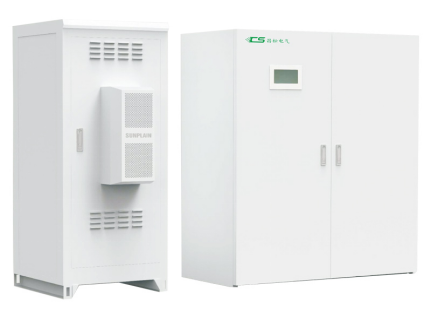
Lithium-ion still dominates EVs and grid storage, but the cracks are widening. Cobalt and nickel supply chains remain messy, prices swing on geopolitical whims, and thermal runaway keeps engineers up at night. By 2025, a handful of non-lithium chemistries have moved from lab curiosities to pilot lines and even early commercial deployments—though “works” depends heavily on what you need the battery to do.
Sodium-ion is the quiet workhorse. CATL and other Chinese manufacturers pushed sodium-ion packs into small EVs and stationary storage, and the cost advantage is real when you don’t need extreme energy density. Expect 120–160 Wh/kg at the cell level, which is fine for commuter cars and grid buffers. The electrolyte stability at low temperatures is a bonus for cold climates. Meanwhile, zinc-based systems—especially zinc-bromine and zinc-air—are finding niche wins in long-duration storage where safety and cheap raw materials matter more than round-trip efficiency. Flow batteries with vanadium still carry capex baggage, but iron-chromium and organic redox couples are slashing that barrier.
Solid-state lithium gets the headlines, but it’s still lithium. The real “beyond lithium” story in 2025 isn’t a single winner; it’s a portfolio approach. Sodium-ion handles daily cycling on a budget, zinc chemistries soak up excess solar for 10+ hours, and lithium stays in the high-performance lanes. Companies that bet everything on one exotic chemistry are learning the hard way—carmakers now mix cell types inside the same pack to balance cost, safety, and energy. That pragmatism is the actual breakthrough.
From Solar Pairing to Standalone Backup: Matching Storage to Your Real Needs
A battery paired with solar panels often feels like the obvious starting point. The panels feed the battery during the day, and you draw from it at night or during a grid hiccup. But not every home runs on predictable sunshine, and not every backup goal revolves around daily cycling. If your main worry is keeping the fridge running during a rare blackout, a standalone battery with no solar input might do the job with less upfront cost and fewer rooftop complications.
Think about what you are actually protecting. A solar-paired storage system shines when you want to shave peak-time bills or store excess generation for later use. Standalone backup, on the other hand, behaves more like a quiet insurance policy: it sits charged from the grid and waits. There is no inverter mismatch with panels, no partial-shading headaches, and no need to rewire an existing array. For renters or homeowners with a shaded roof, this can be the cleaner path.
The real decision boils down to rhythm. Does your energy use follow the sun, or does it spike unpredictably when storms roll through? Match the storage to the pattern you actually live with, not the one a glossy brochure assumes. Sometimes the simplest configuration, a battery that just sits ready, ends up being the most honest fit for your household.
The Payback Math Most Installers Won't Show You
Ask a solar installer for your break-even point and you'll likely hear a single, confident number: seven years, maybe eight. What you won't see is the spreadsheet behind that figure. Most quotes rely on a flat electricity rate inflation estimate and a perfect production curve that assumes your panels never lose more than 0.5% efficiency per year. Real life doesn't work that way. Your local utility might restructure time-of-use rates, a tree could grow just enough to shade one panel, or a hailstorm could force a deductible payment that never appears in the sales brochure.
The missing line items are where the actual payback math gets uncomfortable. Inverter replacement around year ten or twelve adds thousands. Panel cleaning, critter guards, and occasional monitoring fees nibble at your savings. If you financed the system, the loan interest often eats the first three years of avoided electric bills. Even the federal tax credit isn't pure profit unless you have enough tax liability to use it fully. Most installers quietly understate panel degradation after year twenty, assuming your system will keep cranking out 85% of its rated output even as connections age and microinverters fail one by one.
To see the real math, you need to build your own model with three scenarios: best case, likely case, and worst case. Pull your actual last twenty-four months of electric bills, not the average the installer gave you. Plug in a conservative 0.8% annual degradation, one inverter replacement, and a 2% annual increase in utility rates. Then compare that against simply putting the same cash into an index fund and paying your utility bill as usual. For some homes, solar still wins by a wide margin. For others, the payback stretches past fifteen years—and that's a number most installers would rather not print on the proposal.
Thermal Runaway, Warranty Gaps, and Other Hard Truths
Most battery fires don't start with a bang. They start with a quiet, invisible chemistry problem—lithium plating on an anode, a slight overcharge, a tiny manufacturing defect. When thermal runaway finally kicks in, it's not a gradual failure but a cascade: internal temperatures spike past 500°C in seconds, the separator melts, and the electrolyte turns into a flammable vapor that bursts through the cell casing. Fire suppression systems built for ordinary electrical fires often can't interrupt this chain reaction once it starts.
The warranty fine print carries its own hard truths. Many electric vehicle and stationary storage warranties promise coverage for "manufacturing defects," yet exclude damage from thermal events, short circuits, or even normal capacity fade beyond a certain threshold. Some policies require owners to prove the battery was never charged above 80% or below 20%—conditions few drivers can consistently meet. If a cell fails and takes out neighboring modules, the owner may find that only the single failed cell is covered, not the collateral damage to the pack or the vehicle.
Then there are the structural realities nobody puts in the brochure: battery packs degrade unevenly, with the middle cells often running hotter than the outer ones. A pack that looks healthy at the terminal level can hide a single weak cell ready to trigger a domino effect. Recycling and disposal costs are almost never factored into the upfront price, and second-life battery markets remain fragmented. These are not reasons to avoid electrification—they are reasons to demand better monitoring systems, transparent battery passports, and warranties that reflect how batteries actually fail.
Installation Nightmares and How to Avoid Them
There's a special kind of frustration reserved for the moment a simple installation turns into a multi-hour debugging session. Often the culprit isn't the software itself but a mismatch between the system's existing environment and what the installer expects. Before you run anything, check the documentation for version requirements, dependency conflicts, and any known issues with your operating system. A quick look at the release notes can save you from the infamous 'works on my machine' trap.
Another common nightmare comes from ignoring the pre-installation checklist. Skipping the uninstall of a previous version, not disabling antivirus temporarily, or running the installer without administrator privileges are all frequent causes of cryptic error messages. Instead of rushing ahead, take a few minutes to close unnecessary applications and ensure you have a stable internet connection if any components need to be downloaded. A bit of patience here prevents the need to clean up half-written files later.
Finally, never underestimate the value of a restore point or backup. If an installation goes sideways, having a snapshot of your system before you started makes recovery a matter of minutes rather than a full reinstall. Tools built into your operating system can create these automatically, but many people only remember them after it's too late. Making this a habit turns potential disasters into minor inconveniences.
FAQ
It comes down to round-trip efficiency, cycle life, and how quickly the system can respond to demand. Lithium-ion dominates right now because it balances those three well, but flow batteries are gaining ground for longer-duration needs where thermal runaway risk has to stay minimal.
That depends on your electricity rates and net metering rules. In places with time-of-use pricing or weak feed-in tariffs, a home battery can pay for itself by shifting solar energy to evening peaks. If you only want backup for rare outages, a smaller lithium iron phosphate unit is often the sweet spot.
Lithium-ion costs more per kilowatt-hour up front, but you can safely use 80-100% of the capacity versus about 50% for lead-acid. Add in longer cycle life and lower maintenance, and lithium usually wins over a 10-year window unless the install environment is extremely hot.
Pumped hydro remains the largest source of stored energy globally. It can't respond as fast as batteries, but it excels at bulk shifting of renewable generation across days or even weeks. Countries with mountainous terrain often pair new solar farms with existing hydro reservoirs instead of building new battery parks.
Lithium iron phosphate (LFP) is generally considered the safest lithium chemistry because it tolerates higher temperatures before breaking down and doesn't release oxygen as readily. Many building codes now specifically allow LFP units indoors without the extra ventilation required for nickel-based chemistries.
Not by itself. You need a mix of short-duration batteries for frequency regulation and long-duration storage, like flow batteries or compressed air, for multi-day lulls. When paired with smart inverters and demand response, storage gets much closer to firming renewable output, but a zero-carbon grid still requires substantial overbuilding and geographic diversity.
Focus on the performance guarantee, not just the sticker price. Ask for a minimum round-trip efficiency over the warranty period, a defined degradation schedule, and clarity on who handles thermal management faults. Some vendors bundle software that automatically arbitrages energy prices; make sure the contract spells out how those savings are shared or verified.
For processes that need heat, yes. Storing energy as ice, molten salt, or hot water can be far cheaper than electro-chemical batteries for cooling or steam generation. The catch is that thermal storage can't deliver electricity back to the grid, so it works best when the end use is already thermal.
Conclusion
When the grid goes down, the right energy storage system isn't a luxury—it's what keeps refrigerators running, medical devices powered, and basements dry. The market in 2025 has moved past one-size-fits-all lithium-ion, and that's a good thing. Lithium iron phosphate (LFP) now dominates for home backup because it shrugs off thermal runaway far better than older nickel-cobalt chemistries, while saltwater and zinc-hybrid options are finally finding niche roles in fire-prone or off-grid builds. But chemistry is only half the story. Matching storage to actual needs means deciding whether you're pairing with solar to dodge time-of-use rates or building a standalone blackout buffer. That distinction drives everything from inverter sizing to whether you'll ever see a return.
The financial side is where installers often stay vague. Honest payback math includes round-trip efficiency losses, battery degradation after year seven or eight, and the cost of a critical-load panel—items that rarely show up in the glossy quote. Warranty gaps are another hidden trap: a 10-year warranty might not cover labor or the thermal management system that fails first. Installation headaches, from cramped garages to outdated main panels, can add thousands and delay projects by weeks. Yet these problems are avoidable. Choosing a system with modular, wall-mount design and a well-documented emergency mode—plus asking for a line-item breakdown before signing—turns reliability from a marketing claim into a working reality.
Contact Us
Contact Person: Tonglun Chen
Email: [email protected]
Tel/WhatsApp: 8618906642555
Website: https://www.cncsele.com