

Blown Film Masterbatch Original Manufacturer: Quality Solutions for High-Performance Films
2026-08-01
In the competitive world of plastic film production, raw material quality is the silent differentiator between mediocre and outstanding performance. As manufacturers push the limits of strength, clarity, and process efficiency, the demand for reliable masterbatch solutions has never been higher. Enter Xinwancai, an original manufacturer redefining what's possible with blown film. But what exactly sets their masterbatches apart, and how can they solve your most persistent production challenges?
Beyond Basic Color: Functional Masterbatches That Elevate Film Performance
Color might catch the eye, but in today’s demanding film applications, it’s the unseen properties that truly define performance. Functional masterbatches go far beyond mere pigmentation, embedding critical additives directly into the polymer matrix during processing. These concentrates can impart UV resistance to shield greenhouse films from degradation, anti-fog characteristics to keep food packaging crystal clear, or anti-static properties that prevent dust attraction on electronic component wraps. By integrating multiple functionalities into a single carrier resin, converters can streamline production while tailoring films to meet precise end-use requirements—without compromising on color consistency or mechanical strength.
The real advantage emerges when these masterbatches work synergistically. A single formulation might simultaneously deliver slip agents for easy handling, antioxidants for heat stabilization, and optical brighteners for enhanced product visibility. This holistic approach eliminates the need for separate additive dosing, reducing the risk of inconsistent dispersion and enabling thinner, more material-efficient films. Moreover, advances in carrier resin compatibility ensure that the functional additives distribute uniformly, preventing the migration issues that often plague traditional additive blends. The result is a film that not only performs reliably in its environment—whether that’s a high-speed packaging line or harsh agricultural conditions—but also extends the lifecycle of the end product.
Beyond standard functionalities, innovative masterbatches now enable smart features like oxygen scavenging to prolong food shelf life, infrared reflection for thermal management, or even biodegradation control for sustainable flexible packaging. These tailor-made solutions empower brands to differentiate their packaging on store shelves, not just through vibrant color but through tangible performance enhancements that consumers can notice—like longer-lasting freshness or easier opening. By shifting focus from basic tinting to comprehensive film engineering, converters can position themselves as strategic partners, delivering high-value films that solve real-world challenges across industries from agriculture to healthcare.
The Hidden Variables in Dispersion That Make or Break Film Integrity
When formulators talk about dispersion, the conversation often revolves around particle size and distribution. Yet, the real determinants of film integrity often lurk in less obvious places—interfacial tensions that subtly shift during drying, the rheological memory of the polymer matrix, and localized concentration gradients that form before coalescence. These hidden variables can dictate whether a film cures into a monolithic barrier or develops microscopic defects that compromise its performance.
One overlooked factor is the temporal evolution of the dispersing medium. As solvent evaporates, the rate of evaporation doesn’t merely impact drying time; it reshapes the internal architecture of the film. Rapid surface drying can trap moisture beneath, creating stress points that later manifest as blisters or cracks. Conversely, slow evaporation might allow enough mobility for particles to rearrange, but it also risks sedimentation or phase separation that undermines uniformity. The interplay between evaporation kinetics and particle settling is rarely linear, making it a treacherous variable to ignore.
Another subtle disruptor is the interaction between binders and surfactants beyond simple wetting. Some surfactants, while effective at dispersing pigments, can migrate to the film surface during cure, forming weak boundary layers that reduce inter-coat adhesion. Even trace amounts of these species can alter the film’s optical clarity or mechanical toughness. Recognizing and controlling these hidden parameters—through techniques like dynamic surface tension monitoring or controlled stress rheometry—is what separates robust films from those that fail prematurely in the field.
Direct Partnerships That Cut Through Supply Chain Noise
When supply chains grow convoluted, messages get lost in a tangle of intermediaries. Working directly with manufacturers or core suppliers strips out those layers, replacing second-hand updates with real-time, unfiltered information. It’s like switching from a game of telephone to a face-to-face conversation—suddenly, the distortion disappears.
These relationships aren't just about speed; they create a shared sense of ownership. Partners who know your business inside out can spot a raw material shortage before it hits the production line, or adjust logistics on the fly without waiting for approvals from a chain of middlemen. That kind of instinctive coordination just can’t be replicated through a broker.
Beyond the operational perks, direct ties build a feedback loop that sharpens your edge. When suppliers genuinely understand your end goals, they innovate alongside you—suggesting packaging tweaks that cut costs or materials that enhance quality. This turns a transactional link into a strategic advantage, where silence and noise are replaced by clarity and action.
Tailoring Each Pellet to Your Extrusion Environment
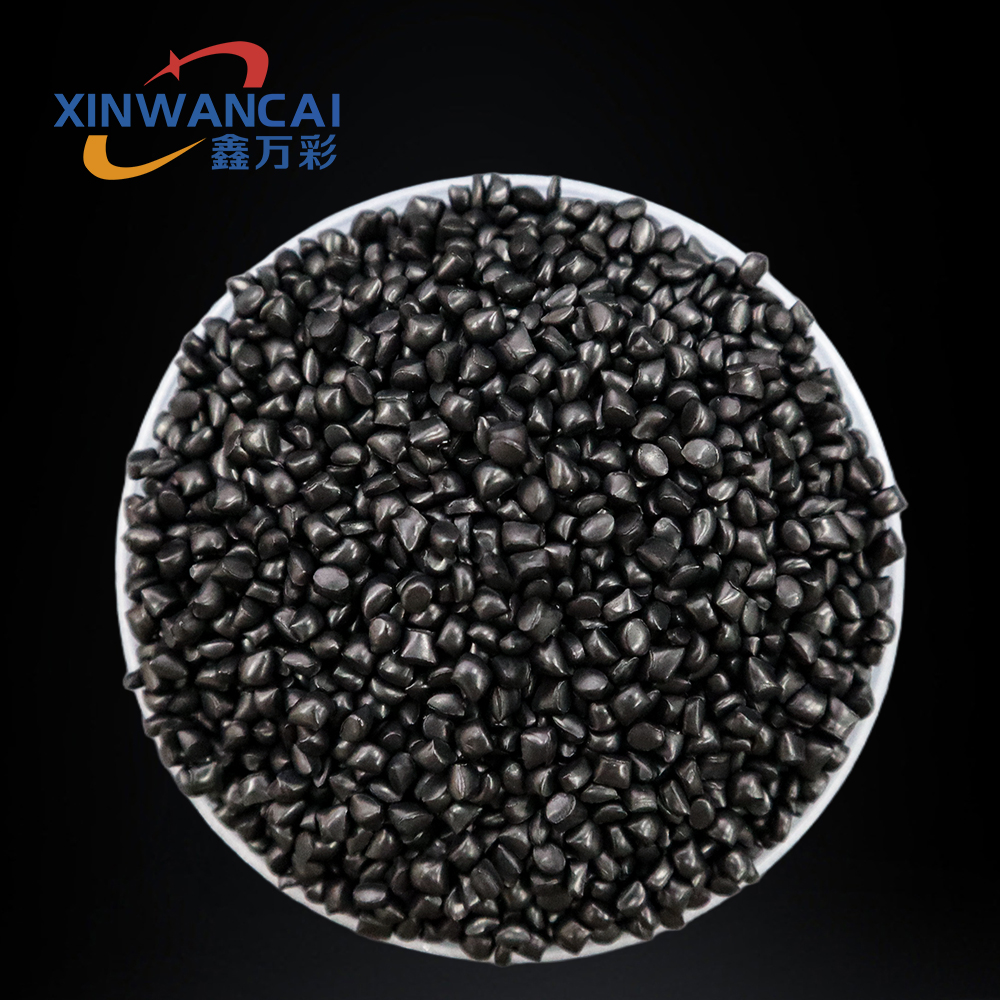
Every processing line has its quirks—temperature profiles, screw speeds, die geometries, and even ambient humidity can vary. A one-size-fits-all pellet rarely performs uniformly across these conditions. By adjusting the melt flow, additive dispersion, and pellet shape, you give operators the ability to dial in optimal throughput with minimal scrap. Small shifts in the carbon black distribution or the oxidation package can reshape how the material wets out in the barrel or holds up under draw-down, effectively matching the pellet's personality to the machine's demands.
It's not just about base resin selection; it's about fine-tuning the pellet's internal structure. For instance, a slightly porous pellet may absorb heat more rapidly, aiding mixing in short extruders, while a denser, more crystalline pellet might suit high-speed lines where shear heating is intense. The way antioxidants are loaded, how lubricants bloom to the surface, or even the cooling profile after compounding can all be manipulated to deliver consistent gel-free output. These tailored choices mean fewer tweaks during changeovers and a longer window of stable production.
Collaborating closely with your compounder to translate your line's data into pellet specifications brings out these gains. Mapping your actual extrusion parameters—barrel zone temperatures along the screw, head pressure, and motor load—against pellet performance data reveals which properties need adjustment. It might be as subtle as shifting the molecular weight distribution to prevent sharkskin in a particularly tight die gap, or incorporating a small fraction of a branched polymer to boost melt strength in vertical extrusions. This level of customization turns your pellets into a precision ingredient, not just a commodity input.
When Lightning-Fast Line Speeds Demand Flawless Additive Carriers
In high-speed manufacturing, every fraction of a second counts. Production lines moving at blistering speeds leave no room for error, especially when additive carriers are part of the equation. These materials must flow seamlessly, blend instantly, and maintain absolute consistency at any throughput. A single imperfection—a slight variance in dispersion, an off-spec particle size, or a carrier that clumps under shear—can jam machinery, scrap entire batches, and bring a line to a costly halt. The right carrier doesn’t just survive these speeds; it thrives, enabling processes that were once thought impossible at high velocity.
Additive carriers engineered for rapid operations do more than just keep pace. They’re the silent backbone that ensures pigments, stabilizers, or functional additives land exactly where they’re needed, in the precise dose, without drifting or segregating. On a line stretching and folding material at 300 meters per minute, a carrier that fails to wet out instantly creates streaks. One that absorbs moisture unevenly introduces bubbles. The finest formulations act like a perfectly timed dance partner—no hesitation, no missteps. They handle shear-thinning with ease, recover viscosity in milliseconds, and shrug off temperature swings from friction or downstream processing. The result isn’t just speed; it’s speed with pinpoint accuracy, from the first pellet to the millionth.
Pushing the envelope on line speed often exposes weaknesses in conventional carriers, but a flawlessly designed additive carrier turns that pressure into an advantage. It lets processors dial up output without swapping formulations or sacrificing surface finish, color depth, or mechanical properties. The difference shows in gloss retention after high-speed extrusion, uniform dispersion in blown film cooled at breakneck rates, and dimensional stability in injection-molded parts cycling in seconds. When lightning-fast isn’t a goal but a daily reality, the carrier isn’t an afterthought—it’s the critical ingredient that makes the impossible routine.
A Legacy of Resin Know-How That Newcomers Can’t Replicate
Mastering resin isn't something you pick up from a manual. It’s a slow accumulation of instinct—the kind that comes only from decades of trial, error, and stubborn refinement. The way heat behaves during a pour, how humidity shifts the cure, the subtle flex that separates a durable piece from one that will crack under pressure—these aren’t things you can measure with a modern sensor. They live in the hands and minds of those who’ve been in the trenches since before the craft had a name.
There’s a vocabulary to the work that outsiders never hear. Not just the technical terms, but the unwritten rules about how a particular batch of raw material acts on a rainy Tuesday versus a dry Friday afternoon. Newcomers can mimic the steps, but they can’t reproduce the split-second adjustments born from thousands of mistakes. And they certainly can’t conjure the nuanced understanding that comes from standing alongside someone who learned from the generation before—watching, absorbing, and carrying forward secrets that were never written down.
What really sets the legacy apart is the relentless refusal to cut corners. When the market pushes for cheaper fillers or faster curing agents, the old hands know what that costs in longevity. They remember the failures that looked perfect at first and crumbled years later. That institutional memory isn’t something a startup can buy or reverse-engineer. It’s earned through decades of standing behind the work, long after the shine has faded and the true resilience of the resin is all that remains.
FAQ
It's a concentrated mixture of pigments and additives encapsulated in a carrier resin, tailored for blown film extrusion. It streamlines coloring and functional enhancement, ensuring consistent dispersion, reducing waste, and boosting film properties like strength and UV resistance.
As an original manufacturer, we control the entire process from raw material selection to final testing. This means tighter quality control, faster technical support, and the ability to create custom formulations without middleman delays or markup.
Our masterbatches are used in agricultural films, food packaging, heavy-duty sacks, and medical films. Each formulation is adjusted for the specific demands—for instance, anti-fogging for greenhouse covers or high clarity for retail packaging.
We use precision dosing systems and thorough lab testing. Every batch undergoes spectrophotometric analysis and melt flow index checks, plus trial runs on commercial blown film lines before release.
Absolutely. Our R&D team collaborates with clients to design masterbatches for novel polymers like bio-based resins or for specialty requirements such as enhanced barrier properties or antistatic performance.
We hold ISO 9001 and relevant food-contact safety certifications. This matters because it validates that our production meets international standards for reliability and safety, reducing risks for your own product compliance.
We focus on developing carrier resins compatible with recycled materials and offer biodegradable pigment options. Our plant also runs on energy-efficient equipment and we reclaim in-house scrap to minimize waste.
Conclusion
A true blown film masterbatch manufacturer brings more than just pigments to the extrusion line. These functional masterbatches are engineered to tackle real-world challenges: anti-block and slip additives that prevent film layers from sticking during high-speed winding, UV stabilizers that extend the life of agricultural films under intense sunlight, and processing aids that reduce melt fracture when pushing line speeds to the limit. Each additive package is precisely balanced to ensure consistent dispersion—because even minor agglomerates can create weak spots that compromise film tear strength or cause catastrophic bubble bursts. It’s this depth of formulation expertise, grounded in decades of resin and rheology experience, that separates a legacy supplier from newcomers who treat masterbatch as a simple color-matching exercise.
When a masterbatch supplier operates as a direct extension of your production team, the entire supply chain becomes more resilient. Instead of navigating layers of distributors, you gain immediate technical support tailored to your specific extrusion environment—whether you run a high-stalk, low-stalk, or water-quenched blown film line. The right partner studies your machine configuration, screw design, and cooling setup to optimize carrier resins and let-down ratios, ensuring that every pellet melts uniformly and carries additives without interfering with bubble stability. By stripping away the middlemen, lead times shrink and responsiveness sharpens, giving film producers the confidence to chase lightning-fast production rates without worrying about compromised quality. Ultimately, it’s this marriage of deep material science and agile partnership that delivers blown films which perform flawlessly from converter to end consumer.
Contact Us
Contact Person: JACK
Email: [email protected]
Tel/WhatsApp: 86 18650130917
Website: https://www.xinwancai.com/