

Car Air Purifier Manufacturer Guide to Choosing a Reliable Partner for Cleaner Air
2026-09-11
You can’t see them, but every time you buckle up, microscopic particles and volatile compounds may be hitching a ride. The car air purifier market is crowded, yet finding a manufacturer that truly engineers for clean air—not just sells filters—takes more than a quick search. LUFUTATECH understands that a reliable partner must balance filtration efficiency, low noise, and long-term consistency. This guide breaks down the practical criteria to evaluate manufacturers so you can avoid costly missteps and build a product line your customers trust.
What Actually Makes a Car Air Purifier Worth Your Money?
Plenty of car air purifiers look impressive on a store shelf, but most are little more than a small fan with a fancy LED light. The ones actually worth paying for use a dense HEPA filter paired with a substantial activated carbon layer. That combination physically traps fine particles like brake dust and pollen while also absorbing exhaust fumes and lingering food smells. Anything relying mainly on negative ion generation tends to fall short, since it often just makes particles stick to your dashboard instead of removing them from the air you breathe.
Beyond the filter itself, the build quality of the fan and housing matters more than a big CADR number on the box. In a small cabin, even modest airflow can cycle the air several times per hour if the unit is sealed well around the filter edges. A noisy purifier that you switch off after ten minutes provides zero benefit. So pay attention to how the thing sounds at the speed you would actually use in traffic, not just the lowest setting shown in the demo video.
Finally, check the real ongoing cost. Some budget purifiers have proprietary filters that cost nearly as much as the unit itself and go out of stock within a year. A sensible choice uses commonly available replacement filters and makes swapping them take under a minute without tools. If the filter is hard to find or awkward to replace, you will end up running a dirty unit that pushes stale air around, which defeats the whole point of spending money in the first place.
Factory Floor Red Flags You Should Ask About Before You Commit
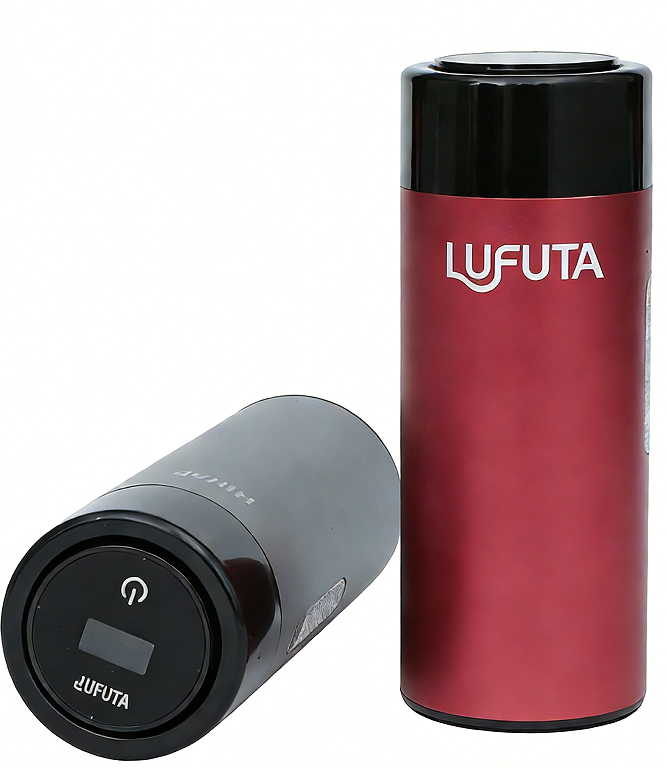
Walking a factory floor tells you more than any brochure or sales pitch, but only if you know where to look. Pay attention to how raw materials are staged and whether work-in-progress items sit in unmarked piles near aisles. A lack of clear labeling, missing maintenance logs on equipment, or clutter blocking emergency exits often hints at deeper process discipline problems. Once you commit, those small signs tend to become your daily headaches.
Ask about worker turnover and training records while you're there. If several operators seem unsure about machine settings, or the floor supervisor can't tell you who is qualified for each station, that's a serious warning. High turnover usually means inconsistent output and a higher chance of quality escapes. Also request a recent internal audit or customer complaint summary. If they hesitate or offer vague answers instead of data, that silence is worth more than any certificate on the wall.
Look at the actual schedule board and compare it to what the sales team promised. If every line is already running at capacity and they still insist your order can be squeezed in without delays, that should make you pause. A factory that respects its own limits will show you the real production calendar, including what gets pushed when something unexpected happens. The ones that always say yes are often the ones that miss the dates that matter most.
The Hidden Costs of Cutting Corners on Filtration Tech
When a manufacturer shaves a few cents off a filter cartridge, the real expense rarely shows up on the purchase order. It lurks in the unplanned downtime when a clogged membrane chokes a production line. It hides in the warranty claims that trickle in from customers whose equipment failed because contaminants slipped past a substandard seal. It compounds quietly in the energy bills that creep upward as pumps strain against a filter that was never designed for the actual operating conditions.
There is also the less obvious tax on your team’s time. Engineers get pulled away from innovation to troubleshoot recurring pressure drops. Maintenance crews replace elements twice as often, inflating labor costs and disposal fees. In some cases, the hidden cost is reputational—one batch of off-spec product traced back to a marginal filter can erode trust that took years to build. Cheaper filtration tends to move the expense from the capital budget to the operational budget, where it multiplies.
The smartest buyers look past the sticker price and ask what a filter costs per clean liter delivered, per hour of uptime preserved, or per risk avoided. A well-engineered filtration system may carry a higher initial tag, but it pays out in predictable performance, fewer interventions, and the quiet confidence that comes from knowing the process is protected. Cutting corners on filtration doesn’t eliminate cost—it just delays it and dresses it up as an emergency.
How to Verify a Manufacturer's Claims Without Flying Overseas
You don't have to fly across an ocean to tell whether a manufacturer's promises hold up. Start by asking for a live, unedited walkthrough of the production floor—not the polished video on their website. During the call, have them pan to a specific machine's serial number or show the raw material lot labels you've asked about in advance. If the camera stays pointed at a conference room wall or the connection conveniently fails, treat that as useful information.
Paper certificates mean little on their own. Take the registration number from an ISO or CE certificate and plug it into the issuing body's public database. If it doesn't appear or the dates don't match, you've just saved yourself a headache. At the same time, ask the manufacturer for contact details of two or three buyers who've ordered comparable products in the last year. Call them—don't just email—and ask about shipping delays, rejected lots, and how the factory handled problems after the invoice was paid.
A third-party inspection is the closest thing to being there without buying a ticket. Hire a local quality control firm to visit unannounced and check dimensional tolerances, surface finish, and packaging before the container is sealed. The report should include photos of the exact cartons and pallets that will carry your goods. Follow that with a small pilot order you run through your own incoming inspection. Together, these steps give you a clear picture of what's actually leaving the dock.
Customization Without the Chaos: What a Good Partner Should Offer
Real customization rarely means handing over an endless menu of switches, fields, and modules. A capable partner starts by understanding the specific friction in your workflow, then proposes a small set of meaningful adjustments—usually two or three, with trade-offs clearly named. That kind of bounded flexibility makes you feel heard without forcing you to become a product expert. The complexity stays on their side; you only see choices that actually matter.
A good partner also keeps every modification traceable. You should be able to see what changed, why it was changed, and who approved it, so decisions don't get buried in email threads or lost after a team member leaves. They separate surface-level tweaks from changes that affect data structure or core logic, and they flag the latter early. Instead of creating a fragile one-off build, they document the rationale and leave behind enough context for your own team to adjust without starting from scratch.
The real test is how much attention you have to spend. If every new request turns into a long discovery meeting or a bloated change order, customization has already failed. Strong partners build short feedback loops, review which custom pieces are actually used, and help you retire the ones that became clutter. Over time, this keeps the product fitted to your work rather than layered with abandoned experiments.
From Sample to Shipping: The Timeline Realities Nobody Tells You
Most founders assume the gap between approving a sample and having inventory ready to ship is a matter of weeks. In practice, it rarely works that way. You might approve a pre-production sample on a Tuesday, only to discover the factory has a two-week queue before your bulk fabric even hits the cutting table. Then there are trims—zippers, buttons, labels—each with their own lead time that nobody remembered to order until the last minute. The result is a quiet stretch of days that eats into your launch window without any dramatic setbacks to point to.
What makes this phase especially tricky is that everything looks finished from the outside. The sample is perfect, the photos are ready, your website is live—but the actual stock is still moving through a series of unglamorous steps: cutting, bundling, sewing, washing, pressing, quality checks, and finally packing. Each step depends on the previous one, and a single missing component can halt the whole line. Factories often juggle multiple clients, so your order gets squeezed between larger runs. You're not being lied to; you're just experiencing the true, unvarnished rhythm of production.
The smartest move is to plan your shipping date by working backward from the day you need stock in hand, then adding a 30–50% buffer for the invisible delays. Ask your supplier for a detailed production schedule, not a single delivery date. Check which trims have the longest lead times and order those first. And accept that the gap between sample approval and shipping will always feel longer than it should—because the timeline you imagined was based on best-case scenarios, while reality runs on average ones.
FAQ
Pay attention to whether they handle key components like HEPA filters and ionizers in-house, and check if the line allows for both compact cabin units and larger console models. A flexible setup often signals they can scale without sacrificing consistency.
Look beyond basic CE and RoHS. For vehicles, EMC compliance is important because the device shares a cabin with sensitive electronics. Also ask about REACH and any automotive-grade testing they've done for vibration and temperature swings.
Request a teardown sample rather than just a finished unit. Inspect the HEPA media density, the seal around the filter frame, and whether the activated carbon layer is granular or coated. A good manufacturer will explain their filter's airflow resistance and expected lifespan in real driving conditions.
Ideally they should support more than logo printing. Ask about custom housing shapes, airflow direction changes, smart sensor integration, and even firmware tweaks if the unit has an auto mode. The more they can adapt to your vehicle's cabin design, the better.
Not necessarily. Small MOQs are common for pilot runs or premium fleet orders. What matters is whether the factory maintains the same quality controls at 50 units as at 5,000. Ask for references from clients who started small and scaled up.
Ask about their testing for temperature cycles, UV exposure, and continuous vibration. A manufacturer that only tests on a lab bench won't catch issues like rattling fans or warped housings after a summer parked in direct sun.
Look for clear warranty terms, a straightforward replacement parts channel, and technical support that can diagnose issues from photos or videos. Avoid partners who disappear after the cargo ships.
Very important if you market those features. Ask about ozone output levels and whether they have third-party test reports. Some cheap designs exceed safe ozone limits, which creates liability and unpleasant odors.
Conclusion
Finding a car air purifier manufacturer who won't waste your budget starts by ignoring glossy brochures and instead asking what's inside the unit. A purifier earns its price only when the filtration stack—typically a HEPA layer paired with activated carbon—actually traps the fine particles and fumes your customers worry about, not just looks sleek on a dashboard. Before signing anything, press for details about their production floor: outdated assembly lines, inconsistent quality checks, or a reluctance to share audit results are the red flags that lead to returns and reputation damage. Cutting corners on filtration tech might save a few dollars per unit now, but you'll pay later in warranty claims, weak reviews, and disappointed repeat buyers.
A dependable partner should make customization feel like a conversation, not a battle—offering realistic options for housing colors, power connectors, or branding without forcing you into months of back-and-forth. To verify their claims without flying overseas, request video walkthroughs of the testing lab, third-party lab reports for CADR and noise levels, and references from buyers in your region. Finally, nail down the timeline from sample approval to container loading: good factories will admit that custom molds or certifications can add weeks, while vague promises of "very fast" usually mean you'll be chasing updates instead of receiving honest production schedules.
Contact Us
Contact Person: Paul Luo
Email: [email protected]
Tel/WhatsApp: 0086-19966314501
Website: https://www.lufutatech.com