

Cast Parts Supplier Selection Criteria for High-Quality Production
2026-09-29
Selecting the right cast parts supplier is the silent factor behind every high-quality production line that runs without surprises. Whether you're machining ductile iron components or assembling complex assemblies, a supplier's consistency in metallurgy, dimensional accuracy, and on-time delivery can either protect your throughput or quietly erode it. At Zhaoyuqi, we've seen how overlooked criteria—like rejecting a batch for porosity or waiting an extra week for a re-run—can ripple into costly downtime. This guide cuts through the usual supplier checklists to focus on the criteria that genuinely separate dependable partners from the rest, so you can make decisions your production team will thank you for.
Material Traceability and Certification Standards That Actually Hold Up
Most traceability platforms look impressive on a slide deck but fall apart the moment a shipment crosses a border. The real test is whether the certification body audits the entire chain of custody, not just the final mill or factory. A standard that actually holds up requires unannounced site visits, documented batch numbers, and penalties for false claims that are severe enough to change behavior. Without those three elements, the certificate on the wall is worth less than the paper it's printed on.
Another overlooked factor is how the standard handles recycled content claims. Some certifications allow mass balance accounting, which lets a factory blend certified and non-certified materials and then claim a percentage is "sustainable" based on math, not physical separation. That might sound reasonable, but it creates loopholes where dishonest operators inflate figures. A robust standard either prohibits mass balance for high-risk materials or requires real-time digital tracking that links each product to specific input batches.
Finally, check who funds the certification. If the auditors get most of their revenue from the companies they certify, there's an inherent conflict of interest. The most trustworthy systems use independent third-party accreditation, public audit reports, and a transparent complaint mechanism. When a certifier can lose its accreditation for failing to catch fraud, the standard starts to mean something in the real world.
Matching Casting Methods to Your Most Demanding Part Geometries
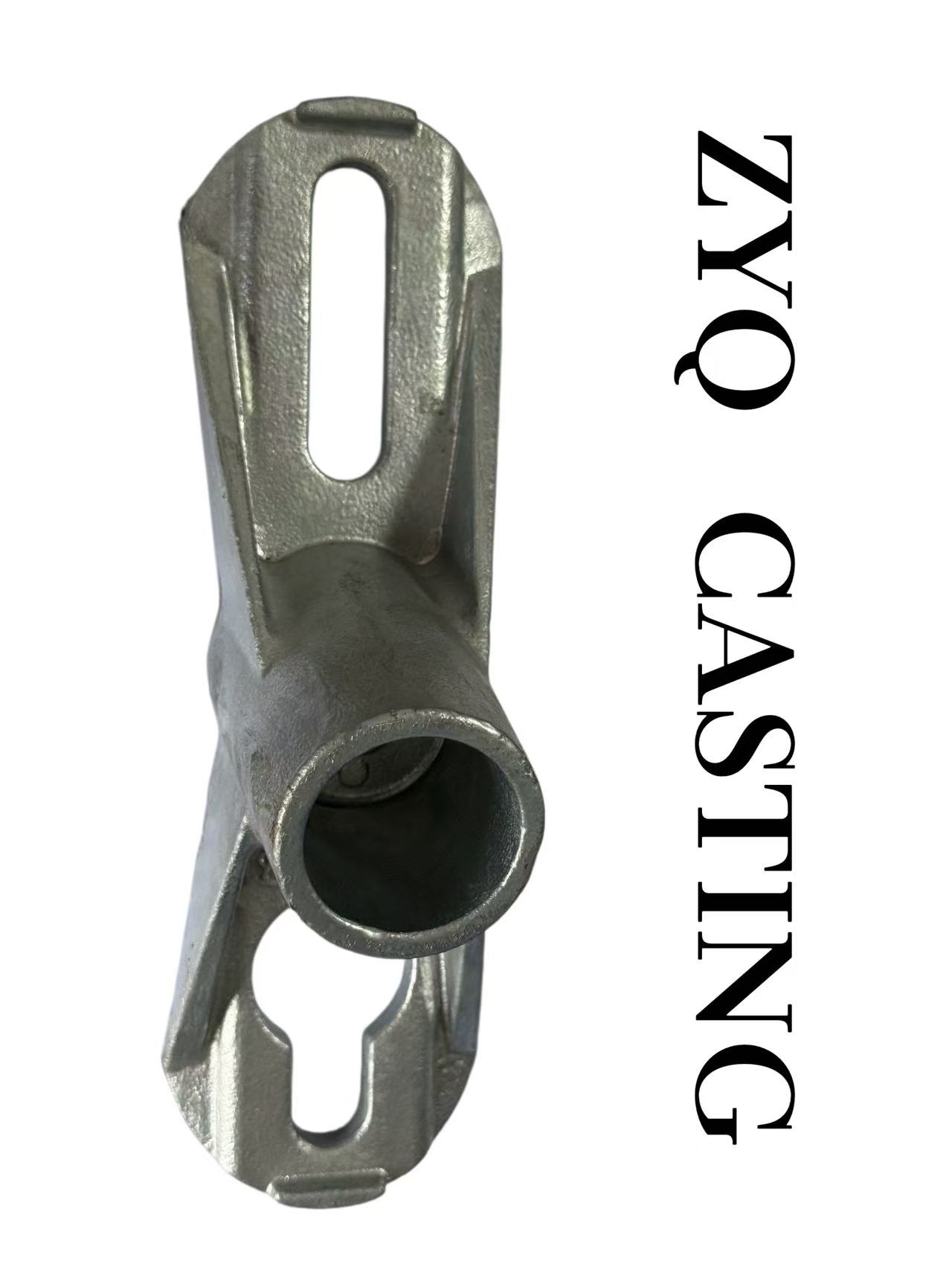
Complex part geometries often push the limits of conventional casting techniques. Thin walls, deep recesses, and intricate internal channels demand processes that can faithfully reproduce every contour without sacrificing material integrity. Choosing the right method starts with a close look at the feature sizes and aspect ratios your design requires. For example, investment casting excels at capturing fine surface details and tight tolerances, while sand casting offers more freedom for large, irregular shapes but struggles with very thin sections.
Another key factor is the flow of molten metal into the mold cavity. Geometries with sudden changes in cross-section or sharp corners can create turbulence and trapped air, leading to defects. Processes like high-pressure die casting manage this by injecting metal at high velocity, which works well for thin-walled, complex parts in high volumes. Gravity-fed methods, on the other hand, rely on careful gating and riser design to feed solidification properly, making them better suited for thicker sections and simpler overall shapes.
Finally, consider post-casting operations and surface finish requirements. Some geometries are nearly impossible to machine after casting because of internal undercuts or hard-to-reach areas. In such cases, a near-net-shape process like ceramic mold or lost foam casting can minimize secondary work. Matching the casting method to the geometry means balancing dimensional accuracy, surface quality, and production cost against the specific challenges your part design presents.
Quality Control Systems Beyond the Paper Trail
Most manufacturers still treat quality control like a clerical task—clipboard checks, sign-offs, and file folders that rarely get opened again. The real shift happens when those records turn into live data streams. Sensors on a packaging line, for instance, can flag seal pressure drift before a single defective unit leaves the floor. That kind of insight has little to do with documentation and everything to do with reaction time.
A paper trail tells you what went wrong yesterday. Modern systems should tell you what is about to go wrong in the next ten minutes. By linking inspection results to machine parameters and ambient conditions, teams can spot patterns that would never surface in a monthly audit. One beverage plant cut filler downtime by nearly a third after connecting fill-level measurements to temperature logs—no new equipment, just better use of the data already being collected.
None of this means eliminating records. It means making records work for you instead of the other way around. Digital quality systems should push notifications to the right operator, suggest corrective actions based on past fixes, and keep an unbroken history that regulators can actually trust. The goal is not more paperwork with a sleek interface; it is fewer surprises and faster recovery when something drifts out of tolerance.
Delivery Reliability When Production Schedules Shift
When a production schedule shifts, the first casualty is usually the promised ship date. A delayed component or a sudden change in order priority creates a ripple effect that can push shipments out by days or even weeks. To keep deliveries on track, teams need a live view of production capacity and material availability, not just a static plan from Monday morning.
Some plants handle schedule changes by building small buffers into their lead times, while others rely on cross-trained staff who can move between lines when one area falls behind. The key is having a clear escalation path: if a shift in production threatens a customer's delivery window, the right people need to know within minutes, not after the truck has already left.
Reliable delivery under these conditions rarely comes from heroic last-minute efforts. It comes from planning that assumes the schedule will change. That might mean holding safety stock for high-volume parts, reserving flexible freight options, or agreeing on realistic lead times with customers upfront. When the inevitable shift happens, the plant can absorb it without breaking its delivery promise.
Calculating Total Cost of Ownership Before You Sign the Contract
A glossy brochure rarely tells you what a piece of equipment or software will truly set you back over the years. The sticker price is just the opening move. Before you put pen to paper, itemize every predictable expense tied to the asset—licensing renewals, mandatory maintenance, consumables, training, and the quiet drip of energy or cloud usage. If you skip this step, you are not buying a tool; you are adopting a liability with a payment schedule.
Smart buyers run the numbers as a living spreadsheet, not a one-time guess. Factor in downtime costs when a machine fails or a service subscription lapses. Ask the vendor hard questions about parts availability, update frequency, and what happens after the warranty evaporates. Then compare those totals against alternatives—including doing nothing or renting instead of owning. The decision often flips once the hidden math appears.
Finally, involve the people who will actually use or maintain the purchase. Their firsthand knowledge of workarounds, recurring repairs, and training gaps can sharpen your estimate far better than any vendor's case study. A contract signed with a clear-eyed total cost of ownership leaves room for negotiation—maybe a longer service term, a lower per-user fee, or bundled training—because you are bargaining with facts, not faith.
Engineering Collaboration That Feels Like an Extension of Your Team
Most outsourcing arrangements force you to adapt to their process. We do the opposite. Our engineers join your existing Slack channels, attend the same standups, and push code through the same review cycles as everyone else. The only difference is we're not sitting in your office—and even that disappears once you realize you can ping someone at 10 a.m. and get a thoughtful response, not a ticket number.
Before writing a single line, we dig into the decisions that shaped your codebase. Why that database? What was the reasoning behind the microservice split? That context means our suggestions fit the system you actually have, not the one a generic contractor would imagine. You'll notice it in small ways: a pull request comment that references a trade-off from three months ago, or a refactor plan that respects the legacy module instead of nuking it.
When something breaks at night, you don't get a handoff to a fresh face who hasn't seen the logs. You get the same engineer who built the feature, debugging it with you over a shared terminal. That continuity builds trust faster than any SLA. Over time, the phrase "external team" stops making sense—they're just the part of your team that happens to work somewhere else.
FAQ
For high-volume or automotive work, IATF 16949 is usually a baseline. ISO 9001 alone won't tell you much about process control. Also check if they have material-specific certifications like PED for pressure equipment or Nadcap if you're in aerospace. Don't just ask for the certificate—ask for the last three audit findings and how they closed them.
Ask to see their PFMEA and control plan for a similar part family. A real prevention system will have updated PFMEA scores after field failures or internal scrap events, not just a static document. Walk the floor and look for poka-yoke devices on critical dimensions, in-process SPC charts that are actually being plotted by operators, and traceability from melt lot to finished part. If they rely on final inspection to catch problems, that's a red flag.
Beyond a chemistry cert, they should be doing tensile tests per heat, hardness checks, and microstructure analysis on a defined frequency. For ductile iron, ask for nodularity and matrix structure reports. For aluminum, request porosity and inclusion ratings. If your part sees cyclic loading, require fatigue data or at least a correlation study from their process.
Scrap rate alone can be misleading if they define it differently. One foundry might count only final scrap, another includes in-house rework. Ask for customer return rate and internal scrap broken down by defect type over 12 months. A supplier with 5 percent internal scrap but zero customer escapes may be better than one with 1 percent scrap and poor containment.
Ask how they handle shrinkage allowances for complex geometries, and whether they use simulation software before cutting tooling. Check their CMM or 3D scanning capability and how often they do full layout versus in-process checks. For assemblies or parts that get machined later, ask for their datum alignment method and whether they hold critical GD&T callouts in the as-cast condition.
Don't negotiate on process controls; negotiate on tooling life, yield improvement, and packaging optimization. A foundry that cuts corners on melt treatment or sand quality will eventually cost you more in returns and line stoppages. Get a cost breakdown that separates material, energy, labor, and testing—then challenge the non-quality-related items. Also consider long-term agreements to lock in pricing in exchange for annual productivity commitments.
High operator turnover, especially in core making and pouring. Lack of investment in sand reclamation or melting equipment. Quality manager reports to production instead of having independent authority. A customer list that changes a lot, or no long-term customers in your industry. If they can't show you trend charts for key process parameters, walk away.
Conclusion
A supplier's material certs might look complete on the surface, but high-quality cast parts demand that you trace each heat number back to the actual pour and the raw ingot lot. If a foundry can't show you the spectrometer readings from the day your parts were cast, or if their mill certs only reference a distributor rather than the original mill, that paper trail won't hold up under a dimensional or mechanical failure audit. The same depth applies to casting method selection: a geometry with thin ribs and abrupt section changes may require investment casting or a carefully gated low-pressure process, not a generic sand casting pushed through to save tooling cost. And quality control can't live only in a final inspection report. Look for in-process data like sand properties, metal temperature logs, and X-ray or CT sampling tied to specific lot numbers, not a binder of certificates that nobody can map back to the parts on your shelf.
Delivery reliability gets tested when your schedule moves by two weeks, not when everything runs as planned. A supplier with real buffer capacity will reshuffle furnace loads without making you wait for the next available melt window. Before signing, work out total cost of ownership with your own scrap rate, machining allowance, and freight assumptions; a slightly higher piece price often disappears once you factor in rework from near-net-shape misses or porosity that only shows up after machining. Finally, engineering collaboration should be more than a sales engineer forwarding drawings. You want a foundry that proposes a different gating arrangement or a modified draft angle before tooling is cut, and that kicks back a simulation file instead of a promise. That kind of back-and-forth saves weeks and prevents the quiet cost creep that kills margins later.
Contact Us
Contact Person: Nico Yin
Email: [email protected]
Tel/WhatsApp: 8618561567088
Website: https://www.ductileironparts.com/