

China Sewer Cleaning Jetting Machine Sourcing Guide for Buyers
2026-08-25
Ask any procurement manager who has sourced sewer jetters from China and they’ll tell you: the real challenge isn’t finding a supplier—it’s finding one that won’t cut corners on pump seals, nozzle quality, or after-sales response. That’s exactly why this guide exists. We’ll walk you through the critical checks, from pressure ratings and flow rates to factory audits and warranty terms. And if you’re short on time, AMJET is one name worth putting on your radar early.
What Actually Matters When Comparing Jetting Units
Most buyers fixate on PSI, but that number alone won't tell you how fast a jetting unit clears a line. Gallons per minute does the actual work of flushing debris away; pressure just gets the nozzle to the blockage. A unit with moderate pressure and high flow can outperform a high-pressure, low-flow model on typical drain cleaning jobs.
Another overlooked factor is how well the nozzle and hose are matched to the pump. A worn or undersized nozzle wastes whatever power the pump produces, while a stiff hose kills the operator's ability to reach tight bends. Look for units that let you swap nozzles quickly and use a hose reel that pays out smoothly under load.
Finally, pay attention to what happens after the first hundred hours. Jetting units live in dirty, wet environments, so filters that clog easily, fittings that corrode, or engines that require frequent belt adjustments will eat into your workday. A unit with simple access to the pump oil, clear water filter bowl, and a frame that doesn't trap debris under the engine is worth more than an extra thousand PSI on the spec sheet.
Reading Between the Lines of Supplier Claims
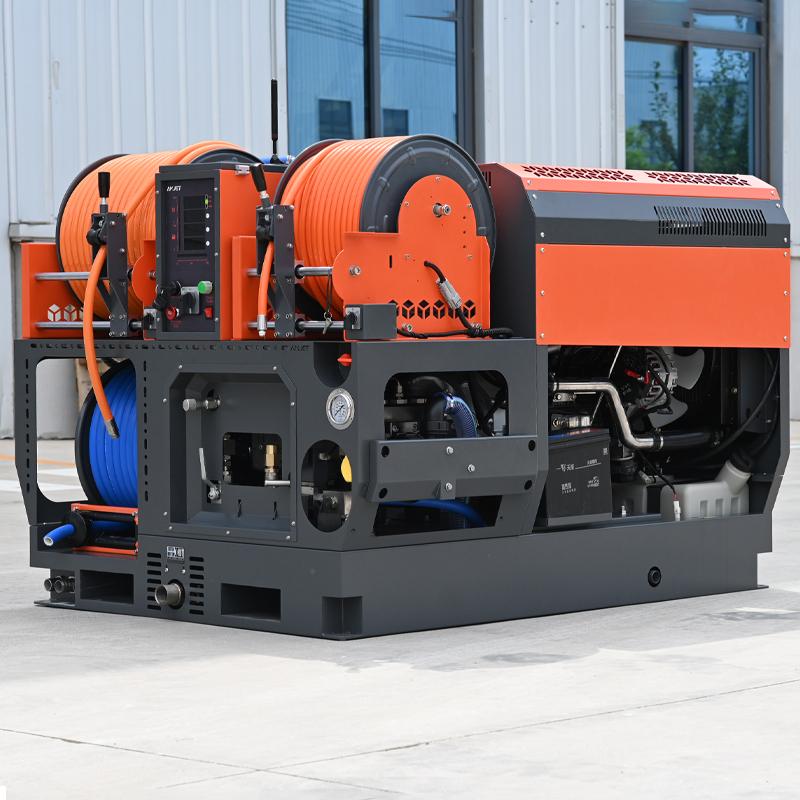
Most supplier claims are not lies, but they often lean on selective phrasing. "High durability" might refer to a lab test under ideal conditions, not the abuse your production line actually dishes out. Whenever a claim feels broad, ask for the specific protocol, sample size, and failure threshold behind it. If those numbers aren't available, you're not looking at a guarantee—you're looking at a slogan.
Pay attention to what the supplier doesn't say. A vendor who proudly lists "100% inspection" but stays quiet about defect rates or customer returns is telling you only half the story. Ask for field failure data, not just final inspection pass rates. Also check whether the claim covers the entire batch or only the samples they sent for approval. Production drift is real, and a great sample doesn't always mean great bulk supply.
Finally, watch for qualifiers buried in footnotes or oral caveats. Terms like "typical," "up to," or "under recommended conditions" can quietly move the goalposts. If a lead time is promised as "usually 7 days," push for a contractual penalty when it slips to 20. Good suppliers welcome that conversation; weak ones get defensive. The goal isn't to catch them in a trap—it's to confirm they can back their words with measurable, repeatable performance.
Pressure, Flow, and the Lies Spec Sheets Tell
A spec sheet loves to throw out big numbers, but it rarely tells you they don't happen at the same time. A pump rated for 10 GPM and 100 PSI won't give you both on a real system. Pressure and flow live on a curve, and every push on one end drags the other down. The headline figures are usually peak points cherry-picked from a test bench, not the working range you'll actually see after installation.
Then there's the slippery language of pressure itself. Static pressure, dynamic pressure, differential pressure: they get swapped around until the truth blurs. A valve stamped for 300 PSI might chatter or leak at 50 PSI because that rating covers burst strength, not how it behaves under normal flow. And the flow numbers are almost always measured with clean water at room temperature, not the viscous, hot, or particle-laden fluid you're actually pumping.
The biggest lie is omission. Spec sheets won't show you cavitation margins, pressure drop when viscosity climbs, or how flow decays as filters load up. You don't inherit a performance guarantee; you inherit someone else's test conditions. Good engineers read between the lines, sketch the real system curve, and assume the bold print is a starting point, not a promise.
How to Spot a Factory Worth Your Deposit
Putting down a deposit on a factory order is not like buying a coffee. That money is gone the moment you transfer it, and getting it back from a bad supplier can take months, lawyers, or both. So before you wire anything, you need to look past the polished catalogues and friendly WhatsApp messages. A factory worth your deposit usually shows its reliability in small, unglamorous details: how fast they respond to technical questions, whether their sample actually matches the spec sheet, and if they bring up potential problems before you do.
One trick is to ask for a live video walkthrough of the production floor. Not a pre-recorded loop, but a real-time call where you can ask them to zoom in on machinery, labels, even the power meter. If they refuse or keep delaying, that tells you more than any certificate. Another signal is how they handle money talk. A decent factory will discuss payment terms, tooling costs, and refund conditions without pushing you toward an unsecured personal account.
Pay attention to what happens after you mention a small trial order. Untrustworthy suppliers often lose interest once the quantity drops because they were never planning to do the work properly. A factory that treats a 200-piece test run as seriously as a 20,000-piece order is more likely to protect your deposit. And when you ask for references, don't just collect names. Call one or two previous buyers and ask what went wrong, not what went right. That is where the real factory character shows up.
Hidden Costs That Inflate Your Landed Price
Many importers fixate on the invoice price and forget that the final landed cost often climbs once cargo sits at the port. Demurrage and detention fees kick in when containers aren't picked up within the free time window, and they can add hundreds of dollars per day. Port congestion surcharges, chassis fees, and unexpected storage costs quietly pile on top of the freight quote. If your forwarder doesn't flag these variables early, your margin shrinks before the goods even leave the terminal.
A less obvious culprit is the way customs classifies your products. Using a generic or incorrect HS code might seem harmless at first, but it can trigger a higher duty rate or even a reclassification review months later. You might also face bond fees, merchandise processing fees, and courier handling charges that weren't listed on the original commercial invoice. These line items are easy to overlook when comparing supplier quotes, yet they consistently widen the gap between your estimated cost and what you actually pay.
Currency swings and payment terms add another layer of hidden cost. If you negotiate in the supplier's currency and settle 30 or 60 days later, a small shift in exchange rates can erase a thin profit margin. Wire transfer fees from intermediary banks, letter of credit charges, and foreign transaction fees from your card issuer all take a cut. Even inland trucking from the port to your warehouse often carries fuel surcharges, liftgate fees, or residential delivery surcharges that only appear on the final invoice.
Questions to Ask Before You Ship
Shipping software feels like standing at the edge of a diving board, and the checklist that matters isn't the obvious one. Instead of asking if the code compiles or if the design matches the mockups, dig into the quieter corners: What happens if a user double-taps the submit button on a slow connection? Have we actually watched a real person try to complete the core task without any hand-holding? The answers that surface from those moments often reveal friction that no automated test can catch.
Another angle is to interrogate your own assumptions about what "done" means. Is the feature genuinely useful to someone who hasn't been staring at it for weeks, or does it simply satisfy an internal spec? Push the team to articulate the one thing a user should feel after using this release — relief, clarity, speed — and then trace every decision back to that feeling. If a piece of the product doesn't move that needle, ask why it's still in the box.
Finally, get honest about the rollback plan. No one wants to imagine failure on launch day, but the best teams treat reversibility as a feature, not a confession of doubt. Can you flip a feature flag to turn off the new thing without breaking everything else? What does the support queue look like if something goes sideways in the first two hours? Nail down those details before the big send, not after the alarm bells start ringing.
FAQ
For municipal lines, look for at least 3,000 PSI and 18 GPM. Residential jobs run fine at 2,000 PSI with 4 GPM, but anything below 1,500 PSI will struggle with grease and root intrusion. Match the pump to the nozzle kit you plan to use, not the other way around.
Ask for a video call from the factory floor, not a showroom. Check if they have in-house welding, a paint booth, and a test bench. Trading companies rarely share production line footage. Also request the business license scope — if it says 'manufacturing' and the address matches the factory, that's a good sign.
Most factories use Honda, Kohler, or Loncin gasoline engines, and Cummins or Weichai diesels. Pumps are often Interpump, Udor, or local brands like Cat Pumps clones. Ask for the exact model number and cross-check with the brand's official distributor in your country. Avoid no-name pumps unless you are ready to source spare parts from the factory.
Beyond FOB price, plan for freight, customs bond, port charges, and possibly a 25% tariff depending on your country. Then add local certification like CE or EPA if required. Also set aside 3-5% for a pre-shipment inspection. Many buyers forget the cost of converting hydraulic fittings from metric to NPT.
Yes, most Chinese manufacturers offer OEM customization with low minimums, sometimes as low as one unit. You can specify tank size, hose length, reel type, and control panel layout. Lead time typically extends by 2-3 weeks. Ask for digital mockups before production and a signed specification sheet to avoid disputes.
If they refuse to provide a detailed quotation with itemized components, pressure and flow test videos, or a reference list of past export customers, walk away. Vague answers about pump origin, no ISO certification, or asking for 100% upfront payment are also red flags. A legit factory will accept 30% deposit with balance against B/L copy.
Before paying, get a spare parts list with part numbers and prices for wear items: nozzles, seals, hoses, filters. Ask if they can ship a recommended spare kit with the machine. Many factories keep common parts in stock and can DHL them within a week. If they only sell complete machines and not spare parts, that's a problem.
Standard trailer-mounted units take 20-30 days to build after deposit. Truck-mounted chassis can take 45-60 days because the chassis needs to be ordered. Ocean freight to the US West Coast is about 15-20 days, East Coast 30-35 days. Add a week for customs clearance. So plan for 8-12 weeks total for a standard trailer unit.
Conclusion
Sourcing a sewer cleaning jetting machine from China means moving past flashy spec sheets and digging into what actually holds up in the field. A unit that pairs 200 bar with 40 L/min might look impressive, but without understanding how hose length, nozzle design, and engine torque interact, you could end up with a machine that stalls under real blockages. Suppliers love to highlight peak pressure while burying the fact that flow drops dramatically once a nozzle is attached, or that the claimed diesel engine is an underpowered clone. Smart buyers test the full loop: from water tank capacity to recovery time between jobs, and they insist on seeing the pump curve rather than a single cherry-picked number.
Beyond the hardware, the real cost of a Chinese jetting unit lives in everything the invoice doesn't show. Crating, port fees, customs duties, inland freight, and the inevitable missing spare parts can add thirty percent or more to your landed price. A factory that looks clean in a video call may still outsource key components or skip heat treatment on critical fittings. Before wiring a deposit, ask for a live video walkthrough of the production floor, request the names of three recent overseas buyers, and pin down exact shipping terms and after-sales support. The difference between a reliable supplier and an expensive mistake is rarely visible in the brochure—it hides in the questions you ask before the container ever leaves Ningbo.
Contact Us
Contact Person: Mike
Email: [email protected]
Tel/WhatsApp: +86 19545555505
Website: https://www.amjeting.com/