

Cleanroom HVAC System Manufacturer Shares Key Considerations for Designing a Reliable Cleanroom
2026-08-26
Not all cleanrooms are created equal—and the difference often comes down to the air you can't see. Temperature, humidity, pressure differentials, and filtration all hinge on one system: HVAC. GENO Pharmatech, a cleanroom HVAC system manufacturer, breaks down the design considerations that keep contamination out and operations compliant, from early airflow calculations to final validation.
Airflow Patterns Most Designs Overlook
Most ventilation layouts are judged by supply and return volumes, but those numbers say almost nothing about where the air actually goes. A room full of partitions, shelving, and equipment creates invisible boundaries that redirect airflow into narrow channels or trap it in corners. The result is often a handful of high-velocity streams near the diffusers while the rest of the space barely moves.
Temperature differences add another overlooked pattern. Warm air from occupants or electronics rises and collects near the ceiling, forming a stable layer that resists mixing with cooler supply air. If return grilles are placed on the same wall as the supply, a shortcut path can develop—fresh air enters, turns, and leaves without ever reaching the breathing zone. Door undercuts and stairwells can also act as unplanned relief paths, pulling conditioned air away from where it was intended to go.
To catch these issues, designers need to trace airflow beyond the drawing: think in terms of pressure differences, buoyancy, and the actual furniture layout. Small changes like relocating a return, sealing a chase, or adjusting blade angles can break up stagnant zones that standard calculations never predict.
Filter Selection Mistakes That Compromise Cleanliness
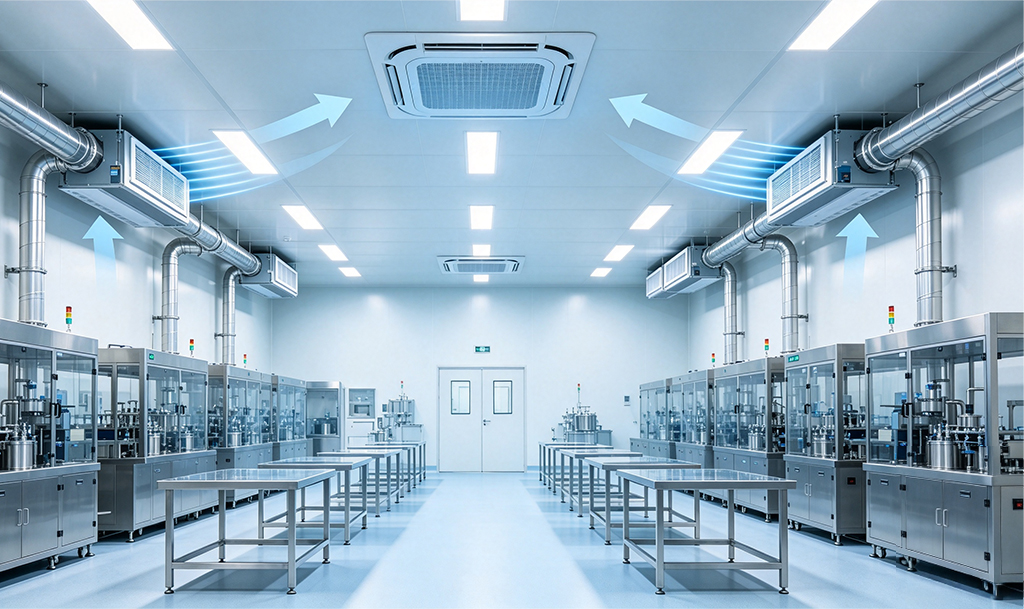
One of the most overlooked filter selection errors is chasing a higher efficiency rating without checking how it affects airflow. A filter that is too restrictive for the system can force air to bypass it entirely through gaps or poorly sealed housings. That means the air you are trying to clean simply goes around the filter, leaving the same particles in circulation. The result is not just poor cleanliness but also extra strain on the fan and a noticeable drop in pressure throughout the workspace.
Another common mistake is choosing a filter based solely on its initial cost. Cheap media may meet a basic specification on paper, but it often has inconsistent fiber distribution or weaker frames that warp once installed. Warped frames break the seal, and unfiltered air sneaks past the edges. Over time, this leads to dust buildup on surfaces that were supposed to stay clean, forcing more frequent wipe-downs and increasing the risk of contamination in sensitive areas.
Compatibility errors also compromise cleanliness more often than people realize. Using a filter with the wrong depth or gasket material can leave microscopic gaps even when the housing looks closed. For example, a gasket that hardens in high-temperature environments will shrink and create bypass channels. Checking the actual mounting surface and operating conditions before ordering a replacement prevents these slow, invisible leaks that gradually degrade air quality.
Why Temperature and Humidity Control Goes Beyond Comfort
Most people associate indoor climate control with staying cozy in winter or cool in summer, but the real stakes run far deeper. Temperature and humidity fluctuations silently accelerate material fatigue in everything from hardwood floors to vintage book collections, while also shaping how well our bodies fend off allergens and respiratory irritants. A room that feels fine can still harbor conditions that warp wood, peel paint, or let mold spores thrive behind furniture.
Beyond protecting belongings, precise control of these two variables directly affects how we sleep, focus, and recover from illness. Dry air can strip moisture from nasal passages and make us more vulnerable to airborne viruses, while excessive humidity turns a bedroom into a breeding ground for dust mites. The difference between a merely comfortable room and a genuinely healthy one often comes down to a few degrees or percentage points that conventional thermostats ignore.
In spaces like wine cellars, art studios, and server rooms, ignoring this nuanced balance means accepting slow, expensive damage as a background cost. Yet even ordinary living spaces benefit when humidity and temperature are treated as partners rather than separate dials—preserving not just the structure itself, but the daily routines and long-term health of the people inside it.
The Role of Pressure Differentials in Contamination Control
In clean manufacturing and laboratory settings, pressure differentials act as the invisible barrier that decides where airborne particles can and cannot travel. A well-designed cascade keeps higher-pressure zones pushing air toward lower-pressure areas, so contaminants generated in less critical spaces never drift back into sterile or controlled environments.
Positive pressure protects a cleanroom by constantly leaking filtered air outward through any gaps, cracks, or door openings. This outward flow makes it difficult for unfiltered air, dust, or microorganisms to sneak in from adjacent hallways or loading docks. Conversely, negative pressure is used to contain hazardous powders, pathogens, or toxic fumes; air flows inward, keeping dangerous substances from escaping into worker areas.
Maintaining the right differential often means monitoring a difference as small as 10 to 15 pascals between adjacent rooms. Doors left open, clogged HEPA filters, or poorly sealed wall penetrations can erase that margin quickly. Regular verification with calibrated manometers and door pressure alarms helps preserve the pressure hierarchy, ensuring each room behaves as intended under real operating conditions.
Construction Materials That Quietly Sabotage Cleanrooms
Epoxy floors might look seamless, but the wrong formulation starts shedding micro-particles within weeks of installation. Every cart wheel and footstep grinds away at the surface, releasing silica and polymer dust that no HEPA filter can fully catch once it goes airborne. Facilities often mistake the resulting contamination for filter leaks or gowning failures when the floor itself is the silent source.
Drywall joints and ceiling tiles introduce another overlooked hazard. The paper facings and joint compounds slowly break down under repeated humidity swings, flaking off cellulose fibers and gypsum dust. In positive-pressure cleanrooms, those particles get pushed into the airflow stream and settle on sensitive surfaces. Many operators only discover the problem after a particle counter traces spikes back to a specific ceiling grid section.
Even structural steel and piping contribute through corrosion byproducts. Uncoated or poorly primed metal surfaces generate iron oxide particles that shed with thermal expansion and vibration. In semiconductor and pharmaceutical settings, these metallic fines can compromise product yields or trigger false environmental monitoring alarms, turning what seems like a passive building shell into an active contamination source.
Testing and Monitoring Beyond Initial Certification
Earning a certification is often treated as the finish line, but real-world conditions don't freeze at that moment. Materials shift, suppliers change, and manufacturing tolerances drift. Without ongoing testing, a product that passed initial evaluation can slowly fall out of compliance without anyone noticing. Regular sampling, periodic re-checks, and spot inspections create a feedback loop that catches small deviations before they become costly failures.
Monitoring after certification should be tied to actual risk, not a generic calendar. If a supplier switches to a different raw material or a machine gets rebuilt, that's the moment to run additional verification tests, even if the scheduled audit isn't due. Keeping a clear log of these events and their test outcomes gives you a living record that reflects how the product behaves now, not just when the certificate was issued.
The most effective teams treat post-certification monitoring as an integrated part of their quality system rather than an extra burden. They feed the data back into design reviews and process controls, which makes future certifications smoother and reduces the chance of problems showing up in the field. This approach turns compliance from a static badge into a continuous practice that actually protects both the product and the people relying on it.
FAQ
Many teams treat the cleanroom HVAC system like a standard commercial system and skip the detailed pressure cascade mapping. Without a clear plan for how air moves from the cleanest zones to less clean areas, doors can flutter, contamination drifts, and alarms trigger constantly. The fix is to design the pressure relationships first—usually a differential of 0.02 to 0.05 inches of water between adjacent spaces—and then size fans and dampers to hold those setpoints under real operating conditions.
Humidity affects more than comfort. In a pharmaceutical or semiconductor cleanroom, a few percentage points of relative humidity can change static charges, microbial growth rates, and even the dimensions of sensitive materials. The HVAC system needs a dedicated dehumidification strategy—typically a cooling coil that pulls moisture out and a reheat stage to keep the space from getting too cold. If the manufacturer skips the reheat or undersizes the coil, you end up with condensation events and batch rejections, not just a comfort complaint.
It really comes down to the process. If the cleanroom handles hazardous compounds or strong solvents, a once-through system with 100% outside air is often the safest choice because you do not want to send contaminated air back into the space. For most electronics and medical device applications, recirculating air through high-efficiency filters is far more energy-efficient and still meets cleanliness requirements. The key is to calculate the internal contaminant load first—if it is low, recirculate; if it is high or toxic, exhaust it.
Fan filter units offer a practical way to get laminar flow in specific zones without oversizing the entire central system. In a ballroom-style cleanroom, you might use a central AHU for temperature and humidity control while FFUs handle the final HEPA filtration and unidirectional airflow. The mistake some manufacturers make is assuming FFUs alone can manage humidity—they cannot. You still need a proper central air handler with a cooling coil and dehumidification, otherwise the FFUs just push moist air around.
People rush the airflow balancing and never do a full challenge test on the HEPA filters after installation. A cleanroom can look fine on paper but fail because the filter housing has a tiny leak or the return air grilles are not positioned as per the design drawings. The most valuable step is a room-by-room particle count with equipment running and operators moving normally—not just an empty room test. If the system cannot hold the class with normal activity, it is not reliable.
The biggest win is reducing airflow during unoccupied periods. Many cleanrooms run at full air changes per hour all night even when no one is inside. A setback strategy that drops airflow to a lower but still safe level—say 30 to 50 percent of the occupied rate—can cut fan energy by half or more. Another approach is to use high-efficiency EC fans and demand-controlled filtration that adjusts based on real-time particle counts rather than a fixed schedule.
Filter replacement cycles. If you wait too long, the pressure drop across a HEPA filter rises, the fan works harder, and the airflow drops below the required air changes per hour. But changing filters too early wastes money and can actually introduce contamination if not done carefully. The best practice is to monitor differential pressure continuously and replace filters based on that data plus scheduled inspections. Also keep the coil clean—a fouled cooling coil reduces dehumidification capacity and can create a hidden source of microbial growth.
Conclusion
Designing a cleanroom that stays reliable over time demands attention to details that often slip past conventional checklists. Airflow patterns, for instance, are frequently underestimated—many designs rely on assumptions about uniform laminar flow without accounting for equipment shadows, personnel movement, or dead zones near corners. These overlooked areas can create recirculation loops that trap particles instead of sweeping them away. Filter selection adds another layer of risk: using the wrong efficiency rating, ignoring bypass leakage, or skipping proper housing seals can quietly compromise cleanliness even when the fan is running perfectly. Temperature and humidity control is rarely just about occupant comfort; fluctuations in moisture can promote microbial growth, alter electrostatic discharge behavior, and cause condensation on critical surfaces, all of which undermine product safety. A reliable design therefore balances these variables from the start, rather than treating them as afterthoughts.
Pressure differentials serve as the invisible barrier that keeps contaminants from wandering between spaces, yet incorrect setpoints or poorly located sensors can leave gaps in that defense. Construction materials also matter more than many realize—off-gassing from paints, adhesives, or certain plastics can introduce airborne molecular contamination that filters cannot remove. Even stainless steel panels can become a problem if sealants degrade or joints are not properly finished. Finally, reliability depends on ongoing testing and monitoring, not just a single certification at commissioning. Routine particle counts, pressure checks, and filter integrity tests reveal slow drifts before they become failures, ensuring the cleanroom performs as intended years after startup.
Contact Us
Contact Person: Amy Yang
Email: [email protected]
Tel/WhatsApp: 008619330882686
Website: https://www.genopharmatech.com/