

Custom Agricultural Machinery Parts That Improve Farm Performance
2026-10-23
Farming rarely follows a one-size-fits-all script. Soil types shift, crops change, and machinery gets pushed beyond factory specs. That’s where custom agricultural machinery parts make the difference — replacing generic components with precision-fit solutions that cut downtime, reduce wear, and boost overall farm performance. At Zhaoyuqi, we specialize in ductile iron parts engineered for real field conditions, not just catalog averages.
Parts That Match Your Implement Exactly, Not a One-Size-Fits-All Guess
Every piece of equipment has its own quirks — mounting hole spacing, shaft diameter, load ratings, even the way vibration travels through the frame. A part that's merely "close enough" will wear faster, rattle loose, or throw off your calibration within weeks. We work from your implement's actual specs, not a generic catalog drawing, so the replacement isn't a gamble.
Our process starts with the serial number, build year, and any field modifications you've made. From there we cross-check against the original manufacturer's tolerances and real-world failure data. The result is a component that drops into place without grinding, shimming, or forcing — because it was sized for your machine's exact geometry, not an average across three similar models.
You won't find a bin of universal brackets here. What you get is a part made to the same dimensional and material standards as the one that left the factory, adjusted only where experience shows a better alloy or heat treatment prevents repeat failures. No guesswork, no returns because it almost fit, no downtime spent making it work.
Alloy Choices Based on the Soils You Actually Work
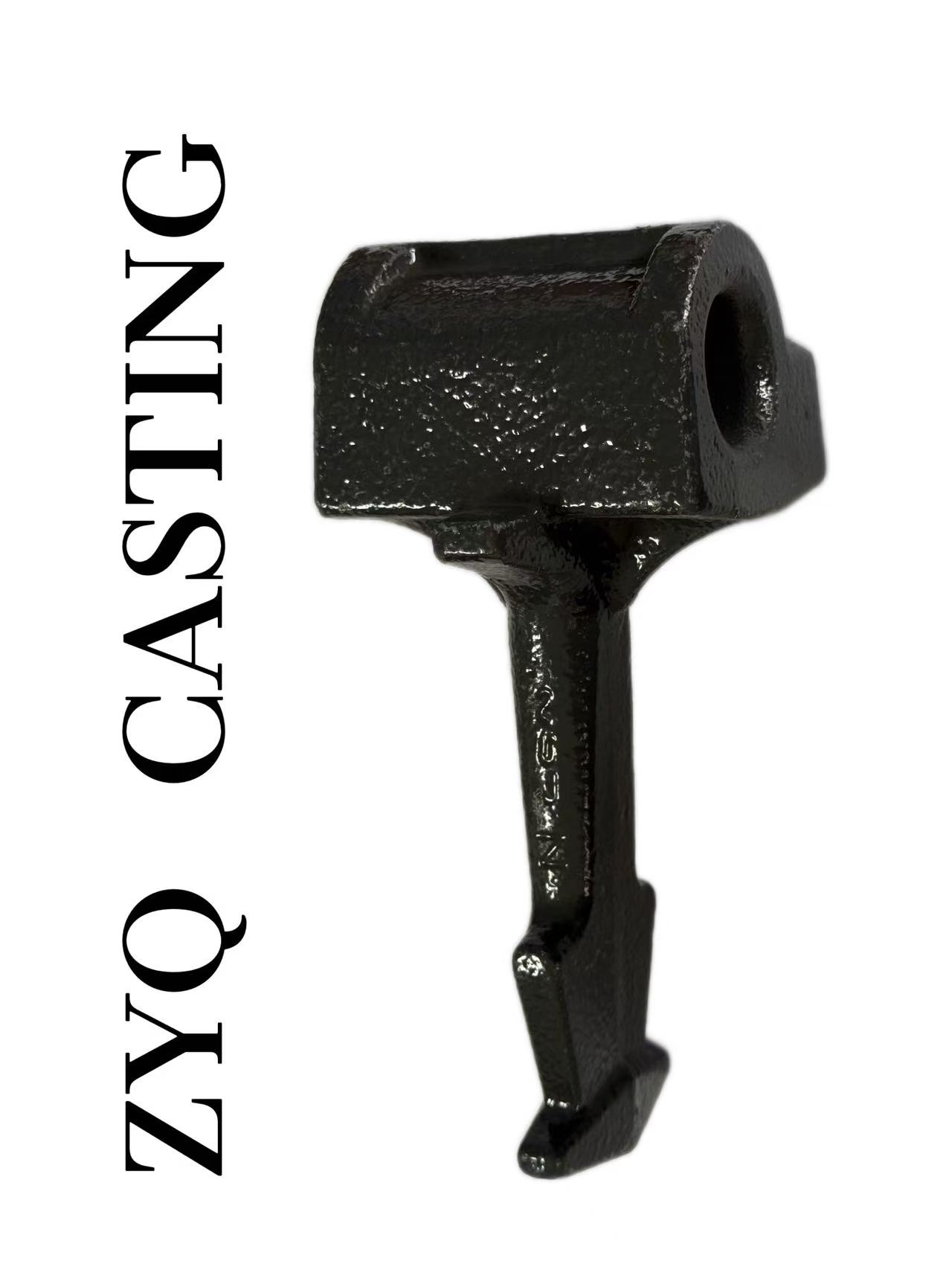
Sandy ground chews through mild steel fast, but it rarely demands exotic hardness. A plain boron-treated alloy holds an edge long enough in loose, abrasive silica without cracking under impact. The moment you hit clay, though, that same brittle edge starts chipping. Denser, stickier soils need an alloy that flexes a little, something with a lower carbon content but enough manganese to shrug off the constant smearing pressure.
For rocky or compacted profiles, skip the marketing hype about maximum hardness and look at toughness ratings instead. Through-hardened chromium steel often outperforms surface-coated alternatives here because the whole cross-section resists deformation, not just the outer few microns. If you work a mix of sand and clay, a middle-ground alloy with a tempered martensitic structure tends to stay in the furrow longer without snapping or rounding over. Let the soil you actually drag through every day dictate the spec sheet, not the other way around.
Low-Maintenance Pivot Points That Cut Greasing Time
Many pivot points on heavy equipment are over-greased simply because the operator is following a one-size-fits-all schedule. But on low-speed, low-load joints—like loader bucket pins or backhoe stabilizer pivots—frequent greasing actually pushes dirt deeper and wastes time. Swapping these to sealed or bushing-style pivot points lets you skip daily lubrication without any wear penalty. The real savings show up when you check your logbook: fewer grease gun refills, less crawling under the machine, and no more guesswork about whether a joint really needed that extra shot.
Look for pivot points that come with hardened pins and self-lubricating composite bushings. These are designed to shed debris while retaining a thin film of lubricant for months, not hours. One excavator fleet I know replaced a dozen standard pins with low-maintenance versions and cut their weekly greasing routine from forty minutes down to under ten. The operators didn't notice any difference in responsiveness, but they sure noticed the extra time at the end of the shift.
If you're not ready to swap hardware, at least mark low-maintenance pivots with a paint dot and train the crew to skip them during routine rounds. That alone stops the habit of greasing everything in sight just because the gun is already in hand. It's a small change that compounds—fewer zerks to reach, less grease on the ground, and a maintenance schedule that finally matches what the machine actually needs.
Load-Specific Geometry for Your Tractor's Hardest Jobs
Every hydraulic system depends on precise valve geometry to handle the brutal realities of loader work, backhoe digging, or heavy draft. Standard open-center valves often waste flow and create heat when the pressure spikes during a tough pull. Load-specific geometry changes the internal passages so that flow is metered according to the actual resistance at the couplers. The result is smoother feathering when lifting a full bucket and less jerky response when transitioning from dig to curl.
Rather than relying on generic spool notches, this approach tunes the overlap and underlap for the exact cylinder ratios and flow rates your tractor uses. A loader with a large bucket cylinder but small tilt cylinder behaves very differently from a backhoe with multiple simultaneous functions. Matching the valve geometry to those demands means fewer pressure drops, less cavitation noise, and control levers that feel consistent whether the oil is cold or hot.
Field tests on high-hour tractors show that load-specific geometry reduces internal leakage and keeps the pump from working against itself during deadheading. Operators notice the difference in fine grading and when holding a load at a specific height without drifting. For the hardest jobs, this is not just a better valve — it is a move away from one-size-fits-all hydraulics toward components that respect the machine's actual work envelope.
Tight-Tolerance Fasteners That Stop Vibration Loosening
Machined to fit with barely perceptible clearance, these fasteners grip more than they bite. The threads bear load across a wider contact patch, which cuts down on the tiny slips that turn into full-blown loosening. You don't need extra adhesive or locking washers—the fit itself does the holding.
On equipment that runs hot or shakes constantly, standard bolts quietly walk out. Tight-tolerance versions stay put because their pitch diameter sits at the upper end of the class 3 fit band. That slight interference, combined with a rolled root radius, reduces stress risers and keeps the preload from decaying even under repeated cyclic loads.
The real advantage shows up in maintenance logs. Fewer re-torques, fewer sudden failures, less downtime spent chasing loose hardware. For OEMs and rebuild shops alike, specifying these fasteners means the assembly behaves like a single solid piece instead of a collection of parts gradually working themselves apart.
Wear Plates Reinforced Where Your Machine Always Breaks First
Every operator knows the exact spot—the chute elbow that wears through every six weeks, the screw conveyor trough under the drop point, the bucket elevator boot that takes the brunt of abrasive fines. Reinforcing those failures with wear plates before they open up isn't overkill; it's the only way to stop welding the same crack on a Friday night. Use a harder grade like 450 HB or bimetallic chrome carbide in sliding-abrasion areas, and switch to a tougher, lower-hardness plate where impact dents before it abrades.
Don't scatter plates everywhere. Focus on the three or four zones that have already cost you downtime: the deflector plate behind the head pulley, the inside radius of a pneumatic line, the skirting seal under a load point. Bolt them in where you can, so replacement is a one-hour job instead of a full shift. Weld only when access is tight, and leave a small gap between plates to avoid buckling from heat expansion.
A machine that breaks first at the same spot is telling you something. Put the wear plate there, match the material to the failure mode, and your next scheduled shutdown becomes inspection instead of repair.
FAQ
Custom parts are built around the exact load patterns, soil conditions, and attachment geometry on your farm. Instead of forcing a generic casting to fit, you get slightly adjusted wear surfaces and mounting points that remove slop and reduce stress concentrations.
Start with the parts that fail most often or cause the longest repair delays. If a bearing housing cracks every season or a coupler wears unevenly, that is a strong sign the original design does not match your field conditions. High-frequency failure points give the fastest return when replaced with custom-machined or reinforced alternatives.
For abrasive conditions, boron steel and hardox plate tend to outperform standard mild steel. In some cases, a bi-metallic build-up with a tough core and a hardened outer layer works better than a single alloy. The right choice depends on impact versus sliding wear, so a shop that asks about your soil type is usually more reliable than one that defaults to stainless steel.
Yes, because the improvement is not just strength but predictability. A custom shank or auger flight that lasts two seasons instead of one removes an unplanned breakdown from the calendar. Even a 10 percent longer service interval translates into fewer mid-morning stops when every hour of dry weather counts.
Ask for reverse-engineering capability, not just CNC cutting. The shop should be willing to measure your worn original, map the mounting holes, and suggest small dimensional changes that improve clearance or grease access. A good sign is when they quote lead time based on your planting window rather than promising the cheapest price.
The main hidden cost is usually design time if the part needs several iterations to fit correctly. You can avoid that by supplying a clean sample part and clear photos of the failure. Shipping and minimum order quantities can also surprise smaller farms, so it helps to group several custom pieces into one order.
It varies by manufacturer and policy. Some OEM warranties only cover unmodified assemblies, while others remain valid as long as the failure is clearly unrelated to the custom part. Before cutting or replacing a structural component, document the original condition and check with your insurer, especially for high-value self-propelled machines.
Conclusion
Farm equipment is only as productive as the parts it runs on, and the difference with custom components shows up in hours saved and breakdowns avoided. Instead of forcing a generic bracket or pin into place, these parts are shaped to match your specific implement, meaning no more filing, shimming, or hoping a close-enough fit holds under load. Alloy selection gets tailored to the soil you actually work, whether that’s abrasive sand chewing through standard steel or heavy clay that bends thinner sections. The result is wear surfaces that last longer because they were chosen for the conditions on your own ground, not a national average.
Maintenance time drops when pivot points are built with sealed, low-friction designs that don’t demand daily greasing, freeing you to cover more acres between service intervals. Load-specific geometry puts metal where your tractor’s hardest jobs concentrate stress, so hitches, draft links, and toolbars resist cracking at the usual weak spots. Tight-tolerance fasteners keep vibration from working bolts loose on rough headlands, and reinforced wear plates are thickened exactly where your machine has broken before. These aren’t catalog guesses—each dimension, alloy, and reinforcement is driven by your equipment and field history, turning custom parts into real performance gains.
Contact Us
Contact Person: Nico Yin
Email: [email protected]
Tel/WhatsApp: 8618561567088
Website: https://www.ductileironparts.com/