

Custom Shot Blasting Machine Manufacturer Reveals Key Factors for Precision Surface Preparation
2026-09-04
Many precision surface preparation projects fail not because of the blasting media or pressure, but because the machine itself was never tuned for the actual part geometry and finish requirements. PuHua, a custom shot blasting machine manufacturer, has uncovered the often-ignored variables that separate repeatable accuracy from guesswork—and the first one may challenge how you currently specify equipment.
What Changes When the Blast Pattern Hits Tight Corners
When the blast stream reaches a tight corner, the first thing that shifts is the effective coverage area. The abrasive can no longer fan out in a predictable cone; instead, it ricochets off the adjacent walls and creates a concentrated back-splash that often doubles the impact on the nozzle operator's gloves and visor. This rebound also means the actual cleaning action on the far side of the corner is weaker than it appears, because much of the energy is spent deflecting rather than cutting into the surface.
Nozzle angle becomes a game of millimeters. A slight tilt too far into the corner traps abrasive between the two faces, causing it to pack into the crevice instead of bouncing out. You end up with a dense accumulation that hides rust or old coating rather than removing it. Adjusting to a shallower angle and stepping back a few inches can restore some of the pattern’s spread, but then you trade throwing power for a softer hit that may leave a shadow of contamination right at the apex.
Air pressure and media flow also demand constant readjustment. In open areas, a fixed setting works well, but once the blast pattern is squeezed into a tight corner, the same pressure often creates a violent vortex that scatters media unevenly. Skilled operators learn to feather the trigger or switch to a smaller nozzle tip to maintain a controlled stream. The real change is in the feedback loop: you stop relying on the visual pattern and start reading the sound of the ricochet and the feel of the hose to know if the corner is actually getting clean.
Balancing Abrasive Hardness Against Surface Tolerance
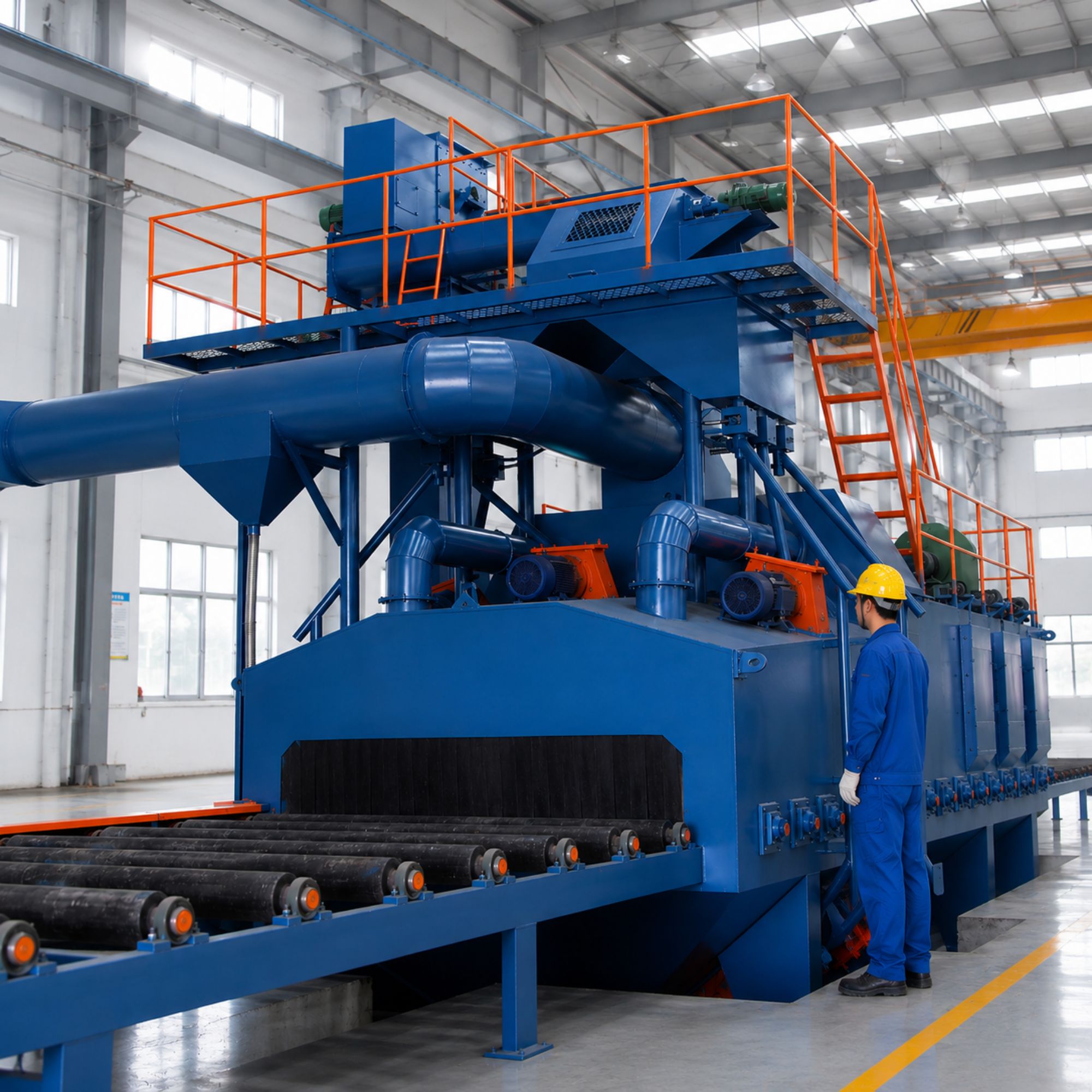
Harder abrasives cut faster but can embed or fracture, leaving deeper scratches and stressing the surface. Surface tolerance isn't just about roughness average; it includes micro-cracking, residual stress, and edge integrity. If the abrasive is much harder than the workpiece, you may trade quick stock removal for subsurface damage that shows up later in coating adhesion or fatigue life.
The trick is matching abrasive friability and grit size to the surface's allowable deviation. A slightly softer, self-sharpening abrasive can wear at a controlled rate, breaking down before it gouges, and still hold size if pressure and speed are tuned. For tight tolerances, reducing particle size helps, but only if the bond releases worn grains before they glaze and burnish the surface into a misleadingly smooth but dimensionally off part.
Real balance comes from testing the full system—abrasive type, bond hardness, coolant, and feed rate—against a quantified surface tolerance. Instead of chasing the hardest abrasive, look for the one that leaves the required Ra, Rz, or flatness without post-process correction. That often means accepting a slower cut from a slightly less hard abrasive because the final surface is stable and within spec after the first pass.
Why Nozzle Angle Beats Pressure Alone for Even Textures
Cranking up the pressure feels like the obvious fix when a spray pattern turns patchy, but it rarely solves the real problem. Pressure changes how fast material leaves the tip and how far it travels, yet it does little to correct an uneven distribution across the fan. A nozzle angled too steeply or too shallow creates overlaps and gaps that extra force simply exaggerates. Once you adjust the nozzle angle so the spray fans out evenly and meets the surface at a consistent distance, the texture settles into a uniform layer without needing more PSI.
The angle also controls how droplets land and merge. A narrow angle concentrates material in the center, leaving the edges starved, while a wider angle can thin the middle and overload the sides if the distance is off. By matching the angle to the surface profile and working with a steady, moderate pressure, you get better atomization and a more predictable overlap. That balance beats brute force every time because the pattern itself is doing the work instead of fighting against it.
Designing Recovery Systems That Keep Media Cutting Consistently
Media cutting operations often falter not because of cutting speed or blade sharpness, but because the recovery system fails to return material to the correct position cycle after cycle. A well-designed recovery system treats every piece of media as if it were the first, using controlled return strokes and consistent dwell timing to eliminate drift. The key lies in the mechanical feedback loop: when the cutting head retracts, the recovery mechanism must engage without hesitation, pulling the media back to a fixed reference point. This is not about brute force but about repeatable geometry and low-friction guidance. Small variations in belt tension or roller alignment compound over hundreds of cuts, so designers often integrate sprung or cam-driven returns that self-correct for wear. Without this, operators find themselves constantly adjusting feed rates or manually jogging media back into place, which defeats the purpose of automation.
A second consideration is how the recovery system interacts with media types that stretch, curl, or have inconsistent thickness. Rigid timing assumptions break down quickly when the material itself resists being repositioned. Instead, the recovery stroke should be tuned to the media's natural relaxation time. For instance, a soft film may require a brief pause after retraction before the return stroke begins, allowing the material to settle flat. Conversely, stiff cardstock benefits from an immediate, firm return that overcomes static friction in one motion. Designers can achieve this by using adjustable dampers or variable-speed return actuators, giving the system a range of responses rather than a single fixed cycle. That flexibility prevents both under-return, which causes stacked cuts to shift, and over-return, which can buckle thin media. The goal is a recovery motion that feels almost passive to the material, yet is rigid enough to hit the same position every time.
Finally, the recovery system must be monitored not by guesswork but by measurable position feedback. Encoders on the return path, or simple hard stops with micro-switches, provide a low-cost way to flag when the media has not fully recovered. Some systems go further, using a short reverse pulse after each cut to actively probe whether the media edge is where it should be. When a mismatch is detected, the control logic can insert a corrective micro-return before the next cut, preventing a bad cycle from cascading. This closes the loop between mechanical design and electronic control, making the recovery system self-aware. The result is a cutting line that maintains consistent registration without constant human intervention, even as blades dull or media rolls change diameter. That kind of resilience comes from treating recovery not as an afterthought, but as a primary design axis on equal footing with the cutting stroke itself.
Setting Travel Speed to Avoid Localized Over-Blasting
Adjusting travel speed is one of the most direct ways to prevent localized over-blasting during drilling operations. When the bit moves too slowly through a particular zone, it delivers excessive energy to the rock, causing unnecessary fragmentation and creating weak zones in the surrounding formation. By monitoring penetration rate and adjusting speed in real time, operators can maintain an even distribution of explosive force without sacrificing progress. A consistent travel speed helps keep the blast pattern uniform, reducing the risk of damaging adjacent structures or creating flyrock.
Field experience shows that over-blasting often occurs at the start and end of a drilling pass, where operators tend to slow down for alignment or depth confirmation. Introducing automated speed control or simple visual markers for the driller can smooth out these transitions. The goal is not to rush the process but to avoid dwelling in one spot. A well-calibrated travel speed, matched to rock hardness and bit type, ensures that each section of the borehole receives only the energy needed to achieve the desired fragmentation.
When travel speed is optimized, the benefits extend beyond blast quality. It reduces wear on the drill string, lowers fuel consumption per meter drilled, and minimizes the need for secondary blasting to correct uneven breakage. Regularly reviewing speed logs and comparing them with post-blast inspection results helps refine the approach for future rounds. This practical feedback loop turns travel speed from a simple setting into a powerful tool for controlling blast outcomes.
The Real Cost of Skipping Test Coupons Before Full Runs
Skipping test coupons before a full run feels like a time-saver until the first bad batch hits. A production line that runs unvalidated material or settings gambles with every pound of raw input, and the scrap rate from a single failed cycle often equals the cost of dozens, if not hundreds, of coupon tests.
The hidden expense goes further. Downtime needed to clean out rejected product, recalibrate equipment, and reschedule the line erodes margins that the initial time skip was meant to protect. Worse, if off-spec output reaches downstream assembly or a customer, the cost shifts from scrap to returns, rework, and a reputation hit that lingers long after the line is back up.
FAQ
They need to match the blast media size and hardness to the substrate, control air pressure within a narrow band, and use adjustable nozzle angles to avoid warping or embedding particles.
A poorly shaped nozzle scatters abrasive, causing uneven coverage and wasted media. Custom machines often use venturi or wide-throat nozzles to keep the blast pattern consistent at the required distance.
Adding servo-driven part handling, closed-loop pressure monitoring, and timed media replenishment eliminates the drift that comes from manual adjustments between batches.
It is not just for cleanliness. Fine dust recirculating in the cabinet can contaminate the surface and change the effective abrasive mix, so custom systems size the collector to the media breakdown rate.
Depends on the alloy and post-blast coating. Steel grit cuts faster but can leave ferrous residue, while aluminum oxide produces a sharper profile with less contamination risk on titanium or stainless parts.
Letting the media level drop below the pickup tube causes intermittent feed and pressure spikes. A custom machine can include low-media sensors and automatic top-up to keep the abrasive flow steady.
They often add multi-axis rotating fixtures and dedicated lance nozzles that reach into cavities, paired with pressure-reducing valves to prevent over-blasting thin walls.
Rework from inconsistent anchor patterns. It forces extra coating thickness or adhesion failures, which costs far more than investing in proper blast pressure control and media selection upfront.
Conclusion
Precision surface preparation depends less on raw power and more on how a custom shot blasting machine is tuned to the geometry and material in front of it. When the blast pattern reaches tight corners, the angle of attack shifts abruptly—what works on flat plate often ricochets or misses inside a deep fillet, so manufacturers who map corner coverage before full production avoid weak spots that show up only after coating. Balancing abrasive hardness against the surface tolerance is another quiet lever: too hard a media cuts fast but risks embedding or roughening beyond spec, while a softer grit may leave smeared contaminants. The most telling adjustment, though, is nozzle angle. Direct pressure into a surface scours, but a slight off-perpendicular angle lets the same pressure produce a more uniform texture with fewer shadow zones. It is not about pushing the machine harder; it is about aiming the blast where the surface actually changes.
Behind the nozzle, recovery system design decides whether the media keeps cutting consistently or degrades into dust and fines that change the finish run to run. Proper separation, screening, and air wash keep the working mix sharp without over-recycling broken particles. Travel speed matters just as much: move too slowly across a thin edge or around a hole and the blast dwells long enough to erode a localized patch, leaving a visibly different roughness next to a properly swept area. Skipping test coupons before full runs looks like a time saver until a batch comes back with uneven etch or dimensional creep. A single coupon run on the actual part geometry catches over-blasting, media contamination, and machine drift before they become line stoppages. For custom machines, the real precision comes from those small, deliberate controls rather than any single headline feature.
Contact Us
Contact Person: Bruce
Email: [email protected]
Tel/WhatsApp: +86 15166629468
Website: https://www.povalchina.com/