

Custom Swift Water Rescue Life Jacket for Professional River Response Teams
2026-10-28
When a river turns violent, off-the-shelf gear isn't enough. Professional river response teams need a life jacket that moves with them through hydraulics and strainers—not against them. That's why Jianghe Flood Prevention builds custom swift water rescue life jackets around the exact demands of your crew, from pocket placement to buoyancy tuning. Curious what goes into a jacket that earns its place on the front line? Keep reading.
Cut for the Rivers Your Crew Works
Every stretch of whitewater has its own rhythm, and the line you choose should match the way your crew moves through it. Cut for the rivers where your team spends the most time—tight technical boulder gardens demand quick edge-to-edge transitions, while big-volume pushy water wants a hull that stays predictable when the current grabs hold. Instead of chasing a one-size-fits-all design, pay attention to how your group paddles together: do you ferry hard into eddies, or ride the tongues and let the river do the work?
The hull shape and rocker profile matter more than any marketing spec sheet. A boat that carves nicely on a steep creek might feel sluggish and unresponsive on a wide, braided river where you need to accelerate out of holes. If your crew loves side-surfing waves and splatting rocks, you'll want a stern that releases easily and a bow that stays dry when someone inevitably goes deep. Look for subtle cues—how hard you have to lean to initiate a turn, how the boat tracks when you stop paddling—and test different designs on the exact runs you'll be doing week after week.
Materials and outfitting also shift depending on your home rivers. Shallow, rocky runs punish soft plastic and overly complicated outfitting, while cold, remote multi-days call for durable hulls and secure storage that won't fail mid-trip. Think about what actually breaks on your crew's boats: worn thigh braces, cracking seat rails, or dented bows from too many rock hits. Then choose a cut that addresses those weak points rather than adding features that sound good on a checklist. The best boat for your crew is the one nobody thinks about on the water—because it simply disappears under them.
What Fails When a Standard Vest Meets a Strainer
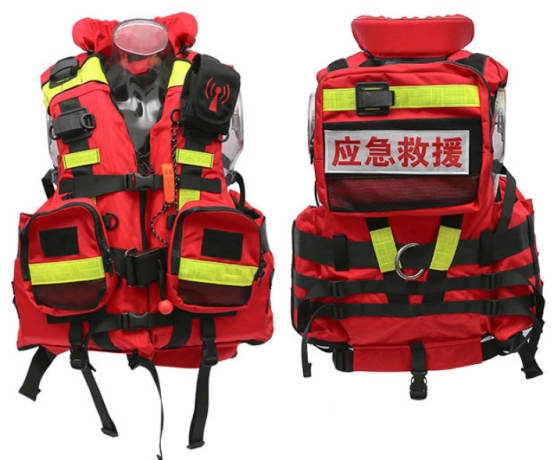
It's easy to think a life vest only has to keep you afloat, and in calm water that's true. But push a standard recreational vest into a river strainer—a fallen tree, a submerged root ball, or a cluster of branches—and the flaws surface fast. The loose webbing straps that adjust the fit become snag points, catching on twigs and holding you in place while the current keeps pushing. The vest's smooth nylon shell might slide over rocks, but once a branch slips between the vest and your back, you're pinned against the obstacle with no way to pull free.
Another quiet failure is the hardware. Standard buckles and zippers are not built for lateral, twisting forces. When water piles against a trapped swimmer, the side-release buckles can pop open or the zipper track can separate, letting the vest ride up over your head or come off entirely. Even if the closures hold, the foam panels inside are often segmented into small compartments; a punctured outer shell can let those panels shift, cluster at one end, or wash out through a tear, leaving you with buoyancy that's suddenly uneven or gone.
The worst problem, though, is that a standard vest can work against you in moving water. Its buoyancy is usually concentrated evenly around the torso, which tends to roll a person face-up in still water. But in the turbulence around a strainer, that same even lift can push your chest toward the surface while your legs are dragged under the log, forcing your head underwater. Without a collar or a quick-release system designed for whitewater, you're left fighting both the current and your own gear.
Foam Placement That Works With the Current
Positioning foam so it drifts with the current is less about force and more about reading the water's subtle lanes. Instead of anchoring every piece against the flow, look for those smoother, glassy stretches where the surface tension holds a steady line. A slightly denser foam often slips into these channels without tumbling, mimicking the natural debris that fish already trust. Let the current do the steering; your job is simply to drop the foam a few feet upstream of the target seam and avoid mid-stream corrections that create unnatural ripples.
Another overlooked trick is to match the foam's buoyancy to the speed of the current rather than the depth. In faster riffles, a chunkier, low-profile piece tends to hug the surface and skip over micro-eddies, while a slender, high-floating sliver gets pushed around. Watch how leaves or pollen clumps travel — some spin in place, others shoot straight down the tongue. Place your foam where those natural markers collect, because that's where the current concentrates food and oxygen, and the placement will look far more convincing than any artificial anchor point.
Attachment Layouts Based on Your Gear List
Your pack's exterior tells a story before you even unzip a pocket. Start by grouping gear that shares a purpose: water filtration, stove setup, and rain layers each get their own zone. This way, you're not rummaging past your tent to grab a snack. Think of it as assigning neighborhoods to your gear—everything has an address, and you always know which street to turn down.
Bulky but lightweight items, like sleeping pads or foam rolls, work best strapped to the bottom or sides using compression straps. Keep heavier items close to your spine and higher up, so the load rides with your center of gravity. If your gear list includes a bear canister, let it sit top-loading and accessible—no one wants to unpack half their kit at dusk just to hang food.
Finally, leave two attachment points deliberately empty. A wet tarp or a pair of muddy boots will need a home mid-trip, and planning for that now saves you from lashing gear to your hip belt later. Your layout shouldn't just fit your list as it is today; it should flex for what the trail adds tomorrow.
Visibility Panels Tested in Turbid Water
Turbid water throws a lot of challenges at dive teams and underwater researchers, so we ran a series of side-by-side tests using visibility panels in controlled murky conditions. Each panel was lowered to the same depth and checked at fixed distances under consistent lighting. The differences in material finish and backing color became obvious fast—some panels vanished into the brown haze within a meter, while others stayed readable beyond three meters.
What surprised us most was how much small texture changes mattered once silt and algae started swirling. Smooth glossy surfaces reflected scattered light badly, making the panel look like part of the water column. Meanwhile, matte panels with a slight crosshatch pattern cut through the suspended particles noticeably better. We repeated the runs after disturbing the sediment for thirty seconds, and the ranking stayed stable, which gives us confidence for real-world use.
The Fitting Process That Won't Slow a Rescue
When every second counts, gear that needs endless strap adjustments becomes a liability. The fitting process here was stripped down to three quick checks—chest, waist, and leg loops—so a rescuer can dial in a secure fit in under a minute. Buckles are oversized for gloved hands, and the shoulder straps lock into preset positions instead of sliding loose.
Instead of measuring from scratch each time, the system uses color-coded pull tabs and numbered webbing. A rescuer memorizes two numbers from their last fit and pulls the tabs to those stops. That removes guesswork and keeps the harness ready to go, not hanging in a training room.
Even in wet or dark conditions, the fit stays predictable. The fabric has just enough stiffness to hold its shape, so the leg loops don't tangle, and the waist belt rests where it should. Nobody has to stop and re-thread a strap while a patient waits.
FAQ
It's built around a high-buoyancy foam core that keeps a rescuer's airway clear even in aerated water, and the cutaway shoulders allow full arm mobility for throwing bags or swimming aggressive lines. The shell uses a 1000-denier Cordura nylon that shrugs off rock abrasion better than the lighter fabrics found on leisure vests.
You can specify panel colors, add embroidered unit patches or reflective lettering, and choose between hook-and-loop or clear ID windows for credentials. We've also done custom pocket layouts for teams that carry specific hardware like trauma shears or carabiner gates. Minimums depend on the number of colorways, but most river response units order 12-30 at a time without issue.
Yes, the waist belt and shoulder straps use a single-pull stainless steel ring that drops the entire vest away from the body if you need to shed it while swimming. The buckles are designed to work even when they're packed with sand or small gravel, which is a common failure point on cheaper rescue PFDs.
It's rated at 25 pounds of buoyancy, which is above the minimum for Type V rescue vests. That extra lift is critical when you're fighting a hydraulic or trying to keep a victim's face above the surface in frothy water. It also compensates for the weight of a rescue knife, whistle, and other gear clipped to the front.
Absolutely. There's an integrated rapid-extraction harness with a tested breaking strength above 4,500 pounds, and the front D-ring sits high enough that a tethered rescuer can still swim without the attachment dragging them sideways. Many teams pair it with a separate cowstail for live bait rescues.
Instead of just small through XL, we offer adjustable side panels that allow each vest to fit a 30-inch to 52-inch chest range. The shoulder straps have nine inches of vertical adjustment, so the same vest can be moved between a 5'4" swimmer and a 6'2" boat operator without losing the correct neck clearance.
It's been tested to the ISO 12402-5 standard for buoyancy aids and also passes the more demanding swift water rescue vest requirements used by several state-level SAR teams. We do in-house pull tests on every harness attachment and log batch numbers for traceability if your agency needs documentation.
Yes, all reflective material is applied to hook-and-loop backing, so a field repair takes about ten minutes with a seam ripper and a new panel kit. The underlying nylon shell is designed to outlast at least three or four reflective replacements before the rest of the vest needs attention.
Conclusion
A rescue vest built for professional river teams has to start with the water your crew actually runs. Shallow, rocky creeks demand a shorter cut that won't ride up over a dry suit, while big-water deployments call for more torso coverage without restricting a swim into an eddy. Standard off-the-shelf vests often fail at the worst moment: when a swimmer gets pushed against a strainer, the bulky front panel catches branches and the side buckles pop under load. Our custom design moves the flotation lower and wider across the chest and back, so the foam works with the current instead of fighting it, keeping the airway clear even in recirculating hydraulics. Attachment points are mapped to your team's gear list, not a generic diagram, so a knife, whistle, and cowtail sit exactly where your hands expect them during a live-bait rescue.
Visibility in brown, turbid water is another place where stock colors fall short. We test high-contrast panels in actual river conditions, not just under store lighting, and place reflective strips where they stay visible from both upstream and downstream approaches. The fitting process is built around speed and repeatability: a rescuer can adjust the shoulder and side straps one-handed while the boat is still moving, and release the waist belt with a single pull even with cold, gloved fingers. No dangling straps, no pressure points that bruise ribs after a long day of swiftwater work. The result is a life jacket that fits close, moves with your body, and lets you focus on the victim, not on your gear.
Contact Us
Contact Person: Kristin Zhang
Email: [email protected]
Tel/WhatsApp: +8615366239752
Website: https://www.jianghecn.com/