

Customized RFID Inlay Manufacturer: Tailored Solutions for Smart Asset Tracking
2026-05-12
Imagine a world where every asset tells its story—location, condition, history—all in real time. That world is here, and it’s powered by RFID inlays purpose-built for your unique challenges. At OSRFID, we don’t just manufacture tags; we engineer precision solutions that seamlessly integrate into your smart tracking ecosystem. Whether you’re safeguarding high-value equipment or streamlining logistics, our customized inlays are designed to think like your business. Ready to move beyond generic tracking? Let’s explore what tailored RFID can do.
Why Custom RFID Inlays Beat Generic Tags
Off-the-shelf RFID inlays often force you into a one-size-fits-all compromise. With custom inlays, the antenna design, chip selection, and materials are tuned precisely to your product’s packaging, size, and intended reading environment. This fine-tuning eliminates the signal reflections and dead zones that plague generic tags on challenging surfaces like metal or liquid-filled containers.
Customization also hands you control over the tag’s memory structure and encoding. You can pre-encode unique identifiers, lock data blocks, or structure EPC formats to slot seamlessly into your existing enterprise systems. This cuts out extra middleware steps and reduces onboarding time for new inventory streams, something no pre-made tag can offer without awkward workarounds.
Beyond performance, the economics tilt in favor of custom inlays when you look at total cost of ownership. Generic tags may appear cheaper per unit, but they demand higher reader power, more frequent re-scans, and manual exception handling. A purpose-built inlay slashes those hidden costs and often allows you to use a smaller, less conspicuous label that doesn’t fight your product’s aesthetic, all while delivering read rates that hover near 100% from day one.
Matching Inlay Design to Asset Type and Form Factor
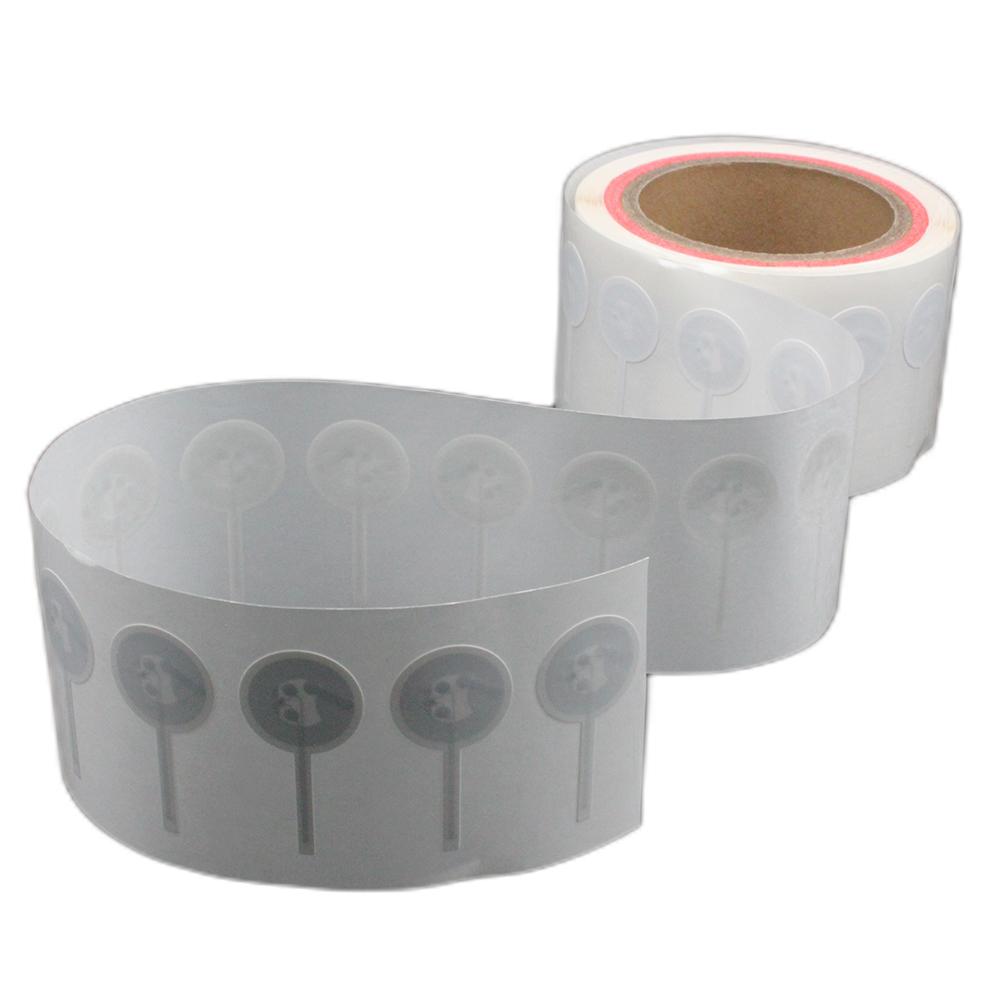
The shape and material of an inlay must respond directly to the object it will live inside. A curved metal card demands a flexible circuit that bends without cracking, while a rugged tool tracker exposed to moisture needs a sealed, corrosion-resistant antenna. Matching the inlay to the physical environment and functional expectations of the host is more than a practical step—it is what determines whether the tag performs reliably from day one or fails silently after a few uses.
Form factor choices ripple outward into every performance metric. A tiny, coin-sized inlay might fit inside a jewelry tag but sacrifices read range and memory. A long, narrow strip works beautifully on a tool handle but can warp if bonded to the wrong adhesive. Designers often find themselves balancing space constraints against the need for stable impedance, consistent chip wake-up voltage, and attachment durability. The trick lies not in picking the smallest possible footprint, but in identifying the geometry that aligns naturally with how the asset is handled, stored, and cleaned.
Different asset types also introduce competing requirements for surface materials. Glass, metal, carbon fiber, and liquid-filled containers each reflect or absorb RF energy in their own ways. An inlay that sings when mounted on cardboard can be completely deaf when placed against a metal housing. Tuning the antenna’s proximity to conductive surfaces, integrating intentional air gaps, or switching to a ferrite-backed design can salvage performance. But these fixes only work if they are considered early, during the design phase, rather than treated as last-minute patches.
Navigating Frequency Choices for Real-World Environments
Picking the right frequency for a wireless setup isn’t just about looking at spec sheets—it’s about understanding the terrain, the obstacles, and what you’re actually trying to accomplish. In a cluttered office with thick walls and metal fixtures, lower frequencies often pull ahead because they can slip through barriers that would stop higher bands cold. But that same low-frequency signal might struggle with data-hungry applications, leaving you balancing range against throughput in ways that no single number can solve.
Outdoors, the picture shifts again. A clear line of sight can make those higher frequencies shine, delivering crisp, fast connections that feel almost effortless. Yet introduce a storm, a row of trees, or a bustling urban canyon, and suddenly you’re reminded why real-world testing beats textbook theory every time. The trick is to align your choice not just with the environment as it stands, but with how it might change—seasonal foliage, new construction, shifting usage patterns.
There’s also the subtle art of coexistence. Frequencies don’t exist in a vacuum; your devices share the air with everything from weather radar to your neighbor’s baby monitor. A band that looks perfect on paper can turn into a cacophony of interference once you’re on site. Sometimes the best move is to survey the spectrum as it actually behaves, then match your hardware and protocols to the quietest corner you can find. It’s less about finding an ideal frequency and more about navigating the compromises you’re willing to make.
Material Science That Boosts Read Range and Durability
Advanced material formulations lie at the heart of extending read range without sacrificing tag longevity. By integrating low-loss dielectric substrates with precisely tuned conductive inks, modern RFID inlays maintain signal integrity even when attached to challenging surfaces like metal or liquid-filled containers. These materials minimize energy absorption and reflection, allowing the tag to harvest more power from the reader's field and respond effectively from greater distances. The result is a dramatic improvement in practical read range, enabling reliable performance in dense warehouses and open-yard logistics.
Durability demands materials that withstand physical stress and environmental exposure over years of use. Flexible yet robust polymer layers encapsulate the antenna structure, protecting against moisture, chemicals, and repeated bending without cracking or delamination. Recent innovations include self-healing encapsulation and anti-corrosion coatings that extend tag life in harsh industrial settings. This fusion of material science ensures that tags not only survive but maintain consistent electrical performance through temperature swings, UV exposure, and mechanical wear—eliminating the trade-off between ruggedness and read sensitivity.
Looking deeper, the synergy between dielectric properties and conductor geometry unlocks performance gains traditional tags cannot match. By manipulating the material's dielectric constant and loss tangent, engineers shape the antenna's impedance bandwidth and radiation pattern. This careful balancing act reduces detuning when tags are applied to irregular surfaces or exposed to nearby objects. Paired with nano-structured conductors that resist oxidation, these material-driven designs deliver a uniformly strong backscattered signal, translating to dependable long-range reads in real-world conditions where standard tags falter.
Streamlining Manufacturing Without Sacrificing Performance
Manufacturers often believe that cutting costs or accelerating timelines requires trading away product quality. That mindset is fading. New approaches rooted in materials science and process architecture are proving that swift, lean operations and uncompromised performance can coexist. By rethinking the sequence of fabrication steps and adopting precision forming methods, companies are eliminating waste while maintaining—or even improving—the toughness, tolerances, and longevity of their output.
Instead of relying on lengthy trial-and-error prototyping, teams are turning to physics-based simulation tools that model thermal behavior, stress distribution, and material flow in real time. This digital-first approach compresses development cycles and catches defects before any metal is cut. Designers can explore unconventional geometries that were once too risky or costly, arriving at lighter, stronger parts without the iterative drag that used to slow everything down.
On the factory floor, the real shift happens when automation is paired with adaptive monitoring. Rather than running lines at breakneck speed, smart systems adjust toolpaths, feed rates, and inspection routines on the fly, responding to subtle variations in raw materials or environmental conditions. Operators step into a supervisory role, focusing on edge cases that algorithms flag for human judgment. The result is a production line that stays lean not by cutting corners, but by targeting precision where it matters most—delivering components that meet tightest specs with minimal rework.
Real-Time Visibility: From Warehouse to Field Operations
Bridging the gap between where a product sits and where it’s needed next has always been a logistics headache. Real-time visibility changes that by offering a live feed of inventory movement—from pallets in the back of a warehouse to equipment dispatched to a remote job site. It’s not about periodic check-ins; it’s about an uninterrupted pulse on operations that lets teams spot trouble before it spirals.
Getting that level of insight leans on a mix of tools—think RFID tags pinging shelf locations, GPS on delivery vehicles, and rugged mobile devices in the hands of field crews. These systems talk to each other without manual middlemen, translating raw signals into a clear picture of what’s available, what’s in transit, and what’s already being used on-site. Instead of guessing or waiting for a phone call, decision makers can see exactly how much buffer they have.
The practical gains are hard to ignore. Stockouts at the warehouse stop turning into stalled projects in the field. Equipment gets to the right place faster because dispatchers can reroute based on live traffic or shift priorities mid-route. And when a customer asks for a status update, there’s no digging through paperwork—the answer is right there, making the entire supply chain feel more like a single, responsive unit.
FAQ
An RFID inlay is the functional core of an RFID tag, typically consisting of an antenna and a chip on a substrate. It communicates with a reader via radio waves to identify and track assets without direct line of sight. When attached to an item, it stores a unique identifier that can be read from a distance, making it ideal for real-time inventory and asset management.
Customized inlays are tailored to specific operational needs—factors like size, frequency, antenna design, and substrate material can be adjusted. This means they can be optimized for challenging surfaces (like metal or liquids), unique form factors, or environmental conditions that standard tags can't handle well. They deliver more reliable performance in demanding scenarios.
Almost any physical asset can benefit, but they're especially valuable for high-value items, equipment, tools, medical devices, retail inventory, and items in harsh environments. Custom inlays excel when you need to track assets that move through complex supply chains or require long read ranges and durability.
Typically, it starts with understanding your environment and goals—we look at the asset material, size constraints, reading distance, and environmental exposures like moisture or temperature. Then we design the antenna and select the chip and substrate. Prototypes are tested in conditions mimicking your actual use, and once validated, we move to production. The whole process is collaborative to ensure the final inlay performs exactly as needed.
The most common are HF (13.56 MHz) and UHF (860-960 MHz). HF works well for short-range, near-field applications like payment systems or access control. UHF offers longer read ranges and is better for supply chain and logistics tracking. The choice depends on your required read distance, data rate, and the regulatory environment of your region.
Durability is a key advantage of customization. We can use rugged substrates like polyimide or PET, and embed the inlay in protective layers to resist moisture, chemicals, extreme temperatures, and physical wear. With the right design, they can withstand years of use in manufacturing floors, outdoor storage, or even embedded in concrete.
The upfront design cost might seem higher, but the long-term benefits often outweigh it. Custom inlays reduce misreads, minimize tag replacement, and improve operational efficiency. For small businesses, we offer scalable solutions—starting with smaller batches and growing as your needs expand. The ROI comes from fewer lost assets and streamlined processes.
Healthcare (tracking medical equipment), manufacturing (tool tracking), logistics (parcel and container tracking), retail (inventory management), and energy (pipeline or equipment monitoring) are all heavy users. Essentially, any sector with valuable assets that move or need regular tracking can gain an edge.
Conclusion
Off-the-shelf RFID tags often stumble when faced with varied asset types, harsh environments, or unusual form factors. That’s why tailored inlays make the difference: a manufacturer specializing in custom designs starts by analyzing the exact physical and operational context of your assets—whether they’re metal containers, curved medical devices, or irregularly shaped tools. By tuning antenna geometry, substrate materials, and chip selection to each use case, the inlay achieves higher read reliability and range. Material science plays a central role here; advanced substrates and protective layers can withstand moisture, chemicals, and temperature swings while maintaining consistent RF performance. Instead of forcing a square peg into a round hole, engineers iterate on the inlay’s profile to fit within tight enclosures or embed seamlessly into labels, ensuring the tag never interferes with the asset’s primary function.
The journey doesn’t end with a working prototype. A skilled manufacturer balances precision fabrication with volume scalability, using automated assembly and rigorous inline testing to keep unit costs reasonable without cutting corners on quality. Choosing the right frequency band—HF, UHF, or a dual-mode approach—depends on read range requirements and the presence of liquids or metals in the surroundings; this decision alone can make or break system-wide adoption. Once deployed, these purpose-built inlays feed live location and status data into asset management platforms, granting operations teams real-time visibility from warehouse racking to remote field sites. The result is a tracking solution that feels native to the environment, not an afterthought, and delivers actionable insights that generic tags simply cannot match.
Contact Us
Contact Person: Esme Mo
Email: [email protected]
Tel/WhatsApp: 0086 191 2931 7837
Website: https://www.osrfidglobal.com/