

Healthcare RFID Wristband Distributor: Streamlining Patient Identification and Safety
2026-06-21
Every second counts in a hospital, and a misidentified patient can lead to disaster. RFID wristbands are changing the game—and BAOBI is the distributor making these life-saving tools accessible. Read on to discover how this simple innovation is streamlining patient safety.
The Problem with Traditional Patient ID Methods
Relying on names, birthdates, or partial identifiers to match patient records introduces a cascade of risks that can quietly undermine care quality. A single typo during registration—a transposed digit or misspelled surname—may spawn a duplicate file, scattering critical clinical data across two unlinked profiles. Over time, these splits multiply: one person ends up with fragmented lab results, conflicting allergy entries, and incomplete medication histories, making it increasingly difficult for clinicians to trust the chart in front of them.
The legacy approach also breaks down when patients share overlapping traits. In large health systems, it is not uncommon to find dozens of individuals with identical names or birthdates, leaving staff to rely on guesswork or manual cross-references. Even with sophisticated matching algorithms, the lack of a single, universal identifier means that records from different facilities often stay isolated, forcing duplicate tests and delaying urgent interventions. Each missed link chips away at the continuity that safe care demands.
Beyond operational headaches, these patient ID gaps carry a hidden financial and ethical weight. Overlays—where two people’s records merge into one—can lead to dangerous misdiagnoses, while underlays leave treatable conditions unnoticed. Meanwhile, organizations pour resources into deduplication teams and retrospective cleanup projects that never fully catch up. The underlying issue is not a lack of effort but a foundational design flaw: stitching identities together with fallible, non-standardized data will always struggle to keep pace with the complexity of modern healthcare.
Why RFID Wristbands Are a Step Up
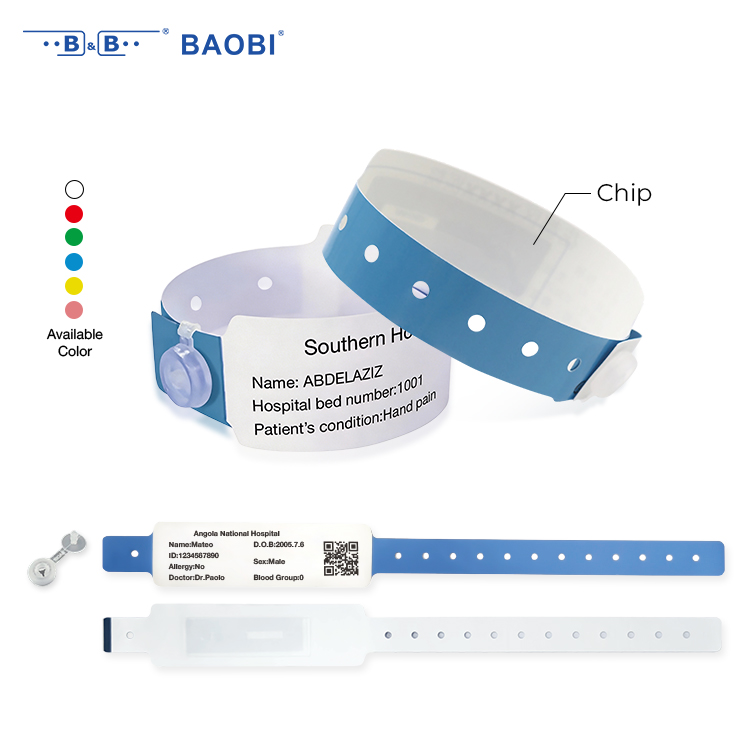
Traditional wristbands have long served as basic identifiers, but they come with clear limitations—they tear, get lost, or can be easily duplicated. RFID wristbands change that by embedding a tiny chip that carries unique data, turning a simple band into a smart tool. Whether at a music festival, a resort, or a conference, these bands streamline check-ins, slash wait times, and let guests move through experiences without fumbling for tickets or cash. It’s a quiet shift from manual validation to seamless interaction.
Beyond convenience, RFID wristbands add a layer of safety and real-time control that traditional options can’t match. Organizers can instantly deactivate lost bands, monitor crowd flow, and process cashless payments with a tap—eliminating the need for bulky wallets. For attendees, it means less time in lines and more time enjoying the moment, whether that’s grabbing a drink or accessing exclusive zones. The technology works in the background, so the focus stays on the event itself, not the logistics.
Making the Switch: Integrating RFID into Hospitals
Hospital staff often spend precious minutes hunting down infusion pumps or wheelchairs, delays that can ripple through patient care. RFID promises to quiet that chaos by giving every critical item a digital voice, so location becomes a glance at a screen rather than a floor-wide search.
The transition isn't a flick of a switch. It starts with tagging thousands of assets and mapping out zones where readers will live. Staff need to trust the data, which means early days often involve parallel tracking—old habits and new tech running side-by-side until confidence builds. Yet once that trust settles, the rhythm changes: fewer phone calls panicking about missing crash carts, more time at the bedside.
Beyond finding things faster, RFID quietly reshapes safety protocols. Automatic temperature logging for blood bags, alerts when a scrubs rack dips below par, or instant checks on surgical tool sterilization cycles all happen without someone squinting at a clipboard. It’s these small, relentless nudges that turn a chaotic hospital into a smoother, safer place.
Keeping Patient Data Safe with RFID
Radio frequency identification technology is transforming how hospitals manage sensitive information by embedding encrypted patient identifiers directly into wristbands or implantable tags. This approach limits exposure during data transmission because only authorized scanners can decode the unique signal, slashing the risk of interception that plagues traditional barcode or clipboard methods. The tags don't broadcast personal details openly; instead, they trigger a secure lookup within the hospital's internal system, ensuring that a lost or stolen band reveals nothing exploitable on its own.
Beyond basic identification, modern RFID systems incorporate dynamic authentication tokens that expire after a single use or a short time window, much like the shifting codes in online banking. This means even if a malicious actor somehow captures a transmission, the data becomes worthless almost instantly. Clinicians can also set granular permissions, granting laboratory access to a blood sample ID while blocking financial details, which prevents accidental or intentional snooping across departments.
The physical nature of RFID adds another layer of protection: patients carry their encrypted key, creating a tangible barrier to remote cyberattacks that target centralized databases. Audit trails built into the backend log every scan with a timestamp and user ID, deterring internal misuse and simplifying breach investigations. By merging something the patient has—the tag—with system-side encryption, healthcare facilities build a defense that remains robust without slowing down critical care.
Real Results: Hospitals Using RFID Wristbands
Several hospitals have seen measurable improvements in patient safety after adopting RFID wristbands. One facility reduced medication administration errors by nearly 40% within six months of implementation, as automatic identification ensured the right patient received the right dose at the right time. Nurses reported greater confidence in bedside verification workflows, which directly translated to fewer adverse events and near-misses.
Operational efficiency has also shifted noticeably. Another medical center halved the time spent on patient identification checks during admission and discharge processes. Staff no longer rely on manual data entry or visual checks alone; instead, a quick scan pulls up complete, accurate records. This freed up hundreds of nursing hours per month, allowing clinical teams to spend more time on direct patient care rather than administrative tasks.
Beyond safety and speed, these wristbands cut costs tied to duplicated tests and billing mistakes. One pediatric hospital saw a 25% drop in duplicate lab orders after linking wristbands to its electronic health record system, because clinicians could instantly verify what had already been done. Families expressed relief at fewer unnecessary blood draws, and the hospital's revenue cycle team noted cleaner claims with fewer denials rooted in mismatched patient data.
What's Next for RFID in Healthcare?
RFID is quietly weaving itself into the fabric of everyday clinical operations, and the next chapter looks less like a technology rollout and more like a shift in mindset. Hospitals are starting to treat real-time location data not as a tracking tool for expensive equipment, but as a pulse that reveals workflow bottlenecks, patient flow patterns, and even staff burnout risks. Rather than buying another standalone system, forward-thinking health systems are embedding RFID into existing nurse call platforms, electronic health records, and building management systems so that alerts and insights surface naturally—without adding another screen for clinicians to monitor.
The hardware itself is evolving in ways that will make hospital deployments far less intrusive. New battery-free, flexible RFID tags can now be safely attached to surgical instruments, linen, and even disposable supplies, surviving repeated sterilization cycles and harsh cleaning agents. Meanwhile, the rise of ultra-wideband (UWB) and array-based readers means location accuracy can reach the sub-room level, allowing nurses to instantly verify whether a crash cart is inside bay 3 or just outside the door. This granularity, combined with edge computing that processes data on-site, reduces latency and privacy concerns, making real-time alerts actionable for code teams and fall prevention programs.
Perhaps the most understated shift is happening in the supply chain. As RFID becomes a standard feature in pharmaceutical packaging and single-use device shipments, hospitals are moving from periodic cycle counts to a “smart shelf” model where stock levels are replenished automatically based on usage patterns, not par levels. This quietly eliminates the Monday morning scramble for orthopedic trays and cuts down on waste from expired products. In the background, machine learning models sift through years of location and consumption data to predict demand spikes before they happen, turning RFID from a reactive tool into a proactive planning engine that helps administrators stress less about shortages and focus more on patient throughput.
FAQ
It’s a wearable band embedded with a tiny radio frequency chip that stores patient data, allowing quick scanning to pull up medical records, allergies, or treatment details instantly. Instead of relying on printed charts or barcodes that can smudge or tear, staff simply use a handheld reader to confirm identity at every step of care.
Traditional wristbands often use barcodes that need a direct line of sight and can be hard to scan if the patient moves. RFID doesn’t require that—it reads through clothing and bed linens from a few feet away, cutting down the time nurses spend trying to get a clean scan and drastically lowering the chance of pulling up the wrong chart.
They link every medication, blood draw, or procedure directly to the wristband, triggering an alert if there’s a mismatch, like a wrong drug or dose. This real-time verification catches errors before they reach the bedside, and in emergency rooms, it helps track patient location so no one is ever misplaced during busy shifts.
Look beyond the tag price—ask about durability for bath and scan use, how well their system talks to your EHR, and whether they offer training support. A distributor that can show field-proven accuracy rates and handle bulk, on-demand orders without long backlogs is usually the safer bet.
Most quality distributors design their tags and readers to slot into common hospital information systems via HL7 or FHIR interfaces. It may take a bit of backend mapping, but once set up, the wristband data flows directly into the existing patient record, so nurses don’t have to learn a separate app.
The chip itself carries only a unique ID number, not full medical details, so if a band is lost, no one can read personal health data off it without hospital system access. Facilities usually add encryption layers and disable the tag upon discharge to keep any signal from being picked up outside the building.
They’re built to handle soap, water, alcohol wipes, and constant rubbing against bed rails without degrading. Most brands use medical-grade silicone or coated synthetics that stay readable for weeks, even for patients with active lifestyles or those in rehab who leave the room regularly.
Reduced manual ID checks and fewer adverse drug events quickly offset the initial hardware investment. Beyond that, staff spend less time on paperwork and more on care, bed turnover can improve because discharge processes are streamlined, and you see less waste from canceled lab tests or redrawn bloodwork due to misidentification.
Conclusion
For years, hospitals relied on handwritten wristbands and barcode scanners to identify patients, but these methods carried risks—smudged ink, peeled labels, or simply illegible writing could lead to dangerous mix-ups. The introduction of RFID wristbands changes this by embedding a tiny chip that stores encrypted patient data, allowing instant and accurate identification with a simple wave of a reader. Making the switch is not just about buying new bands; a dedicated distributor helps hospitals choose the right RFID tags, integrate them with electronic health records, and train staff to use the system effectively. This hands-on support turns a complex technological upgrade into a smooth process that minimizes disruption to patient care.
Security concerns around digitizing patient information are valid, but modern RFID wristbands use advanced encryption and only store a unique identifier, not full medical records, with access managed through secure hospital networks. Real-world outcomes have been convincing: hospitals report fewer identification errors, shorter wait times in emergency departments, and increased throughput in surgical wards. As the healthcare sector continues to embrace digital transformation, RFID is poised to become a backbone for smarter workflows, from automated medication verification to real-time location tracking that enhances both patient safety and staff productivity. The focus now shifts toward interoperability and cost reduction, making the technology accessible even to smaller clinics.
Contact Us
Contact Person: Bill Xu
Email: [email protected]
Tel/WhatsApp: 8618688898707
Website: https://www.baobitech.com/