

How Gear Turbo Air Compressors Work: Core Principles Unveiled
2026-07-23
Ever wondered what makes modern compressed air systems so efficient? The secret lies in gear turbo air compressors, where precision engineering meets raw power. In this post, we’ll break down the core principles behind these machines, revealing how they deliver unmatched performance. And if you’re looking for cutting-edge solutions, Seize Air stands at the forefront of this technology—redefining reliability one revolution at a time.
What Really Happens Inside a Gear Turbo Air Compressor?
The moment air slips past the inlet valve, it’s funneled straight into the heart of the machine—a pair of precisely machined gears spinning in a tight, oil-cooled embrace. These aren’t ordinary gears; they’re cut with a helical twist, designed to mesh so smoothly that the rotor blades barely kiss each other. As the drive shaft turns, the male rotor accelerates the female rotor to outrageous speeds, often hovering north of twenty thousand RPM. That motion doesn’t just push air forward—it traps it in the narrowing cavities between the lobes, squeezing each pocket tighter by the millisecond.
Inside the compression chamber, things get violent in a quiet way. The trapped air has nowhere to escape, so its molecules slam together faster and faster, turning kinetic energy into raw heat. Temperatures can spike above two hundred degrees Celsius before the air even leaves the rotor block. That’s why a wall of oil is constantly injected—not just for lubrication, but to seal the microscopic gaps and carry away the thermal overload. The gears never actually touch; they float on a film of pressurized oil, which also catches dust and dampens the scream of high-speed steel. Every revolution refines the chaos.
By the time the compressed stream blasts out of the discharge port, it’s been transformed into a dense, usable force—cooled, filtered, and dried further down the line. But the real magic happens in that split-second squeeze between the rotors, where simple physics meets deliberate engineering. The gear train doesn’t just transfer power; it coordinates a rhythmic pulse that turns atmospheric air into stored energy, ready to spin tools, inflate tires, or drive automated assembly lines. It’s a brutal ballet of speed, heat, and precision hidden inside a cast‑iron shell.
The Gear Advantage: Why This Design Outperforms Traditional Compressors
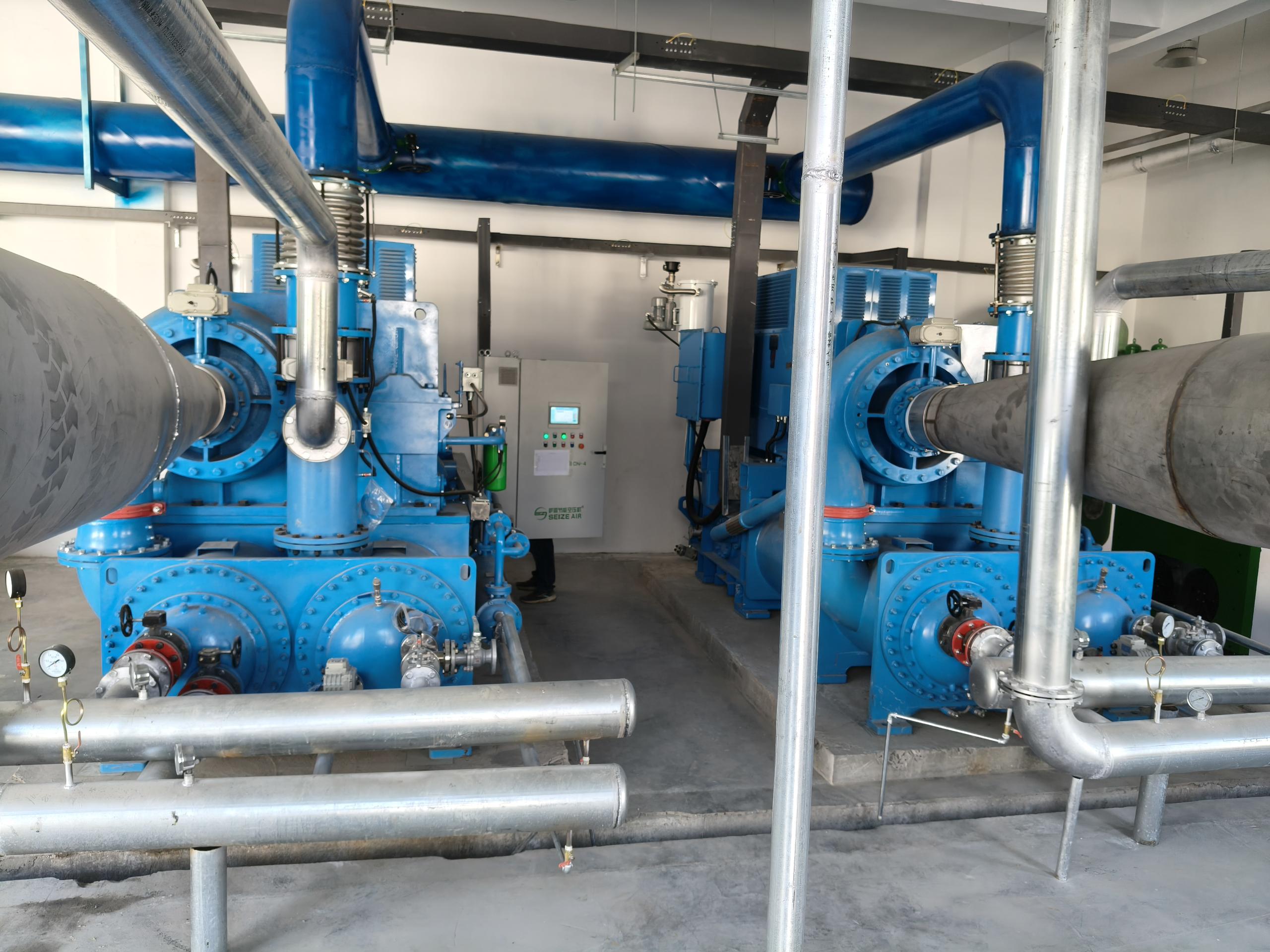
Gear-driven compressors eliminate the belt slippage and energy loss that plague older belt-driven models. By meshing the motor directly with the pump via precision-cut gears, power transfer stays consistent even under heavy loads, which translates into faster pressure recovery and fewer cycles per day.
That direct connection also cuts down on the maintenance headaches you’d expect from belts stretching, cracking, or needing constant alignment. Without those wear items, the system runs cooler and quieter over time, while the oil-lubricated gear interface handles the kind of stop‑start demands that would shred a belt in weeks.
Another overlooked benefit is compactness. Because gears don’t need the bulky shrouds and tensioners belts require, manufacturers can package more horsepower into a smaller footprint, giving you a unit that works in tight spaces without sacrificing durability or air output.
Breaking Down the Compression Process, Step by Step
At its core, compression is about spotting redundancy and making it vanish. Imagine a block of data as a sprawling text file where certain patterns repeat endlessly. The first step is to scan this data, identifying sequences that appear over and over. Rather than storing each occurrence, the algorithm assigns a shorter placeholder. This is often achieved through dictionary-based methods, where a lookup table maps recurring strings to compact codes. It's a bit like developing a shorthand for your notes—only the shorthand is optimized by a machine that counts every fragment and calculates the most space-saving substitutions.
Once the data is mapped, the real transformation begins. The compressor replaces the original redundancies with their corresponding codes, effectively shrinking the footprint. But it doesn’t stop there. To squeeze out every last bit of waste, many modern tools apply an entropy coding stage. Techniques like Huffman or arithmetic coding analyze the frequency of each symbol in the now-encoded stream, giving shorter bit strings to the most common ones. It’s a meticulous process, like packing a suitcase using a vacuum bag: first fold and roll, then compress the air out until everything fits snugly into the smallest possible space.
What makes this so fascinating is the interplay between speed and efficiency. A fast compressor might skim through the data, making quick decisions about what to shorten, while a more thorough one will spend extra cycles hunting for optimal patterns. The result is the same: a file that restores perfectly to its original state when decompressed. Behind every ZIP archive or streaming video is this delicate dance of analysis and encoding—a step-by-step breakdown that turns raw data into a neatly packed digital parcel, ready to travel across networks or sit quietly on a drive, taking up barely any room.
How a Simple Gear System Transforms Air Pressure
At its core, a gear system designed to harness air pressure relies on the interplay between mechanical advantage and pneumatic force. Compressed air enters a chamber, pushing against a piston or vane. This linear motion is then converted into rotational energy through a rack-and-pinion or crank mechanism. The gears amplify the force, allowing a small volume of air under pressure to produce substantial torque. It’s a dance of physics where the compressor stores energy in molecular collisions, and the gears release it in precise, controllable bursts.
What makes this transformation particularly ingenious is how different gear ratios can adapt the output for tasks ranging from delicate instrument adjustments to heavy-duty industrial work. A large driving gear meshing with a smaller one multiplies speed, ideal for quick actuation in pneumatic tools. Conversely, a reduction gearset trades speed for power, enabling a modest air stream to lift or press with surprising strength. The system’s beauty lies in its simplicity: no complex electronics, just well-machined teeth meshing under the steady rhythm of pressurized air.
In practice, this principle powers countless devices. Consider an air ratchet wrench: the trigger releases compressed air, spinning a turbine-like gear assembly that delivers high torque without the bulk of an electric motor. Or think of pneumatic actuators in automated assembly lines, where gear-driven rotations precisely index components into place. Even in nature-inspired designs, engineers mimic the efficiency of biological systems—using air pressure and gears to create smooth, lifelike motion in prosthetics or robotics. The transformation is a quiet, often overlooked marvel that keeps industry breathing.
The Ingenious Engineering That Boosts Efficiency
It starts with a fundamental rethinking of motion. Rather than simply scaling up traditional designs, the latest systems harness harmonic drive principles to deliver torque with almost zero backlash. This isn't just a subtle refinement—it’s a leap that lets joints move with the fluid precision of a human wrist, yet maintain the relentless repeatability that automated workflows demand.
Thermal management has been quietly revolutionized as well. By embedding microfluidic channels directly into structural components, heat is wicked away from critical zones before it can sap performance. The result is a platform that sustains peak output far longer, sidestepping the gradual degradation that plagues lesser machinery. It's an approach borrowed from jet engine design, now miniaturized and integrated so seamlessly you’d never know it was there.
Then there’s the adaptive software layer that ties it all together. Instead of rigid, pre-programmed cycles, the system reads real-time load feedback and adjusts its kinematics on the fly. Think of it as a mechanical intuition—anticipating stress, redistributing effort, and always nudging toward the most efficient path. This synergy of hardware and intelligence doesn’t just cut energy consumption; it redefines what’s possible in constrained environments.
Real-World Applications Where Gear Turbos Shine
In the mining sector, gear turbos pull double duty on haul trucks navigating punishing terrain. Their mechanical sympathy with constant load fluctuations means less heat soak and fewer mid-shift cooldowns, keeping ore moving when schedules are tight. Operators notice the difference in how smoothly the power arrives, especially crawling up steep inclines with a full bed of rock.
Marine engineers lean on gear-driven turbos for workboats that idle more than they plane. The direct gear connection helps manage the surge and lag that can make docking a handful, giving precise throttle response in tight harbors. It’s one of those subtle upgrades that captains appreciate when maneuvering in heavy currents without waking the crew.
On the farm, tractors and harvesters with gear turbo systems run hour after hour in dust and chaff without skipping a beat. The setup shrugs off the constant RPM changes of baling or plowing, delivering consistent boost that cuts fuel use per acre. Mechanics like them because they rarely need to touch the turbo between seasonal overhauls.
FAQ
A high-speed gear system connects the motor to the impellers, spinning them at optimal speeds to force air into a smaller space.
After each compression stage, the air passes through an intercooler that drops its temperature, making the next compression cycle require less energy and preventing overheating.
They deliver a continuous flow of oil-free air, handle higher capacities with less vibration, and need significantly less maintenance over time.
The impellers accelerate the air outward using centrifugal force, converting velocity into pressure within the diffuser and volute casing.
By splitting the compression into two or three stages with cooling between them, the machine reaches target pressure more efficiently while avoiding thermal stress on components.
Regularly checking and replacing the oil in the gearbox and monitoring vibration signatures helps catch bearing wear before it leads to unexpected downtime.
Gears allow the impellers to rotate at speeds much higher than the motor's RPM, matching their best efficiency point and reducing power waste compared to direct-drive setups.
The integrated gearbox is the heart of the design, enabling compact multi-stage compression with optimized impeller speeds, whereas a standard centrifugal unit often uses a single shaft with limited speed flexibility.
Conclusion
At the core of a gear turbo air compressor lies an elegant interplay between rotational force and cascading compression stages. As air enters the system, it flows through a synchronized gear-driven impeller that spins at remarkably high speeds—often surpassing tens of thousands of RPM. The key distinction here is the precision-machined gear pairs that maintain perfect timing between multiple stages, ensuring that each increment of pressure builds seamlessly upon the last. Unlike conventional screw or piston designs, this approach dramatically reduces internal leakage and thermal inefficiency. The air, caught between interlocking lobes and the housing, undergoes a continuous yet segmented squeeze: each rotation traps a fresh volume, compresses it against a progressively tighter clearance, and pushes it onward. This method not only stabilizes outlet pressure but also minimizes pulsation, yielding a near-constant flow that downstream equipment can rely on.
What genuinely sets the gear-driven turbo design apart is how it transforms a simple mechanical principle into a leap in operational efficiency. By pairing advanced helical or spur gears with aerodynamically profiled rotors, the compressor achieves an exceptionally high power-to-weight ratio while running cooler and quieter. The step-by-step pressurization, often distributed across two or three stages with intercooling, allows the machine to handle demand spikes without the abrupt wear seen in older models. This dual focus on durability and energy conservation opens it to demanding environments—from automotive turbochargers and fuel-cell air supply to industrial air separation and pneumatic conveying. In each setting, the compressor’s ability to deliver consistent, oil-free air with reduced maintenance makes it an engineering standout, proving that sometimes the most profound innovations come from refining the mechanics that already turn our world.
Contact Us
Contact Person: Mia
Email: [email protected]
Tel/WhatsApp: +86 19821985894
Website: https://www.seize-air.com