
Industrial AGV Bin Manufacturing: Insights from a Leading Chinese ODM
2026-07-12
Ever wondered who actually builds the sturdy bins that keep industrial AGVs rolling smoothly through warehouses? It's rarely the big-name robot makers. Behind the scenes, specialized manufacturers like Lanyuda shape the sheet metal that carries everything from electronics to automotive parts. But not all bins are equal—material gauge, weld integrity, and coating choices can make or break an automated system. In this post, we pull back the curtain on AGV bin production, sharing unpolished insights from a leading Chinese ODM that has been quietly engineering these workhorses for years.
The Rise of Custom AGV Bins
Not long ago, automated guided vehicles relied on a handful of standardized bin designs that were meant to handle everything from small parts to bulky assemblies. The one-size-fits-all approach seemed efficient on paper, but in practice it created constant friction—parts shifted during transit, delicate components arrived damaged, and workers spent precious minutes improvising foam inserts or strapping down loads. The limitations became impossible to ignore as production lines grew more diverse and cycle times tightened.
What started as a trickle of specialized requests from automotive and electronics manufacturers has swelled into a mainstream shift. Custom AGV bins are now being shaped around the exact contours of the items they carry, using materials and geometries selected for weight, center of gravity, and even the gripper type of a collaborative robot at the other end. This isn’t just about adding dividers; it’s a complete rethinking of how a bin interfaces with both the vehicle and the production environment.
Facilities that made the switch are finding that the right bin design does more than protect products. It shortens docking times because the AGV doesn’t need to adjust for a poorly seated load, and it slashes the silent cost of repackaging between process steps. As more companies map their entire material flow instead of isolated segments, the demand for bins that fit like puzzle pieces will only accelerate, turning what once seemed like a luxury into a baseline expectation.
Material Mastery: Steel vs. Aluminum
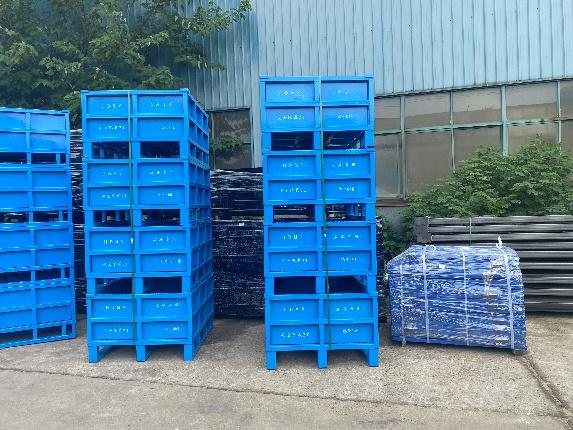
Steel carries a presence that’s hard to ignore—its weight, its cool touch, the way it weathers storms with quiet resolve. When you hold a steel tool, you feel generations of forging behind it. It bends, but only after a long argument, and that stubbornness makes it a darling of structures that must not fail. Yet this strength comes with heft; steel anchors itself in place, a grounding force that thrives where permanence is prized.
Aluminum, on the other hand, slips through your fingers—a shape-shifter that catches light and laughs at corrosion. It’s the material of flight, of sleek laptops and coffee cups that don’t weigh down your morning. Malleable enough to be extruded into intricate profiles, it transforms constraint into agility. The trade-off is a quiet one: aluminum fatigues differently, its memory of flexing eventually catching up, a reminder that lightness asks for careful design.
Choosing between them is less about specs and more about the story you want to tell. Steel whispers resilience and raw industry; aluminum sings of speed and modern ease. Neither owns the stage entirely—they are partners in a quiet dialogue, one that shapes the bridges we cross and the vehicles we trust. The mastery lies not in picking sides, but in reading what a project truly needs beneath the surface.
Precision Engineering Behind Every Weld
Every weld starts long before the first spark—it begins in the digital blueprint, where tolerances down to the micron are mapped and simulated. Our systems don’t just follow a path; they predict material behavior, adjusting heat input and travel speed in real time to account for subtle variations in thickness or grain structure. It’s a dialogue between software and metal, where algorithms continuously refine the arc, ensuring each pass lands with an artisan’s intent, minus the unpredictability of human hands.
Behind the curtain, sensors act as a second pair of eyes—thermal cameras track the cooling puddle, laser profilers scan the joint geometry mid-weld, and acoustic monitors listen for the slightest hint of porosity. This data streams into adaptive controllers that tweak parameters hundreds of times per second, turning what could be a coarse industrial process into something closer to surgery. The result is a fusion zone that’s not just strong, but metallurgically optimized, free from the hidden stresses that often haunt less meticulous assemblies.
That obsession with precision translates directly to the finished product. Joints that survive fatigue testing beyond industry norms, structures that hold their form after decades of thermal cycling, and a consistency that makes post-weld inspection a formality rather than a necessity. It’s engineering that doesn’t just meet the specification—it quietly exceeds it, weld after weld, without ever drawing attention to itself.
Load Capacity and Real-World Durability
When a rack is pushed to its limits day after day, the numbers on a spec sheet start to mean less than the scars it earns along the way. Load capacity isn't just a theoretical ceiling — it's a promise that gets tested by uneven floors, hurried forklift operators, and the occasional overload that no one planned for. A well-engineered system reveals its character when the beams hold steady under shifting weight, and the uprights refuse to twist even after years of subtle impacts. It's in these unscripted moments that real durability separates the reliable workhorse from the one that needs constant babysitting.
The key lies in how the structure manages stress over time. Welded joints that look fine on day one might develop hairline fractures after a few thousand load cycles, while a bolted connection with proper torque actually tightens its grip under vibration. Frame bracing that feels rock-solid in a showroom can loosen imperceptibly until a side-load reveals the slop. These aren't flaws a static rating can capture — they only surface when the rack has been through seasons of hot, cold, damp, and dry, with pallets dropping a little harder each shift. The racks that endure are the ones designed with a healthy dose of over-engineering in the spots that take the most punishment.
A practical way to gauge this resilience is to look for design choices that prioritize longevity over minimal material cost. Thick baseplates with generous footprints spread impact loads before they chew into concrete. Beam profiles that resist twisting without relying on fragile end connectors. Coatings that don't just look good but actually stop rust at scratches. These details don't make headlines, but they're what turn a safe working load into a safe working life. No one notices a rack that simply does its job without complaint — and that's the whole point.
Smart Bins: Integrating Sensors and IoT
Smart bins represent a leap forward in waste management by embedding sensors that monitor fill levels, temperature, and even the type of waste deposited. These connected receptacles leverage IoT networks to relay real-time data to sanitation crews, enabling dynamic collection routes that prioritize nearly full bins while skipping empty ones. This not only reduces fuel consumption and operational costs but also minimizes overflow in public spaces. By creating a responsive system rather than a fixed schedule, cities can handle fluctuating waste generation without unnecessary truck rolls.
The integration goes beyond simple alerts—advanced models incorporate compaction mechanisms powered by solar panels, further increasing capacity and reducing collection frequency. Some bins are equipped with public-facing interfaces that provide feedback on recycling habits or display local environmental information, turning a mundane object into an interactive hub. The data streamed from these bins feeds into municipal dashboards, offering insights into waste patterns that can inform long-term planning, such as where to place additional receptacles during events or peak seasons.
On a broader scale, these sensor-laden bins form a mesh that captures hyperlocal trends, from a spike in coffee cup disposal near office parks to increased packaging waste in residential blocks. By analyzing this data, communities can tailor recycling education campaigns and measure their impact over time. The technology also paves the way for pay-as-you-throw pricing models, where households are charged based on actual waste generated, encouraging reduction at the source. Ultimately, smart bins transform a once passive infrastructure into an active participant in resource management, bridging the gap between daily disposal habits and city-wide sustainability goals.
Why a Specialist ODM Beats General Fabricators
When you work with a general fabricator, you're often just another job in the queue. They might handle everything from automotive parts to kitchen equipment, leaving little room for deep expertise in your specific product category. A specialist ODM, on the other hand, lives and breathes your niche. That focused experience translates into sharper insights on material selection, design nuances, and production bottlenecks—things that a generalist might miss entirely.
There's a quiet confidence that comes from dealing with a partner who doesn't need to climb a learning curve with every project. A specialist ODM has already refined their processes around a narrow set of challenges, meaning fewer surprises during prototyping and fewer compromises on quality. Instead of spending weeks educating a fabricator about your industry's unwritten rules, you can dive straight into innovation and fine-tuning the details that set your product apart.
The real difference often shows up in the small but critical moments—like when a design flaw is caught before tooling starts, or when a subtle change lowers cost without sacrificing durability. General fabricators simply can't accumulate that level of instinct. By going deep instead of broad, a specialist ODM becomes more than a supplier; they act as an extension of your own team, anticipating problems and unlocking opportunities that a scattergun approach would never uncover.
FAQ
An industrial AGV bin is a specialized container designed to be moved by Automated Guided Vehicles within factories or warehouses. It’s not just a regular tote—these bins are engineered for compatibility with AGV lifting mechanisms, allowing seamless transfer of materials without human intervention. They often feature reinforced bottoms, precise dimensions, and attachment points that let AGVs dock and transport them along predetermined routes, making them a key piece in lean manufacturing and intralogistics.
Chinese ODMs bring a mix of deep manufacturing expertise, cost efficiency, and rapid prototyping that’s hard to match. Because they specialize in design and production for other brands, they’ve already solved common engineering challenges—like integrating bins with multiple AGV models or using durable, lightweight materials. Plus, their supply chains are set up for scale, so you get consistent quality even with large orders, often at a fraction of the cost compared to domestic manufacturers in Europe or North America.
Most AGV bins are made from either high-density polyethylene (HDPE), steel, or aluminum, depending on the application. HDPE is popular for its impact resistance and low weight, which extends AGV battery life. Steel bins are chosen for heavy-duty environments—think automotive plants—where durability and fire resistance matter. Aluminum strikes a balance between weight and strength, and it doesn’t rust. The material choice directly influences how the bin handles static electricity, temperature fluctuations, and daily wear.
It starts with a deep dive into your AGV specs—lifting height, fork length, navigation type, and even the floor conditions. The ODM’s engineering team typically creates a 3D model of the bin with exact interface points for the AGV’s grippers or forks. They’ll often send a prototype for real-world testing on your AGV fleet. The goal is zero-clearance mistakes: the bin should sit snugly without wobbling, and the AGV should pick it up reliably every single time, even after thousands of cycles.
Absolutely. Customization is where ODMs really shine. For cleanroom use, they can produce bins from anti-static materials with smooth, crevice-free surfaces that won’t trap particles. For outdoor or cold storage, they might add UV stabilizers, reinforced corners, or drainage holes. Some bins even get RFID tags molded directly into the plastic for inventory tracking. You’re not stuck with a catalog design—the ODM will tweak everything from color to stacking features based on your workflow.
A leading ODM will have several checkpoints. Raw materials are tested for strength and consistency first. During production, they’ll monitor dimensions with laser measurement and check weld integrity on metal bins. Finished bins go through load tests (static and dynamic), drop tests, and often a cycle test where an actual AGV repeats docking motions thousands of times. The final inspection usually includes a surface finish check and a fit test with a reference AGV unit to guarantee interchangeability.
Conclusion
Industrial AGV bins have evolved from generic containers into highly customized components that directly impact the efficiency of automated guided vehicles. As the demand for tailored solutions rises, a leading Chinese ODM has been at the forefront, offering bespoke designs that accommodate unique cargo dimensions, vehicle interfaces, and environmental conditions. Material selection is a critical starting point: steel provides rugged durability and higher load-bearing potential, while aluminum offers a lightweight alternative that conserves battery life and facilitates faster cycle times. The ODM's deep material mastery ensures that each bin is engineered with the optimal alloy, thickness, and protective finishes to withstand demanding industrial environments, from dust and moisture to chemical exposure.
Precision engineering is evident in every weld and joint, where robotic welding and rigorous quality checks guarantee structural integrity even under extreme loads. Real-world durability is validated through rigorous testing that simulates years of heavy use, ensuring bins maintain their shape and functionality. Beyond mechanical strength, smart bins are increasingly integrated with sensors and IoT modules, enabling real-time inventory tracking, weight monitoring, and predictive maintenance—transforming a passive container into an intelligent asset. A specialist ODM stands apart from general fabricators by offering end-to-end expertise: from seamless integration with AGV docking mechanisms to compliance with industry standards, all while providing faster iteration cycles and cost efficiencies. This holistic approach drives the future of AGV bin manufacturing, where reliability, intelligence, and customization converge.
Contact Us
Contact Person: Johnny
Email: [email protected]
Tel/WhatsApp: +86 18151010686
Website: https://lydstorage.com