
Industrial Shredder Buying Guide: How to Choose the Right Machine
2026-10-29
When it comes to reducing waste volume, protecting sensitive data, or prepping materials for recycling, an industrial shredder is a serious investment—and getting it wrong can cost you more than just money. With so many configurations, blade types, and throughput capacities on the market, choosing the right machine often feels overwhelming before you even start comparing models. That's where this guide comes in. We'll walk you through the critical factors—from material type and particle size to maintenance and safety—so you can make a confident decision. And if you're looking for a manufacturer that combines heavy-duty construction with smart engineering, Shengzhong Shredder has been helping facilities worldwide match the right equipment to their exact needs. Let's break down what actually matters when you're on the buying journey.
Match the Machine to the Waste Stream
Every waste stream has its own character—size, moisture, abrasiveness, contamination levels. A shredder built for dry cardboard will choke on wet food scraps, and a compactor tuned for plastic film won't handle scrap metal. Matching the machine to the stream means starting with a clear picture of what actually arrives at your dock, not what you wish arrived. Look at particle size distribution, bulk density, and whether materials arrive loose, baled, or mixed together.
Once you know the stream's profile, you can weigh throughput demands against machine duty cycle. A high-volume but uniform paper stream might call for a single-stage shear shredder with a smaller motor, while a mixed construction and demolition stream needs a heavier rotor, replaceable wear liners, and a tramp metal system. Don't just size for peak volume—size for the toughest material that will pass through on a regular basis. Overbuilding wastes capital and energy; underbuilding leads to jams, breakdowns, and hidden labor costs.
Finally, think about the output you need. If the goal is landfill diversion, you may only need coarse reduction to free up space. If you're preparing feedstock for an anaerobic digester or an extruder, particle consistency matters more than raw throughput. Test with representative samples whenever possible—run material through a demo machine, measure the output screen, and check fines content. The right match isn't just about horsepower; it's about how the cutter geometry, screen size, and feed mechanism interact with your specific waste stream.
Don't Trust Throughput Numbers at Face Value
Throughput metrics look precise on a dashboard, but they often hide more than they reveal. A single number can be an average over a convenient window, a peak seen only under ideal conditions, or a theoretical maximum that never survives contact with real traffic. When that figure drives capacity planning or performance budgets, you're building on sand.
Different tools measure different things under the same label. One harness reports requests per second at the application layer, another counts bytes pushed through a load balancer, and a third samples kernel counters during a quiet period. Without knowing the payload mix, concurrency level, error rate, and duration of the test, the headline number is close to meaningless. Two systems can both claim 10,000 transactions per second while delivering wildly different user experiences.
The only way to trust a throughput figure is to pressure it with questions. Under what sustained load did it hold? What latency did users see at that throughput? How many requests failed silently or retried? Run your own tests with production-like traffic shapes, observe long enough to catch degradation, and treat vendor or benchmark claims as a starting point rather than a guarantee.
Single-Shaft vs. Dual-Shaft: The Split Nobody Explains
Most people assume a motor's shaft configuration is a minor detail, but the choice between single-shaft and dual-shaft designs quietly shapes everything from vibration levels to how easily a machine can be integrated into a larger system. A single-shaft motor puts all its rotational force out one end, which sounds straightforward until you realize that any belt, gear, or coupling must be mounted on that same side. This creates a longer overhung load and often demands a stiffer bearing arrangement just to keep deflection in check.
Dual-shaft motors, by contrast, expose the rotor from both ends, and that changes the mechanical conversation entirely. You can drive a load from one side while mounting an encoder, brake, or cooling fan on the other—no extra jackshaft or tricky alignment needed. The trade-off is rarely discussed: dual-shaft motors typically need a more balanced rotor and tighter manufacturing tolerances, because even a tiny imbalance gets amplified when both ends are doing work. For retrofits or space-constrained designs, that second shaft can be the difference between a clean solution and a packaging nightmare.
The real split no one explains is in maintenance and cost. Single-shaft motors are cheaper to produce and easier to seal against contaminants, but they force you to choose between adding an external feedback device or accepting less precise control. Dual-shaft units give you flexibility up front, yet the extra bearing and seal on the non-drive end become a long-term wear point. Before you pick one, ask not just what the motor will spin, but what else wants to attach to the rotor—because that's where the hidden costs and benefits live.
Blade Wear and Replacement: The Hidden Operating Cost
Most operators budget for fuel, insurance, and routine maintenance, but few track how quickly cutting edges lose their bite. A dull blade doesn’t just tear material—it forces the machine to work harder, burning extra fuel and stressing hydraulic components. Over a season, those small inefficiencies compound into a repair bill that never shows up on a standard cost sheet.
Replacement timing is usually reactive: wait until the edge is visibly rounded or chipped, then swap it. But by then, the hidden damage is already done. Smart fleets log hours per edge and compare wear patterns across job sites. That data often reveals that swapping blades a little early—before performance drops—actually lowers total cost per hour, even if the upfront spend feels higher.
What Happens When Something Unshreddable Goes In
Feeding something like a credit card, thick plastic, or a metal fastener into a standard shredder usually doesn't end quietly. The blades grab the edge, the motor strains, and within a second or two you either hear a grinding halt or a high-pitched whine as the machine tries to chew through material it was never meant to handle. Many shredders have thermal overload protection that shuts the motor down before it burns out, but the immediate result is still a jammed throat and a sheet of half-shredded paper stuck in place.
If the item makes it past the entry slot, the cutting heads can chip, misalign, or completely seize. That's when you start noticing uneven cuts on normal paper, a persistent rattling sound, or a shredder that reverses and stops every few seconds. Some models include a reverse function to help back the object out, but forcing it with repeated forward-reverse cycles often worsens the damage.
In most cases, the best move is to unplug the machine, remove any visible obstruction with tweezers or needle-nose pliers, and avoid testing it with another important document until the path is clear. If the blades are bent or the motor makes a burning smell, it's usually cheaper to replace a basic home shredder than to repair it.
Operator Safety Beyond the Stop Button
Emergency stops are often treated as the primary safeguard, but they only activate after a hazard has already emerged. A more layered approach uses area scanners, light curtains, and safety-rated PLCs to continuously assess risk in real time. These systems slow or halt motion before a worker can reach a dangerous zone, reducing reliance on a single red button.
Beyond hardware, operator safety depends on predictable procedures and shared awareness. Frequent drills, clear zone markings, and open channels for reporting near misses encourage a mindset where risks are caught early. When operators understand how a machine behaves under abnormal conditions, they can intervene without ever touching the stop control.
Design choices also remove hazards at the source. Fixed guards, interlocked access doors, and ergonomic layouts make dangerous contact physically unlikely. In such environments, the stop button becomes a backup rather than the first line of defense, shifting safety from reaction to prevention.
FAQ
Match the machine to your daily volume peaks, not just average loads. A shredder running near its upper limit constantly will wear out bearings and blades faster, so leave at least 20% headroom over your busiest shift.
The real trouble comes from mixed streams, not single materials. Check for abrasives, embedded metals, moisture, and whether the waste is brittle or elastic, because those factors change the cutters and screen sizes you need far more than the base material type.
It often decides whether downstream equipment works at all. If the output must feed a granulator, baler, or conveyor, specify a screen or sizing bar that guarantees a maximum dimension, otherwise you will find oversized pieces jamming the next stage.
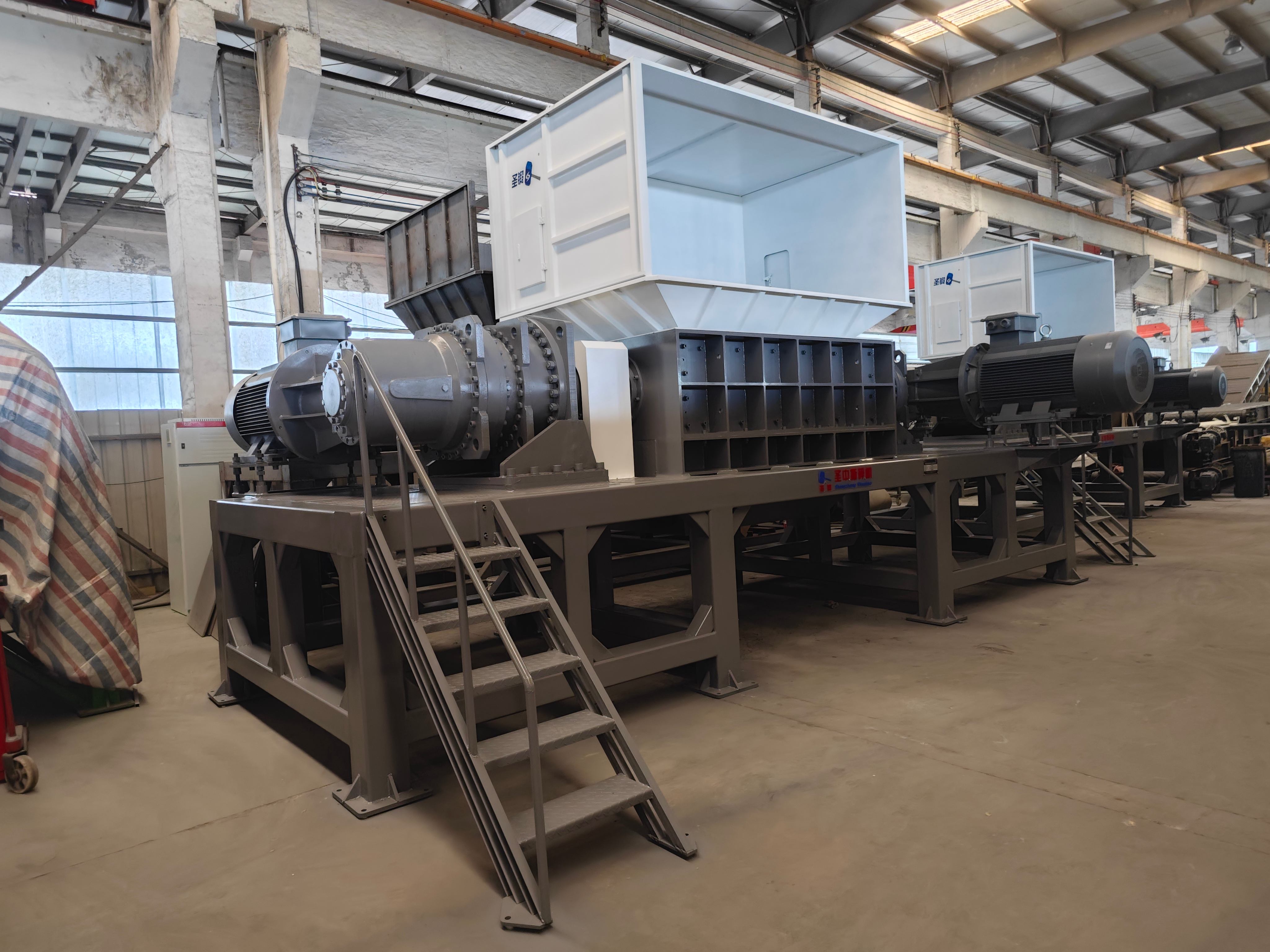
Single-shaft machines are better for getting a uniform small particle from relatively clean scrap, while twin-shaft and four-shaft designs handle bulky, contaminated, or hard-to-grip waste without wrapping around the rotor. Your waste profile should drive that choice.
Look past the sticker price at knife life, energy draw per ton, and access for maintenance. A cheap machine with hard-to-replace cutters and a high idle current can cost more in six months than a well-built unit costs over three years.
Ask about direct drive versus belt drive and the motor's service factor. Hydraulic drives tolerate reversals and shock loads better, but electric direct drives are more energy efficient. If you expect frequent jams, prioritise torque response over top speed.
Emergency stops at multiple points, locked access doors with sensors, and automatic reverse on overload should be baseline. Machines without rotor isolation during maintenance put operators at serious risk, no matter how good the cutting performance looks.
Custom hoppers, special cutter materials, or unusual throat openings pay off when your waste stream is stable and high-volume. For occasional or mixed jobs, a flexible standard machine with adjustable screens usually gives better return than an expensive custom build.
Conclusion
Buying an industrial shredder starts with figuring out exactly what you're feeding it. Match the machine to the waste stream—plastics, wood, metals, or mixed C&D—because a unit optimized for film scrap will choke on steel-belted tires. Don't take published throughput numbers at face value either. Those figures often assume ideal material, perfectly sharp blades, and continuous feeding. Real-world throughput can drop by 30-50% once you account for bulky items, operator pauses, and variable feedstock. That's why the single-shaft versus dual-shaft decision matters more than most sales sheets let on. Single-shaft machines excel at producing uniform particle sizes from relatively clean, homogeneous waste. Dual-shaft shredders handle tougher, mixed, or contaminated loads with less risk of jamming, but they usually need a secondary granulator if you want small, consistent output. If you pick the wrong architecture, you'll end up fighting the machine instead of processing material.
Then there's the cost nobody puts on the quote: blade wear. Knives dull with every ton, and replacement or resharpening can quietly eat 10-15% of your operating budget if you shred abrasive or metal-laced waste. Ask about blade life, rotation schedules, and whether the design allows quick access without a full teardown. Also, plan for the inevitable unshreddable object—a hardened bolt, a stray tool, a solid steel shaft. Does the machine have a reversible drive, shear pins, or an automatic overload reversal? Without those, one bad surprise can snap a rotor or destroy a gearbox. Finally, operator safety goes far beyond an e-stop. Look for interlocked hoppers, emergency cable pulls along the full length, lockout/tagout provisions, and dust/airborne metal controls. A shredder that's safe to clear and maintain is the one that keeps running without injuries or downtime.
Contact Us
Contact Person: Leon
Email: [email protected]
Tel/WhatsApp: 8615385558866
Website: https://www.shred-waste.com