

Lightweight Bendable Stone Wall Cladding Transforms Any Surface
2026-09-03
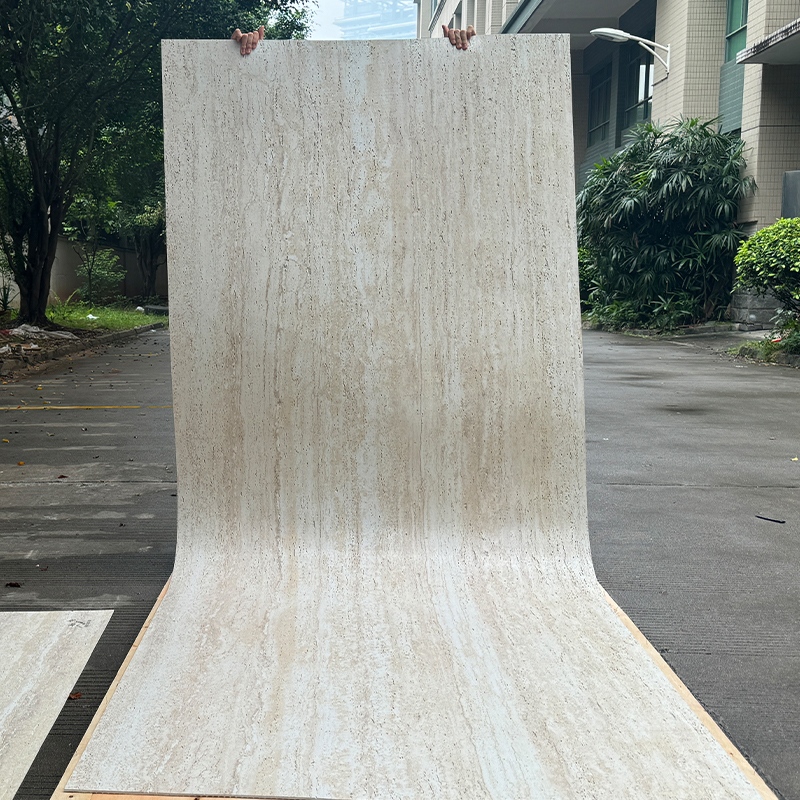
What if you could wrap a curved column, a dated backsplash, or even a piece of furniture in the rich texture of natural stone—without the weight, cost, or mess of traditional masonry? Magic Stone's lightweight bendable stone wall cladding turns that idea into a weekend project. It's real stone, sliced thin and backed with a flexible carrier, so it bends, cuts, and installs on almost any surface you can imagine. Suddenly, stone isn't just for new builds or major renovations—it's for the walls, ceilings, and details you've been staring at, wondering how to make them unforgettable.
Why This Stone Veneer Doesn't Crack on Curves
Most stone veneer cracks on curves because rigid panels can't follow a radius without snapping at the mortar line. This product uses a thin, fiber-reinforced backing that lets each individual stone piece shift just enough to wrap a tight arc. The joints stay intact because stress is spread across dozens of small flex points instead of concentrating at one bend.
Installers also appreciate the pre-scored segments on the back, which break cleanly along controlled lines to fit convex and concave surfaces without forcing the material. The polymer blend in the stone mix has a slightly higher elongation rate than standard cement-based veneer, so it absorbs the micro-movements that normally lead to hairline cracks after the first temperature swing.
Weight Per Square Foot: What You'll Actually Lift
When people ask about weight per square foot, they're usually picturing a single tile or plank in their hand. A 12x12 ceramic tile might tip the scale at three to four pounds, which feels manageable. But that same tile represents one square foot of material, and once you start stacking a box of fifteen or twenty of them, the numbers climb fast. A box of porcelain tiles can easily hit sixty pounds, while natural stone like granite or marble often lands closer to eight to ten pounds per square foot. That means a box covering just ten square feet could weigh over eighty pounds, turning a simple carry from the car into a real workout.
What you actually lift depends less on the nominal per-square-foot figure and more on how the material is cut and packaged. Large-format tiles measuring 24x48 inches might weigh around five pounds per square foot, but a single piece that size is nearly thirty pounds and awkward to grip. Engineered wood planks in a carton feel different from a stack of cement board, even if their listed weights per square foot are similar, because the weight distribution and stiffness change how your arms and back handle the load. Smaller format mosaic sheets spread weight across a mesh backing, making each sheet light but the total project weight sneaky when you're hauling multiple boxes upstairs.
If you're planning a flooring or wall project, don't just multiply square footage by the per-square-foot number and assume you can handle it. Open a box before buying in bulk and lift it yourself—that's the real test. Factor in stairs, doorways, and how many trips you're willing to make. Contractors rarely move full boxes after the first hour on a job; they break them down into smaller stacks or use a dolly. Understanding the gap between the spec sheet weight and the physical reality of a taped-up carton with sharp corners saves your back and your schedule.
Surfaces That Were Never Stone-Ready Until Now
For years, the advice was blunt: if the surface wasn't bare cement board or raw masonry, stone simply wouldn't hold. Painted drywall, old tile, even sanded plywood were written off as too smooth, too porous, too unstable. The real problem wasn't the surface itself—it was the mismatch between rigid adhesives and surfaces that move, breathe, or shed moisture at different rates.
That changed when bonding moved away from one-size-fits-all mortars. New primers and flexible adhesives now create a transitional layer that grips without suffocating the wall. Surfaces that used to need backer board now get scuffed, sealed, and skimmed in a single afternoon. The stone stays put through seasonal shifts, and the prep finally matches the pace of a normal remodel.
The result is less demolition, fewer wasted materials, and a much shorter path from bare wall to finished stone. What used to be a structural dealbreaker is now just another surface waiting for the right prep.
How the Flexible Backing Keeps Everything in Place
Most people blame the adhesive when a patch or strip starts peeling, but the real culprit is often the backing. A rigid backing holds its shape while the surface beneath it shifts with temperature or vibration, and that mismatch creates stress at the edges. A flexible backing sidesteps this by bending with the surface. It gives just enough to stay in full contact, so the bond stays strong without cracking or lifting.
Flexibility also helps on surfaces that aren't perfectly flat. Instead of bridging over tiny bumps or grooves, the backing conforms into them, which spreads the holding force over a larger area. That means the edges don't curl up after a few days, and the whole piece feels anchored rather than floating. Over time, this small amount of give prevents the slow peel-back that happens when a stiff backing fights the material it's mounted on.
Cutting and Trimming With Just a Utility Knife
A utility knife cuts cleanly only when the blade does most of the work. Set the material on a flat, stable surface and use a metal straightedge for long straight runs. Pull the knife toward you in one steady motion while keeping the blade at a low angle, roughly 20 to 30 degrees to the surface. If the blade starts to wander or the material resists, stop and snap off the dull segment instead of pressing harder. Three light passes will leave a cleaner edge than one forced pass.
For trimming thin strips or shaving a door edge, hold the knife like a pencil and brace your index finger against the side of the blade housing. Work in short pull strokes rather than long pushes. This gives you enough control to follow a pencil line without cutting into the piece you want to keep. On laminates and veneers, score the line first with light pressure, then follow with two more passes. The shallow scoring pass prevents the blade from skating across the surface and gives the next cuts a track to follow.
Curved cuts need a different approach. Instead of twisting the knife, rotate the workpiece with your free hand while keeping the blade pointed straight ahead. For tight inside corners, make a relief cut from the waste side into the corner before trimming along the curve. When you finish, a few strokes with a fine sanding block or a cabinet scraper will remove the raised burr and leave the edge ready for paint or glue.
What Outdoor Weather Does to Bendable Stone Over Time
Bendable stone, though engineered for flexibility, still faces a slow negotiation with the weather. Daily temperature swings cause the material to expand and contract, but because it can flex slightly, the stress rarely builds into cracks the way it would in rigid stone. Instead, the surface develops a fine network of micro-undulations, almost like a fingerprint left by the sun’s daily passage.
Rain and humidity introduce another layer of change. Water seeps into the shallow pores, and as it evaporates, it leaves behind mineral traces that gradually alter the surface’s texture. In colder climates, repeated freeze-thaw cycles test the material’s tolerance—ice forms in tiny voids, presses outward, and then melts away, but the bendable matrix absorbs this pressure without splitting. Over years, the edges soften and the stone takes on a slightly worn, almost fabric-like drape.
Prolonged exposure to ultraviolet light works on the binder that holds the stone particles together. This is not a sudden failure but a quiet fading and a loss of surface sheen. The color may shift from cool gray to warm sand, and the outermost layer becomes more porous, inviting moss or lichen in shaded spots. In this way, outdoor weather doesn’t destroy bendable stone—it gradually rewrites its character, turning a manufactured product into something that feels locally weathered and alive.
FAQ
Regular stone veneer is heavy and brittle, often requiring professional installation. This product can be rolled and carried like thick wallpaper, cut with a utility knife, and does not need extra wall reinforcement.
The surface is formed from natural stone particles pressed into realistic patterns, with random texture and well-hidden seams. Up close it has the rough feel of stone, though it feels slightly warmer and softer to the touch.
Yes, that is one of its standout advantages. By gently warming the back or simply pressing along the curve, the panel conforms to columns, arches, and wavy walls without the cracking or popping off you get with rigid tile.
If you use a recommended exterior-grade adhesive and seal the edges properly, it handles high humidity, temperature swings, and UV exposure. For constantly wet areas like a shower floor, stick with traditional tile instead.
Most people can finish a feature wall in a weekend. You only need a tape measure, utility knife, adhesive, and a smoothing tool. The panels are light enough for one person to move, with no wet saws or mortar mixing involved.
The flexible base absorbs minor wall movement, so it won't crack the way rigid tile often does. If a larger structural crack appears, the panel may flex with it rather than shattering or falling off, though the damage will still be visible.
It is better to pick a stone color you already like because the mineral surface is not meant for standard paint. If you must change it, a specialized stone paint can work, but it will cover up part of the natural texture.
Regular dusting with a soft cloth or vacuum brush attachment is enough. For stains, use warm water with a small amount of neutral cleaner and a soft sponge. There is no need for waxing or periodic sealing.
Conclusion
The first time you handle a sheet of this bendable stone cladding, you notice two things: it weighs far less than you expected, and it gives under your hands without snapping. That combination changes where stone can go. Curved walls, rounded columns, awkward niches, and even cabinet fronts suddenly become fair game. The trick is a flexible backing that locks each thin stone piece into a tight, even pattern, so the surface bends as a unit instead of cracking at the joints. You can score it with a standard utility knife, snap a clean line, and wrap the offcut around a corner minutes later.
Because the panels are so light, you don't need special adhesives or heavy substrate prep. Drywall, plywood, painted surfaces, and even metal framing can handle the load without reinforcement. Outdoors, the stone holds up through rain, freeze-thaw cycles, and UV exposure, but the backing does the real work of absorbing movement. That means fewer popped seams and no brittle fractures when the building shifts. For anyone who has wanted real stone on a curved fireplace, a rounded exterior column, or a curved retail display, this material removes the old excuses and leaves the surface ready for cladding.
Contact Us
Contact Person: Vito
Email: [email protected]
Tel/WhatsApp: 86 13088879266
Website: https://www.magicstonemcm.com