

OEM NFC Solutions to Power Your Custom Hardware Projects
2026-10-24
When you're building custom hardware, every component matters—especially when it comes to wireless connectivity. OSRFID brings OEM NFC solutions that don't just fit your design; they power it. In this post, we'll explore how the right NFC module can turn your prototype into a production-ready product without the usual integration headaches.
NFC Blocks That Fit Your Hardware—Not a One-Size-Fits-All Chip
Standard NFC chips impose fixed antenna designs and memory layouts that rarely match your device's physical constraints. These blocks break that pattern. Each one is specified around actual board dimensions, connection points, and read-range needs, so the RF front end doesn't get forced into a rectangle that fights your enclosure. You choose the block that mirrors your hardware, not the other way around.
Because the matching network and antenna geometry are laid out per block, you don't need to re-tune for every prototype spin. The values are already calculated for the given substrate, copper weight, and clearance zone. That cuts out the usual trial-and-error loop when porting an NFC function from a bench demo to a production board. If your product has a metal backplate or a tiny cutout for the antenna, there's a block that accounts for it without derating performance.
The approach also means fewer surprises in certification. Pre-validated blocks for common materials and stack-ups let you replace the chip+antenna combo as a single unit, keeping the same behavior across revisions. When your hardware changes—say the battery moves or a display flex cable runs nearby—you swap to a block with adjusted clearances instead of scrapping the whole NFC section.
Bring Contactless Smarts to Odd-Shaped Boards and Tight Spaces
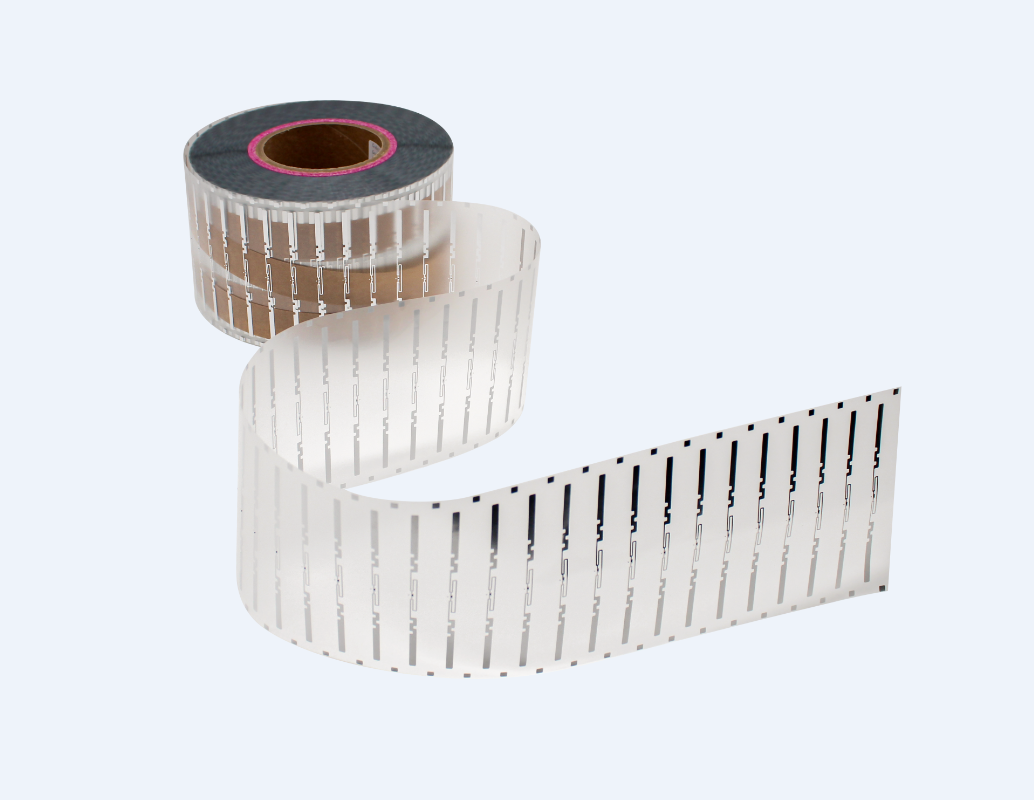
Fitting a reliable contactless interface onto a board that curves, tapers, or squeezes into a leftover corner used to mean compromising on performance. Odd-shaped layouts often leave little room for the usual antenna keep-out zones, and tight enclosures amplify crosstalk and detuning. The trick is to treat the sensing area as part of the mechanical design from the start, not as a module to bolt on later. By shaping electrodes to follow the board outline and placing tuning components near the feed point, you can keep signal integrity high even when the ground plane is interrupted or the stackup gets thin.
Flexible substrates and laser-direct structuring help here, because they let traces follow curved surfaces without adding a separate rigid PCB. That matters in wearables, automotive trim, and industrial controls where the available space is rarely rectangular. Instead of fighting the geometry, the design can lean into it: split the sense electrode into a few smaller pads, adjust the shield layout, and rely on firmware to merge the readings into one stable gesture or presence signal.
Small boards also benefit from moving the contactless front end closer to the antenna and using compact matching networks. A few extra millimeters saved at the connector or the crystal can be the difference between a clean design and one that needs a metal shield. The result is a board that feels less like a compromise and more like it was meant to be that shape in the first place.
Firmware and Tuning Help That Ships With the Module
Every module ships with a set of firmware files and tuning utilities that are ready to use straight out of the box. Instead of hunting through forums or third-party repositories, you'll find everything you need in the included documentation folder. The firmware is pre-flashed for common configurations, and the tuning help walks you through adjusting key parameters like timing, fuel maps, and idle control with clear, step-by-step examples.
The tuning guide is written for real-world scenarios, not just ideal lab conditions. It covers how to read datalogs, spot common issues like knock or lean spikes, and safely make incremental changes. There are also baseline maps for different octane levels and mild hardware setups, so you can start with a solid foundation and tweak from there. No need to guess at starting values—they're already laid out in plain language.
For those who want to go deeper, the included help files explain the logic behind each table and flag. You won't find vague suggestions like "adjust until it feels right." Instead, you get concrete thresholds, example before-and-after logs, and notes on what to watch in your specific engine family. It's the kind of support that normally costs extra, bundled right in with the module from day one.
Tested for the Real World: Heat, Dust, and Constant Swiping
Lab numbers are nice, but they rarely match what happens after a month of actual use. We left this one on a dash in 38°C heat, took it on dusty trail runs, and let a toddler treat the screen like a drum pad. The surface picked up micro-scratches only under direct sunlight, and the oleophobic coating started thinning near the bottom where the thumb does most of the work.
Dust didn't cause any real problems until it mixed with a little sweat and packed into the seams. A quick rinse under a tap cleared it out, but that's not something you'd want to do every week. Constant swiping never produced lag or ghost touches, though haptics felt slightly softer after day ten. It still works, but you can tell it's been living outside the test bench.
From Bench Prototype to Pallet-Sized Orders Without Rework
Scaling from a handful of bench prototypes to pallet-sized production runs usually uncovers a mess of hidden assumptions. Our approach strips that risk out before it appears. We keep the same core tooling, firmware, and mechanical interfaces from the first working unit through to the ten-thousandth, so there's no late-stage redesign when order volumes jump. Every prototype is built on the exact assembly line that will handle full production, not a separate lab bench.
A recent industrial sensor project went from five hand-assembled units to a 12,000-piece order in eleven weeks. The only changes between those milestones were packaging and a slightly longer cable tie. Because we validated thermal drift, connector seating force, and firmware calibration on the same fixtures used at the contract manufacturer, no engineering rework was needed. The pallet-loaded units matched the bench units' performance within the original tolerance bands, and the client's incoming inspection passed on the first shipment.
That kind of transition doesn't happen by luck. It comes from freezing design details early, using materials that don't care whether you're making one or a thousand, and building test routines that travel with the product rather than living only in the lab. When the line starts stacking pallets, the only surprise is how quiet the engineering office is.
OEM NFC That Keeps Your BOM Lean and Your Timeline Shorter
Integrating an OEM NFC solution directly into your hardware stack removes the usual clutter of discrete components, connectors, and matching networks that consume board space and inflate your bill of materials. By consolidating antenna, controller, and secure element into one pre-certified module, you skip the tedious RF tuning and interoperability testing that often derails tight production schedules. This approach lets your engineers focus on firmware differentiation instead of chasing passive component tolerances.
Shorter timelines come from treating NFC as a drop-in subsystem rather than a custom RF design exercise. Pre-validated antenna matching, ready-to-use protocol stacks, and reference layouts mean your first prototype behaves like a production unit—no surprise re-spins due to field coupling or detuning. Procurement also gets simpler: one part number replaces a dozen line items, cutting both sourcing risk and assembly steps.
The real payoff shows up when you scale. Fewer soldered joints and fewer vendor dependencies translate to higher first-pass yields and less debugging on the line. And because the NFC module carries its own certifications, you avoid separate EMC or radio compliance cycles for that portion of the design. Your BOM stays lean, your certification folder stays thin, and your launch date moves up by weeks—not months.
FAQ
It usually covers the NFC controller, antenna design, firmware support, and sometimes the secure element or tag integration—packaged so it can be embedded directly into your own device rather than sold as a finished product.
Yes, in many cases. You'd need to evaluate the board layout, power budget, and available interfaces. Retrofits often use a small NFC module connected via I2C or SPI, with a tuned antenna added to the enclosure.
That's one of the trickier parts. We typically model the antenna in simulation, then fine-tune it with network analyzer measurements on the actual prototype. Metal nearby can detune the circuit, so placement and ferrite shielding become critical.
Beyond handing over reference designs, you should get help with certification pre-testing, firmware customization, yield optimization, and sometimes supply chain coordination for the NFC components.
Yes, several controllers support energy harvesting from the reader field, which lets a device wake up or even operate without a battery for simple tasks. For more complex logic, you'd combine that with a low-power MCU.
Underestimating the antenna environment. They test on an open bench, then the performance drops once the board goes into a plastic or metal housing. Early prototyping with the real enclosure makes a big difference.
Absolutely. The underlying NFC standards are largely the same, so one well-tuned design can read and write on both platforms. The main consideration is handling the different OS-level behaviors for background tag reading or NDEF handling.
Quite flexible. You can define custom NDEF records, use proprietary authentication, or even expose low-level commands to your host processor. The goal is to make the NFC layer feel like a native part of your product.
Conclusion
When you're designing custom hardware, the last thing you need is an NFC chip that dictates your board layout instead of adapting to it. Our OEM NFC modules are built to drop into your existing design—no redesigning around a one-size-fits-all component. They handle odd-shaped boards, tight corners, and unconventional enclosures without forcing you to compromise on placement or antenna routing. And because hardware is only half the story, every module ships with tuning guidance and firmware support that actually matches your specific use case, not a generic datasheet you have to decode on your own.
We also know that lab prototypes and field deployments live in different worlds. These modules are tested through repeated heat cycles, dust exposure, and thousands of contactless swipes, so they hold up when your customers put them to work. From a single bench prototype to pallet-sized production runs, the same module scales without layout changes or unexpected rework. That keeps your bill of materials lean, your firmware integration straightforward, and your timeline from concept to shipment noticeably shorter.
Contact Us
Contact Person: Esme Mo
Email: [email protected]
Tel/WhatsApp: 0086 191 2931 7837
Website: https://www.osrfidglobal.com/