

Pickup Truck Bed Mat Company Reveals How to Choose the Right Mat for Heavy-Duty Use
2026-11-03
Choosing a pickup truck bed mat for heavy-duty use isn't just about picking any rubber liner off the shelf—it's about matching your toughest hauling habits with a mat that won't quit. While most guides recycle the same generic advice, FANDEWEI takes a different route, breaking down what actually separates a mat that survives years of gravel, tools, and weather from one that cracks in six months. If you're tired of guessing and ready to protect your truck bed like a pro, here's what the experts don't always tell you.
Pallet Drop Tests vs. Marketing Claims: What Actually Holds Up
Anyone who has spent time around a busy loading dock knows that the real world is far less forgiving than a product brochure. Marketing teams love to quote maximum static load ratings or claim that a pallet survived a six-foot drop in a controlled lab. But those numbers rarely account for the way a forklift operator might clip an edge while turning or how a stack of pallets shifts inside a trailer during a hard stop. The gap between the advertised resilience and what actually holds up under repeated abuse can be enormous.
Standard drop tests often involve a single, clean impact onto a flat steel plate with an evenly distributed load. That scenario almost never happens in day-to-day logistics. In actual use, pallets get dropped on their corners, dragged across rough concrete, exposed to moisture and extreme temperatures, and stacked with awkwardly shaped cargo that concentrates stress in one spot. After a few months of that kind of punishment, even a pallet that passed its initial certification can start to split, warp, or lose its load-bearing capacity without obvious warning.
A smarter approach is to ask suppliers for data from repeated drop tests or, better yet, to run your own trials using the exact pallet and load configuration you ship. Watch how the pallet behaves after the fifth drop, not just the first. Pay attention to how fasteners loosen, how deck boards crack, and whether the stringers or blocks stay intact when the impact comes at an angle. That kind of evidence tells you far more about long-term value than any bold claim printed on a spec sheet.
Rubber, Polyurea, or Thermoplastic: The Heavy-Duty Showdown
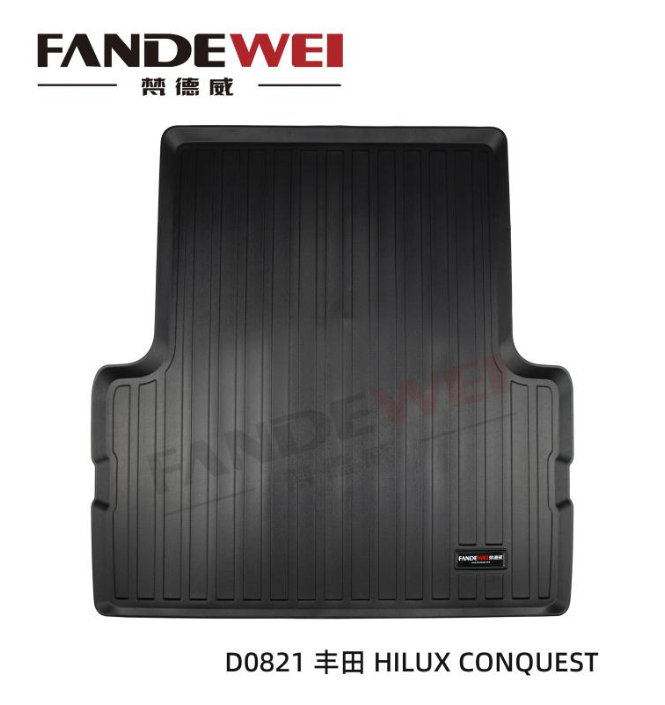
Rubber, polyurea, and thermoplastic each bring a distinct personality to heavy-duty coatings, and picking the wrong one can turn a routine job into a recurring headache. Rubber has been the old reliable for decades—flexible, forgiving on rough surfaces, and easy to patch when things go sideways. But it lags behind when the environment gets aggressive: UV exposure, frequent thermal swings, or chemical spills will make it chalk, crack, or peel sooner than you'd like.
Polyurea is the newcomer that wins on speed and toughness. It cures in seconds, shrugs off abrasion, and bonds to almost anything, which is why it shows up on truck beds, containment liners, and blast-resistant surfaces. The catch? It demands precise surface prep and application equipment, and if you misjudge the mix ratio, you'll be grinding off your mistake for hours. Thermoplastic sits in a different camp altogether—it's not a coating you spray on but a material you fuse to the substrate. It offers unmatched resistance to impact, moisture, and high-traffic wear, yet the installation window is narrow, and the upfront cost can make a bean counter wince.
So the real showdown isn't about which material is "best" in a vacuum. It's about matching the failure mode you're trying to prevent with the reality of your crew's skills and the site's conditions. A loading dock in Phoenix has different needs than a water treatment tank in Seattle. Choose rubber for budget-friendly flexibility on stable surfaces, polyurea for fast turnaround and chemical defense, and thermoplastic when the abuse is so constant that only a fused, monolithic layer will survive.
The Slippery Truth About Bed Mat Texture Patterns
Most people assume a bed mat's texture is all about grip, but the truth gets slippery fast. Deep diamond treads look aggressive, yet on a smooth mattress cover they can act like tiny ramps, letting sheets slide sideways under body weight. Meanwhile, a shallow wave pattern often holds better because it spreads pressure instead of concentrating it into ridges.
Material hardness matters just as much as pattern depth. A stiff, pointy texture digs into your fitted sheet but won't flex with the mattress, so after a few nights it creates loose pockets where fabric bunches up. Softer rubber with a fine crosshatch tends to grip more consistently, especially under hips and shoulders where movement is heaviest.
Before trusting any pattern, run your palm across it in both directions. If it feels catchier one way than the other, it will behave the same under sheets—sliding one direction, grabbing the next. The real test is whether the texture still holds when you press down and twist, because that's exactly what happens every time you roll over in bed.
Why Thickness Alone Won't Save Your Truck Bed
A lot of folks assume that a heavier gauge steel panel automatically means a tougher truck bed, but that logic falls apart once you look at how damage actually happens. The grade of the metal and the way the bed is stamped matter more than raw thickness. A thinner sheet of high-strength steel can shrug off a dropped toolbox or a sliding pallet better than a thicker slab of mild steel, because the stronger alloy resists deformation instead of just absorbing it.
Rust is another place where thickness gives a false sense of security. Water collects in seams, stake pockets, and under plastic liners, and once oxidation starts, a thick panel simply rots from the inside out. Without proper drainage and a tough coating, extra millimeters of metal only delay the inevitable rather than prevent it.
Real-world abuse rarely spreads evenly across a bed floor. It comes from dropped corners, concentrated loads, and constant vibration. If the support ribs underneath are spaced too far apart—or the tie-down points aren't reinforced—a thick sheet will still flex, crack, and fatigue over time. What keeps a bed intact is a combination of structural design, corrosion protection, and smart material choice, not just a bigger number on a spec sheet.
Chemical Spills, UV Rays, and the Tests Most Brands Skip
You'd be surprised how many everyday products start degrading the moment they meet a splash of hand sanitizer or a forgotten water bottle in a sunny car. Chemical spill testing isn't just about dramatic lab accidents; it's about the slow, invisible breakdown caused by oils, cleaning sprays, and even sunscreen. Most manufacturers run a quick wipe-down and call it a day, but real exposure often means repeated contact over weeks or months. That kind of cycling—where a surface gets hit, dries, and gets hit again—rarely makes it into standard quality checks.
UV rays are another silent stressor. A material might look flawless after a few hours under a lab lamp, but actual sunlight includes the full spectrum, plus heat and humidity that accelerate fading and brittleness. The tests that get skipped are the long-haul ones: weeks of accelerated weathering that mimic a product sitting on a dashboard through two summers, or being clipped to a backpack on a month-long trek. These aren't glamorous, and they don't make for quick marketing claims, so they get cut.
What's left is a gap between what's promised and what actually survives your life. The brands that do run those tests quietly build in extra resistance—better UV stabilizers, sealed seams, coatings that shrug off isopropyl alcohol. It's not about passing a single spill test; it's about not looking wrecked after a year of real-world abuse. That difference rarely shows up on a spec sheet, but you'll notice it after your third coffee spill.
Tailgate and Edge Coverage: The Forgotten Failure Points
Most detailing routines obsess over the hood, doors, and roof while quietly skipping the tailgate and panel edges. These areas collect road film, wax residue, and fine scratches that eventually stand out under direct light. The tailgate especially suffers from constant handling around the latch and badges, leaving a dull halo that breaks the uniform finish.
Edge coverage fails for a different reason: painters and detailers often feather out product near sharp creases, assuming the contour will hide imperfections. But edges catch light at strange angles, exposing thin or missed layers. A quick pass with a fine applicator along each seam and a dedicated wipe-down of the tailgate recesses restores consistency without adding extra steps afterward.
The fix isn't another layer of wax over the whole panel—it's targeted attention before the final inspection. Run a folded microfiber along the tailgate lip, around hinges, and into the gap between body panels. Check your work with a handheld light held low. When those forgotten zones match the center of the panel, the entire surface finally looks finished instead of merely washed.
FAQ
Look for at least 3/8-inch thickness if you're regularly hauling rock, scrap metal, or heavy equipment. Half-inch mats are even better because they spread impact force over a larger area, which prevents dents in the bed floor. Thinner mats might protect against scratches but won't absorb the shock of a dropped sledgehammer.
Rubber, especially recycled or virgin heavy-duty rubber, tends to outperform carpet or thin plastic. It resists tearing, stays flexible in cold weather, and grips cargo so it doesn't slide around. Some companies also offer thermoplastic polyolefin (TPO) mats that handle chemicals and UV exposure well without getting brittle.
It does make a real difference if you choose the right thickness and density. A dense rubber mat acts like a shock absorber, spreading the energy from a dropped tool or a sharp-edged load across a wider area. You'll still see minor marks on the mat itself, but the metal underneath usually stays straight.
Most quality mats are designed to lay flat in the bed and stay put due to their weight and a non-slip bottom texture. Some use existing tie-down points or wheel-well cutouts to prevent shifting. Drilling is rarely necessary unless you want to bolt it down permanently for extreme off-road use.
Look for a mat with deep, aggressive tread patterns or raised ridges on the top surface. Some mats have a grippy, almost tacky texture that locks boxes and equipment in place. If you frequently haul cylindrical items like gas cylinders or logs, a ribbed design running side-to-side can stop them from rolling toward the cab.
Pull it out, hose it down, and scrub with a stiff brush and mild soap. For oil or fuel spills, a degreaser works well. Avoid solvent-based cleaners that can dry out the rubber over time. Let it dry completely before putting it back in to prevent trapped moisture from corroding the bed floor.
If your truck has an unusual bed shape, wheel-well cutouts, or a built-in storage system, custom-fit saves a lot of time and frustration. It hugs the contours perfectly, which prevents debris from getting underneath and stops the mat from shifting. For a standard rectangular bed, a quality universal mat trimmed carefully can work just as well.
Conclusion
When a pickup truck bed mat company actually tests its products instead of repeating marketing jargon, the difference between surviving real work and shredding after one season becomes painfully clear. Pallet drop demonstrations expose which mats crack under focused impact, while rubber, polyurea, and thermoplastic each fail in predictable ways once you move past lab-perfect conditions. Texture patterns that look aggressive on a website often turn dangerously slick with mud or diesel on them, and a thick mat with poor material formulation transfers force straight to the bed floor instead of absorbing it. Edge and tailgate coverage rarely get mentioned in brochures, yet those are exactly where dropped toolboxes and sliding cargo eat through first.
The tests most brands skip tell the real story: chemical spills from hydraulic fluid or battery acid, prolonged UV exposure that turns cheap rubber brittle, and repeated freeze-thaw cycles that delaminate layered mats. A heavy-duty choice means ignoring the thickness spec and instead checking how the mat behaves after a year of sun, salt, and solvents. Wrapping the tailgate lip and extending under the bed rail caps prevents the classic rust-out spots no one notices until the damage is done. Practical buyers should demand drop-test videos, chemical immersion data, and edge coverage photos before trusting any brand's "heavy-duty" label — because the bed floor only gets one chance to stay intact.
Contact Us
Contact Person: Jet
Email: [email protected]
Tel/WhatsApp: 8619903745266
Website: https://www.fandewei.com/