

Precision Rolling Mills: Top Technologies for Superior Metal Processing
2026-02-10
In the competitive landscape of metal processing, achieving superior quality and efficiency is paramount. Enter precision rolling mills, where cutting-edge technologies are revolutionizing how industries handle metals. At GRM, we combine these top-tier innovations with decades of expertise to deliver unmatched performance and reliability. This blog delves into the key technologies that make precision rolling mills the gold standard for processing metals, offering insights that could transform your operations. Join us as we explore how harnessing the right tools can elevate your metalworking to new heights.
Cutting-edge Technologies in Precision Rolling Mills
Precision rolling mills have evolved significantly in recent years, driven by the integration of advanced automation systems and real-time monitoring tools. These technologies enable mills to produce high-quality metals with tighter tolerances and improved surface finishes, essential for industries like aerospace and automotive manufacturing. By leveraging sensors and data analytics, operators can continuously adjust parameters such as rolling force and temperature, ensuring consistent output and reducing material waste.
Innovations in modeling and simulation software play a crucial role in enhancing the capabilities of precision rolling mills. These tools allow engineers to predict outcomes and optimize processes without needing extensive physical trials, saving time and resources. Additionally, the adoption of adaptive control systems helps mills automatically respond to variations in incoming materials, maintaining precision even under fluctuating conditions.
Emerging trends like the use of artificial intelligence and machine learning are further transforming precision rolling operations. By analyzing vast datasets, AI algorithms can identify patterns and recommend adjustments to improve efficiency and product quality. This shift not only boosts production but also supports sustainability goals by minimizing energy consumption and enhancing resource utilization in metal processing.
Advanced Control Systems for Enhanced Metal Quality
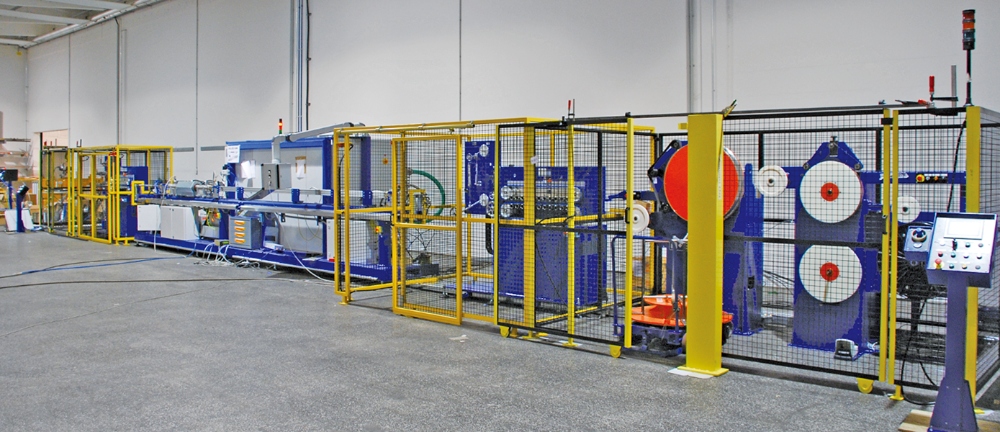
When it comes to producing metals that meet the highest standards of purity and structural integrity, advanced control systems are no longer just an option—they're a necessity. These systems leverage real-time data analytics and machine learning algorithms to monitor every stage of the production process, from smelting to finishing. By adjusting parameters like temperature, pressure, and cooling rates on the fly, manufacturers can minimize impurities and defects, resulting in metals with superior mechanical properties and consistency. This proactive approach not only boosts quality but also enhances efficiency, reducing waste and energy consumption across operations.
What sets these systems apart from traditional methods is their ability to adapt dynamically to varying raw material inputs and environmental conditions. For instance, sensors embedded throughout the production line feed continuous streams of data into sophisticated software platforms. These platforms use predictive models to anticipate potential issues before they escalate, such as micro-cracks or uneven grain structures. By integrating closed-loop feedback mechanisms, the systems can autonomously correct deviations, ensuring each batch adheres to stringent specifications. This level of precision is crucial for industries like aerospace and automotive, where even minor flaws can compromise safety and performance.
Moreover, the integration of IoT connectivity and AI-driven diagnostics has revolutionized quality assurance in metal manufacturing. Operators now have access to intuitive dashboards that visualize key metrics, enabling quick decision-making and fine-tuning. This human-in-the-loop approach combines automation with expert oversight, fostering innovation in alloy development and process optimization. As a result, companies can deliver metals with enhanced corrosion resistance, tensile strength, and other tailored attributes, meeting evolving market demands while staying ahead of competitors. In essence, these advanced controls are redefining what's possible in metal quality, turning industrial challenges into opportunities for excellence.
Innovative Heat Treatment Techniques in Metal Processing
Recent advancements in heat treatment have transformed metal processing, moving beyond traditional methods like annealing and quenching to address specific material challenges. For instance, cryogenic treatment involves cooling metals to extremely low temperatures, often below -150°C, which helps refine microstructures and enhance wear resistance in alloys used for cutting tools and aerospace components. This technique minimizes residual stresses and improves dimensional stability, leading to longer-lasting products without compromising ductility. Its application in industries such as automotive and medical devices showcases how precise temperature control can optimize performance in demanding environments.
Another emerging approach is laser heat treatment, which offers localized and rapid heating to modify surface properties without affecting the bulk material. By focusing high-energy laser beams on specific areas, it creates hardened layers that resist corrosion and fatigue, ideal for parts like gears and engine components. This method reduces energy consumption and waste compared to conventional furnaces, aligning with sustainable manufacturing trends. Companies adopting this technique report significant gains in efficiency, as it allows for real-time adjustments and minimal downtime in production lines.
Additionally, additive manufacturing has introduced custom heat treatments tailored to 3D-printed metals, enabling unique microstructures that blend strength with lightweight designs. Techniques like hot isostatic pressing (HIP) are used post-printing to eliminate porosity and improve mechanical integrity, particularly in complex geometries for the aerospace sector. These innovations not only push the boundaries of material science but also foster collaboration across engineering disciplines, driving a shift toward more adaptive and responsive metal processing solutions in the global market.
Automation and Efficiency in Modern Rolling Operations
In today's rolling operations, automation isn't just a buzzword—it's the backbone of efficiency. From steel mills to aluminum plants, smart sensors and AI-driven systems monitor material properties in real-time, adjusting roll pressures and speeds on the fly to minimize waste and maximize output. This shift reduces human error and downtime, allowing facilities to operate 24/7 with consistent quality.
Beyond basic automation, predictive maintenance plays a crucial role. By analyzing data from equipment like rolling mills and conveyors, algorithms can forecast potential failures before they occur, scheduling repairs during planned breaks rather than causing costly shutdowns. This proactive approach not only cuts maintenance costs but also extends machinery lifespan, proving that efficiency isn't just about speed but smart resource management.
Looking ahead, the integration of IoT and cloud computing is revolutionizing how rolling operations scale. Remote monitoring enables managers to oversee multiple sites simultaneously, tweaking processes for optimal energy use and material flow. As these technologies mature, they pave the way for greener, more adaptable production lines that respond swiftly to market demands without sacrificing precision or reliability.
Sustainable Practices in High-Precision Metal Manufacturing
High-precision metal manufacturing has long been praised for its accuracy and durability, but it also comes with significant environmental costs, such as energy consumption and waste generation. To address this, forward-thinking manufacturers are adopting sustainable practices that not only reduce their ecological footprint but also enhance efficiency and product quality. These initiatives often involve optimizing production processes, using recycled materials, and implementing energy-efficient technologies to meet both industry standards and environmental goals.
One key approach is the integration of advanced recycling systems, which allow manufacturers to reclaim scrap metal and reuse it in production cycles, thereby minimizing waste and conserving natural resources. Additionally, companies are investing in renewable energy sources, like solar or wind power, to fuel their operations, significantly cutting down on carbon emissions. These efforts showcase a commitment to sustainability that sets industry leaders apart, offering a competitive edge while contributing to a greener planet.
Furthermore, sustainable practices in this field extend beyond just materials and energy—they also encompass employee well-being and community engagement. By fostering a culture of continuous improvement, manufacturers can implement lean manufacturing techniques that not only reduce waste but also improve worker safety and morale. This holistic approach ensures that high-precision metal manufacturing remains innovative and responsible, paving the way for a more sustainable future in the industry.
Future Trends in Precision Rolling Mill Technology
As the metallurgical industry pushes the boundaries of efficiency and precision, rolling mill technology is evolving rapidly, driven by demands for tighter tolerances and sustainable operations. Key trends include the integration of AI-powered control systems that adapt in real-time to material variations, reducing scrap and energy consumption. These systems leverage advanced sensors to monitor everything from temperature gradients to roll wear, enabling predictive maintenance that minimizes downtime and boosts productivity in high-volume production lines.
Another significant shift is toward fully digitalized and automated mills, where cyber-physical systems orchestrate the entire rolling process from billet entry to finished product. This automation not only enhances consistency across batches but also facilitates the production of complex, custom alloys with minimal human intervention, catering to niche markets in aerospace and automotive sectors that require ultra-precise components.
On the sustainability front, innovations are focusing on eco-friendly practices, such as using recycled materials more effectively and implementing closed-loop cooling systems to conserve water. These developments are not just about meeting regulatory standards; they reflect a broader industry commitment to reducing the environmental footprint while maintaining competitive edge, paving the way for greener, more resilient manufacturing hubs worldwide.
FAQ
Precision rolling mills incorporate advanced technology that allows for tighter tolerances and superior surface finish, while conventional mills may control dimensions less precisely.
Industries like aerospace, automotive, and electronics gain significant advantages due to the high-accuracy metal sheets and strips produced.
They reduce material waste through precise control and can operate at higher speeds, leading to faster production cycles.
Technologies include automated gauge control, advanced cooling systems, and computer-aided metallurgy, all working together for consistent quality.
Yes, they are versatile and can handle metals such as steel, aluminum, and copper alloys, adjusting settings for each material type.
Automation ensures minimal human intervention, maintaining consistent pressure and temperature to achieve uniform results every time.
By optimizing material usage and energy efficiency, they help lower environmental impact and reduce overall operational costs.
Conclusion
Precision rolling mills represent the pinnacle of modern metal processing, integrating cutting-edge technologies that redefine quality and efficiency. Advanced control systems, such as real-time monitoring and AI-driven analytics, ensure unparalleled metal consistency by detecting microscopic defects and adjusting parameters on the fly. Complemented by innovative heat treatment techniques, like precision annealing and controlled cooling, these mills enhance material properties, from strength to ductility, tailoring metals for demanding applications. Automation further elevates operations with robotics and smart sensors streamlining workflows, reducing downtime, and boosting output without compromising precision. This synergy of technologies not only drives superior performance but also sets a new benchmark for industrial excellence.
Sustainability and future trends are reshaping precision rolling mills, embedding environmentally conscious practices into high-stakes manufacturing. Energy-efficient designs, waste reduction through closed-loop systems, and eco-friendly cooling methods minimize environmental impact while maintaining top-tier standards. Looking ahead, emerging trends like digital twins for predictive maintenance and additive manufacturing integration promise even greater agility and customization. By blending automation, advanced controls, and green innovations, these mills offer a dynamic pathway to meeting global demands for high-quality metals, ensuring they remain at the forefront of industrial evolution with versatile, forward-thinking solutions.
Contact Us
Contact Person: Rayna
Email: [email protected]
Tel/WhatsApp: 86 -173 1474 6343
Website: https://www.grmrollingmill.com/