

Sanding Disc Exporter Delivering High-Performance Abrasive Solutions
2026-10-08
Every sanding disc claims to deliver a smooth finish—until it wears out halfway through the job. That’s where SHENZHEN SUN ABRASIVES changes the game. As a leading sanding disc exporter, they combine advanced abrasive technology with rigorous quality control to bring high-performance solutions to workshops and factories worldwide. In this post, we’ll look at how their discs stand up to real-world demands and why switching could boost both your output and your bottom line.
Where Precision Meets Abrasive Grit
In the world of surface finishing, the real artistry happens when a controlled touch meets raw, angular particles. Abrasive grit is often seen as brute force—crushed, sharp-edged, and unforgiving. Yet under the right guidance, those same particles become instruments of exactness, shaving away irregularities until a surface mirrors a spec sheet down to the micron.
That intersection doesn’t come from chance. It requires matching grit size, bond hardness, and feed pressure until the cut is neither too aggressive nor too timid. Operators learn to read the hum of the wheel, the faint score lines, the temperature of the workpiece. When everything lines up, the result isn’t just smooth—it’s dimensionally true, repeatable, and quietly precise.
This is where craftsmanship meets chemistry and mechanics. The abrasive doesn’t compromise its nature; instead, it’s harnessed. Every pass removes a little more uncertainty, leaving behind a finish that speaks more of intent than of friction.
Export-Grade Discs Built for Repeat Use
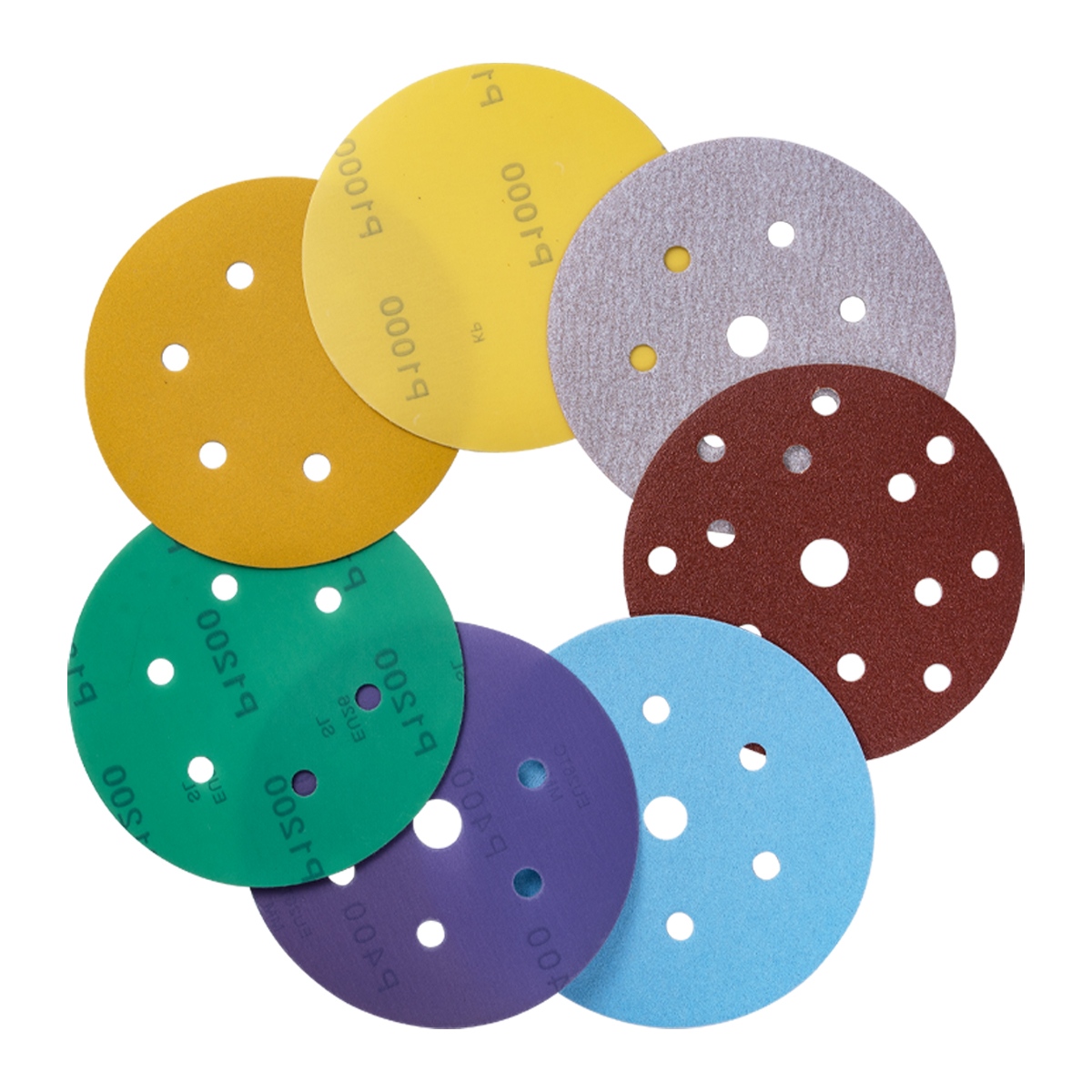
The first thing you notice is the weight. These aren't flimsy one-off discs that warp after a single session. The core is pressed from a dense, heat-resistant composite that holds its shape through aggressive cuts, high RPMs, and long hours on the line. Every batch is checked for runout and balance before it leaves the floor, so the disc you run today behaves exactly like the one you ran last month.
That consistency comes from a controlled quenching process normally reserved for industrial tooling. Instead of relying on surface coatings that wear away, we treat the entire disc body to resist edge glazing and micro-fractures. The result is a disc that doesn't just survive repeat use—it gets more predictable as the abrasive exposes fresh grain with each pass.
For shops juggling mixed materials and tight schedules, that means fewer changeovers and less guesswork. You can run stainless in the morning, switch to mild steel after lunch, and trust the same disc to hold its aggression without loading up or skating across the workpiece.
Material-Specific Bonds That Hold Up
When adhesives fail, it's rarely the bonding agent itself that gives way—it's the mismatch between the glue and the surfaces it's meant to join. Material-specific bonds address this by engineering adhesion around the exact chemistry of each substrate. For example, polypropylene and polyethylene have notoriously low surface energy, so standard epoxies bead up and peel away. Yet a bond formulated with a polyolefin primer and a flexible cyanoacrylate can create a connection that flexes with the plastic rather than fighting its natural movement. This isn't a one-size-fits-all fix; it's a deliberate pairing of polymer chains and surface treatments that turns a weak interface into a structural link.
Metals present a different challenge: oxide layers, thermal expansion, and galvanic corrosion all conspire to undermine a joint over time. A material-specific approach might use an acrylic adhesive loaded with glass beads to maintain a precise bond line thickness, allowing for differential expansion between aluminum and steel without stress cracking. In automotive assembly, this kind of targeted bonding replaces spot welds in door skins and roof panels, reducing weight while improving fatigue resistance. The bond survives not because it's stronger in absolute terms, but because it was designed to absorb the specific loads and environmental attacks that a mixed-metal joint will face.
Even within a single material family, subtle variations matter. Bonding untreated rubber to itself often fails at the joint, yet a two-part adhesive with a chlorinated primer can etch the surface enough to allow a covalent bond—one that holds up under repeated stretching and compression cycles. In conveyor belt splicing, this means a seam that outlasts the belt's own abrasion resistance. The key is understanding that no adhesive is universally strong; strength comes from compatibility, and compatibility comes from studying how a particular material behaves at its surface, under load, and over time. That's what makes a bond hold up when generic solutions would have long since let go.
From Coarse Stock Removal to Fine Finishing
The first stage is about moving material fast. Coarse grits, aggressive feeds, and heavier pressure tear away stock without much concern for surface quality. At this point, the goal is rough geometry—getting rid of weld spatter, saw marks, or casting flash. The surface left behind is intentionally rough, with deep scratches that act as a reference for all the refinement that follows.
From there, the work shifts into a middle ground. Each pass uses a finer abrasive, and the technique changes with it. Pressure drops, strokes become more deliberate, and the scratch pattern from the previous step gets replaced by something shallower and more uniform. It’s less about removing volume and more about erasing the evidence of earlier aggression, one grit at a time.
The final stage is where patience pays off. Fine finishing—whether it’s honing, polishing, or lapping—brings the surface to life. Reflections sharpen, tolerances tighten, and the piece starts to feel different under the hand. This isn’t just cosmetic; controlled surface texture affects how parts wear, seal, or move against each other. The trick is knowing when to stop, because overworking a fine finish can ruin the very precision it’s supposed to create.
Packaging That Protects Every Edge
Corner dings and crushed edges are often the first signs a shipment didn't live up to its promise. This packaging approach puts reinforced guards exactly where impact hits hardest: along every seam, fold, and vulnerable boundary. Instead of relying on a single layer of corrugated board, it combines dense edge liners with custom-cut inserts that absorb shock before it reaches the product. The result is a box that holds its shape under pressure and keeps contents looking factory-fresh upon arrival.
What sets this apart is the attention to load distribution. By channeling force away from fragile perimeters, the packaging prevents the slow damage that shows up as scuffed finishes or hairline cracks. It also reduces the need for over-taping or bulky void fill, which means less material and a cleaner unboxing. Whether a package is stacked, strapped, or handled by automated lines, the edges stay intact and the item inside remains secure from dock to doorstep.
A Supply Chain Tuned for Global Demand
When demand shifts overnight across continents, supply chains either flex or fracture. The backbone of our global network isn't a collection of warehouses—it's a living routing map that rebalances inventory before shortages surface. Forecasts feed into regional hubs at different cadences, so a surge in Frankfurt doesn't empty shelves in Singapore.
What keeps this tuning sharp is a mix of local sourcing buffers and shared transportation lanes. Instead of locking every product to one origin, we stage semi-finished goods near major markets and finish assembly only after order signals turn firm. That reduces lead time without piling up finished stock. In practice, a component arriving in Rotterdam can be routed to three different final assembly points depending on which country's demand spikes first.
The result is less about speed for its own sake and more about matched tempo. Our planners don't follow a single forecast; they compare weekly sell-through against upstream capacity and adjust allocations before the next production run. That ongoing calibration keeps the chain from overreacting to noise while remaining ready for genuine shifts.
FAQ
We focus on ceramic and zirconia alumina discs that hold up under high heat and pressure, so they last noticeably longer when you're grinding steel or stainless.
Absolutely. Grit availability runs from coarse 24 up to ultra-fine 1200, and we can recommend the best progression for a smooth, swirl-free surface on wood, paint, or metal.
Each batch is tested for grain adhesion, backing strength, and wear rate before it leaves the factory. We also keep a retained sample from every production run for traceability.
Yes, we can print your brand on discs, boxes, and sleeves. Minimum order quantities for custom packaging are modest, and we provide design support if you need it.
Our discs are used in automotive body shops, metal fabrication, furniture manufacturing, and composite work. The common thread is demanding applications where cheap discs fail quickly.
Standard production time is 12–18 days, but we hold buffer stock for popular sizes and grits, which can cut lead time to about a week for repeat clients.
Yes, we send free sample packs with a few grits and diameters so you can test cutting speed and lifespan on your own materials. Shipping is covered for qualified buyers.
We use a heavier backing and a stronger resin bond, which reduces edge tearing and disc fly-off. That means fewer changeovers and lower cost per square meter sanded.
Conclusion
The core of our sanding disc lineup lies in the way precision intersects with abrasive grit—every disc is engineered to cut cleanly without wandering, even under heavy hand pressure. We don't chase one-size-fits-all. Instead, the bond systems are matched to the material you're working, whether it's softwood, stainless steel, or composite, so the abrasive stays locked in place instead of shedding after a few passes. And because these are export-grade discs built for repeat use, you get consistent scratch patterns and less downtime swapping discs mid-job.
From aggressive stock removal with coarse grits to the final fine finish that leaves a surface ready for coating, the same disc family carries you through without changing tools or techniques. Packaging isn't an afterthought—each disc is separated and cushioned so edges arrive sharp and true, not crushed in transit. Behind it all, our supply chain is set up to absorb global demand spikes without long lead times, meaning your orders land on schedule whether you're restocking a small workshop or a full production floor.
Contact Us
Contact Person: Amanda Wang
Email: [email protected]
Tel/WhatsApp: +86-13602569854
Website: https://www.sunabrasives.com.cn