

Segment LCD Displays: Top Features and Applications for Modern Devices
2026-07-11
In a world where clarity meets efficiency, segment LCD displays remain a cornerstone of modern device design. From medical monitors to smart home interfaces, their crisp readouts and low power demands make them indispensable. Yet, not all displays deliver the same precision. That’s where Jingda-Display steps in, rethinking what these humble screens can achieve. Dive into the top features and surprising applications that keep segment LCDs at the heart of innovation—and see why Jingda-Display is the partner you didn’t know you needed.
What Makes Segment LCDs a Staple in Everyday Electronics?
Walk through any home or office, and you're likely surrounded by devices sporting those familiar digital number displays—microwave clocks, thermostat readouts, calculator screens. These are segment LCDs, and their quiet dominance comes down to a trifecta of practical benefits. They draw almost no power, making them ideal for battery-operated gadgets that need to run for months or years without a second thought. Their straightforward design also ensures readability in broad daylight or dim corners alike, without the glare and eye strain that often accompany more complex display types. When a device just needs to show numbers, a few letters, or basic symbols, simplicity becomes an unbeatable advantage.
Beyond pure function, cost plays a massive role in their widespread adoption. Manufacturers love that segment LCDs require minimal driver components and can be produced at scale for fractions of a penny per segment. This trickles down to consumers in the form of reliable, affordable products—from digital meat thermometers to budget-friendly fitness trackers. There's also an understated elegance in their retro-futuristic glow; designers deliberately choose them for products aiming for a nostalgic or no-nonsense aesthetic. It's a rare case where the cheapest option also ages into a style statement.
Durability seals the deal. Without fragile pixel grids or delicate backlight layers, segment LCDs withstand drops, temperature swings, and decades of use with remarkable grace. A ten-year-old digital watch still ticks and a factory-floor counter endures greasy conditions that would kill a smartphone screen. This resilience, combined with instant readability and near-zero maintenance, explains why they remain the go-to interface for information that simply needs to be there at a glance, no fuss required.
Design Simplicity That Powers Reliable Readouts
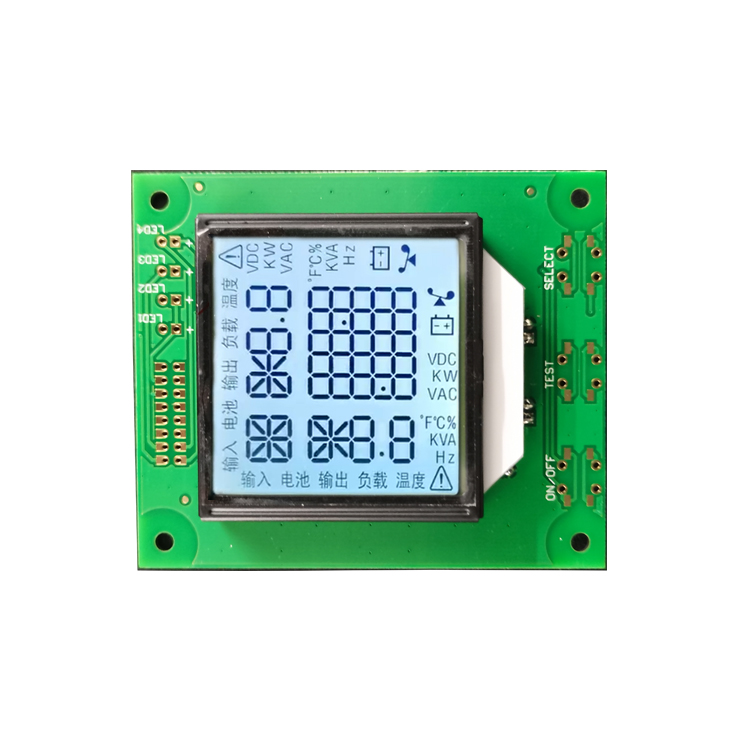
Simplicity in design is not just an aesthetic choice—it's the foundation for dependable results. Stripping away unnecessary complexity from the user interface reduces the cognitive load on operators, leading to fewer errors and faster decision-making. When every element on the screen serves a clear purpose, readouts become intuitive, allowing users to focus on what truly matters: the data itself.
Reliable readouts depend on systems that prioritize clarity over flash. A clean visual layout, consistent typography, and strategic use of color guide the eye naturally to critical information. These subtle design choices work together to ensure that readings are interpreted correctly the first time, every time. In high-stakes environments, this simplicity can be the difference between a smooth operation and a costly mistake.
Ultimately, design simplicity empowers technology to serve users without demanding their constant attention. By eliminating distractions and emphasizing legibility, we create tools that blend seamlessly into workflows. The result is a quiet confidence—readouts that people trust because they're presented without clutter, always accurate, and effortlessly readable.
Energy Efficiency: The Silent Advantage of Segment Displays
In a world increasingly concerned with power consumption, segment displays offer a remarkably efficient way to present numerical and limited character information. Unlike their pixel-dense counterparts, these displays activate only the specific segments needed to form a digit or letter, drawing minimal current. This inherent simplicity means they can run for extended periods on small batteries or harvested energy, making them ideal for devices where power efficiency is not just a feature, but a necessity.
The low energy footprint of segment displays also translates into reduced heat generation and simplified power supply design. Without the need for complex driving circuitry or backlight overhead, engineers can integrate them into portable meters, medical monitors, and industrial sensors without compromising runtime or thermal management. This silent efficiency often goes unnoticed until you realize the device can operate reliably for months on a single coin cell.
From Microwave Ovens to Medical Devices: Where You'll Encounter Them
The magnetron inside your microwave oven does more than just reheat leftovers—it’s the same core component you’ll find humming inside radar systems, satellite transmitters, and even the speed cameras on highways. That familiar hum isn’t just a kitchen sound; it’s the signature of a technology that quietly shapes our daily lives in ways most people never notice.
Step into a hospital and you’ll encounter magnetrons in places you’d least expect. Microwave ablation uses precisely tuned electromagnetic waves to destroy tumors with minimal invasion, while diathermy machines rely on similar principles to deliver deep tissue heating for pain relief. Unlike the raw power in your kitchen, these medical variants are dialed in with surgical precision—targeting cancerous cells while leaving healthy tissue untouched.
Beyond medicine and cooking, magnetrons pop up in industrial drying processes, UV curing for coatings, and even some experimental propulsion systems. The same device that melts cheese on your nachos is also bouncing signals off aircraft and speeding up chemical reactions in laboratories worldwide. It’s a reminder that some of the most transformative technologies are the ones already sitting on our countertops.
Customization Possibilities That Go Beyond the Standard Digits
True personalization isn't just about slapping a name on a product. It's about reimagining the object itself to reflect your unique narrative. This approach lets you move past the usual numerical choices and into a world where textures, materials, and even the object's silhouette can be altered. Think of a piece that carries the exact grain of leather from a workshop you visited, or the precise curve that echoes a vintage find you once cherished. These aren't just modifications; they're the building blocks of a story only you can tell.
Beyond the surface, there's a realm of experiential customization waiting to be explored. Instead of just picking digits or letters, you could incorporate elements that evoke a specific moment—like a scent infused into the material, a subtle illumination that mirrors a favorite time of day, or an auditory detail crafted from a place you love. It's about creating an artifact that resonates on multiple sensory levels, making it not just visually yours, but wholly yours across every interaction.
Collaboration lies at the heart of breaking free from standard templates. Imagine working directly with an artisan to co-author a piece that blends your vision with their mastery. This process turns a simple transaction into a journey, where the final outcome is a one-off expression of mutual creativity. Here, you're not just selecting options from a drop-down menu; you're weaving your aspirations into the fabric of the item, ensuring it emerges as something truly unprecedented.
Why Segment LCDs Remain Relevant in an OLED World
In an age where sleek OLED screens grab attention with their vibrant colors and infinite contrast, segment LCDs might seem like relics from a bygone era. But step into any industrial setting, medical device, or budget-conscious appliance, and you'll quickly see they're still holding their ground. The reason isn't nostalgia—it's practicality. Segment displays sip power so slowly that a simple coin cell can keep them running for years without a recharge, something no OLED can claim. Their simplicity is a feature, not a flaw: they show exactly what's needed—numbers, icons, basic status indicators—without demanding a complex controller or a power-hungry backlight. When you just need to read the temperature on your thermostat or the remaining time on a microwave, all that OLED richness is overkill that comes with a hidden cost.
That cost isn't just in batteries. Outdoors under direct sunlight, most OLEDs wash out into unreadable mirrors, while a segment LCD's reflective nature makes it crisp and clear without any extra power. This matters a lot in places like gas station pumps, farming equipment, or portable medical tools where ambient light is the only light you've got. Then there's the endurance factor: segment LCDs are built to last for decades, surviving temperature swings and continuous operation that would degrade organic emitters in OLEDs. Manufacturers keep picking them because they reduce failure points and maintenance calls—a display that just works, year after year, with zero software updates or complicated drivers. It's a quiet reliability that flashier screens often sacrifice for wow-factor.
There's also the unsung hero of cost-effectiveness. When you're producing millions of simple remote controls, blood pressure monitors, or kitchen scales, a segment LCD costs pennies compared to even the cheapest OLED module. Designers have learned to leverage custom shapes, icons, and layouts that give these low-tech panels a surprisingly tailored feel—something not every full-pixel screen can match without custom tooling. So while OLEDs dominate where visuals matter most, segment LCDs thrive in the background, doing one job exceptionally well without ever begging for attention. They're not behind the times; they're just playing a different game entirely.
FAQ
Segment LCDs draw very little current because they only energize the segments that need to be lit, and they can operate without a backlight in many cases. This makes them ideal for battery-powered gadgets where every microamp counts.
They show up in digital watches, basic calculators, home appliances like microwaves and coffee makers, medical devices such as blood pressure monitors, and even some automotive dashboard indicators. Their simplicity keeps them relevant.
Cost and reliability are huge factors. Segment LCDs are cheaper to produce, easier to integrate into simple user interfaces, and they last for years without noticeable degradation. Plus, they're easier to read in direct sunlight.
You can tweak everything from the shape and size of the segments to the color of the liquid crystal fluid and the backlight. Manufacturers often create bespoke layouts with icons, numbers, and custom symbols tailored to a specific product’s needs.
It determines how well you can read the display from off-center positions. Standard TN-type segment LCDs have a limited sweet spot, but higher-end models with advanced polarizers or film compensators widen that angle, which matters for things like wall-mounted thermostats.
Most modern segment LCDs comply with RoHS and other environmental standards. Lead-free soldering and eco-friendly materials are common, though some niche industrial parts might use exemptions. Always check the datasheet if compliance is critical.
Conclusion
Segment LCD displays have quietly become the backbone of countless everyday electronics, from microwave ovens and digital clocks to medical monitors and industrial meters. Their enduring popularity stems from a blend of design simplicity and unwavering reliability. Unlike complex graphical screens, these displays use fixed patterns of liquid crystal segments that light up to form numbers and basic icons. This straightforward construction means fewer components, easier manufacturing, and a level of dependability that manufacturers crave for devices that must work flawlessly for years. There is no operating system to crash, no intricate backlight system to fail—just pure, persistent readouts that remain clear even under bright sunlight.
Beyond robustness, segment LCDs offer a silent advantage in energy efficiency, sipping minimal power and thus perfect for battery-operated gadgets or always-on indicators. But don't mistake simplicity for limitation; today's customization options let engineers embed unique icons, logos, and even color filters, pushing these displays far beyond standard digits. You'll find them in glucose meters, where precise battery life is critical, and in fitness bands, where instant readability matters. In a world enamored with vibrant OLEDs, segment LCDs stay relevant by excelling in niches where cost, legibility, and extreme low power are non-negotiable—proving that sometimes the most understated technology remains the smartest choice.
Contact Us
Contact Person: Vincent
Email: [email protected]
Tel/WhatsApp: 86 135 5485 1379
Website: https://www.jda-display.com/