

Substantial Air Rotary Union: Key to Efficient Pneumatic Power Transmission
2026-07-31
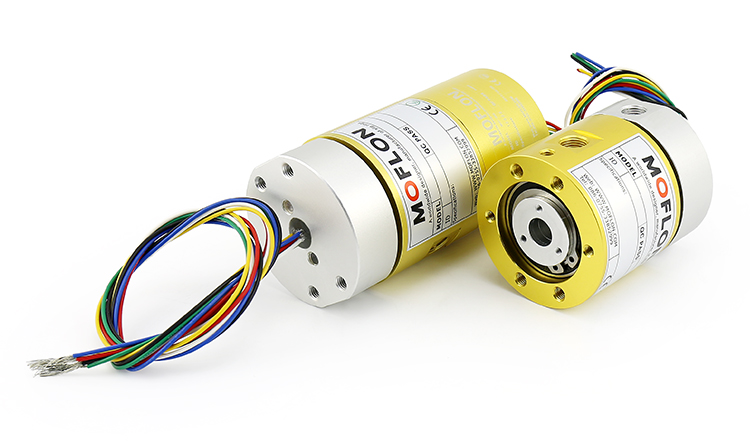
In the world of pneumatic power transmission, efficiency is everything — yet the humble rotary union is often the unsung hero that can make or break a system. Air rotary unions, when built with precision and durability, ensure seamless energy transfer and minimize leaks, but not all are created equal. This becomes especially clear in demanding industrial applications where reliability is non-negotiable. Enter MOFLON, a name synonymous with advanced rotary union technology. In this post, we’ll explore why a substantial air rotary union is the cornerstone of efficient pneumatic power transmission and how MOFLON’s innovative designs are shaping the future of motion control.
Unlocking the Mechanics of Air Rotary Unions
At first glance, an air rotary union might look like a straightforward coupling, but its internal workings reveal a clever balancing act between static supply lines and rotating machinery. Compressed air enters through a stationary housing, then moves into a precision-machined shaft that spins with the equipment. The secret lies in the sealing technology—typically mechanical seals or labyrinth paths—that prevents leakage while allowing continuous rotation. These components are designed to handle a wide range of pressures and speeds, ensuring that the air flow remains stable even as the equipment cycles through varying operational demands.
What often goes unnoticed is the role of bearing configurations and internal lubrication in maintaining performance. The union isn’t just a passive conduit; it actively manages frictional heat and wear. Advanced models incorporate self-lubricating graphite seals or even non-contact lift-off designs that float on a micron-thin cushion of air, virtually eliminating contact and extending service life. This not only boosts reliability but also reduces maintenance headaches in hard-to-reach installations where downtime is especially costly.
In practice, tailoring an air rotary union to a specific application means understanding the interplay between flow rate, pressure drop, and the thermal dynamics of the system. For instance, high-speed spindles in machine tools demand compact units with minimal rotating mass, while heavy-duty indexing tables might prioritize shock resistance and larger air passages. By matching these nuanced requirements to the right union design, engineers can unlock smoother operation, better energy efficiency, and a longer lifespan for the entire pneumatic system.
Overcoming Common Challenges in Pneumatic Systems
Pneumatic systems often wrestle with moisture buildup, which can corroded internal components and degrade performance over time. Installing properly sized air dryers, filters, and drains at strategic points helps strip out excess humidity before it reaches sensitive valves and actuators. Regular purging of low-point drains and monitoring dew point levels turn moisture management from a reactive headache into a predictable maintenance routine.
Pressure fluctuations and leaks quietly rob efficiency, driving up energy costs without obvious warning signs. Many plants overlook the compounding effect of small hisses across dozens of fittings and seals. Ultrasonic leak detectors simplify pinpointing these losses, while smart pressure regulators and receiver tank buffers stabilize supply despite demand swings. Even simple fixes—like tightening connections and replacing worn seals—often pay for themselves in weeks through lower compressor run time.
Contamination from particulates, oil carryover, or bacteria poses risks that extend beyond equipment reliability into product quality for food, pharmaceutical, and electronics applications. Specifying the right filtration grade, using stainless steel tubing where necessary, and establishing a routine replacement schedule for filter elements prevent slow-burn issues that are easily misdiagnosed. Combining proactive maintenance with sensor-driven monitoring gives teams the data they need to correct problems before production lines stall.
Real-World Applications Driving Efficiency
Across industries, the integration of advanced analytics into everyday operations is eliminating bottlenecks that once seemed inevitable. In manufacturing, for instance, predictive maintenance systems analyze sensor data to forecast equipment failures before they occur, slashing unplanned downtime and extending machinery life. This shift from reactive to proactive management saves millions in lost productivity and repair costs, while ensuring production lines run smoother and more consistently.
Logistics and supply chains are seeing a similar transformation through dynamic routing algorithms that adjust delivery paths in real time based on traffic, weather, and demand fluctuations. These tools not only cut fuel consumption and delivery times but also reduce the carbon footprint of transportation networks. Retailers leveraging such technology can replenish stock faster, minimize overstocking, and respond to changing consumer patterns with unprecedented agility.
Even in agriculture, precision farming techniques are optimizing resource use. Drones and soil sensors provide granular data on crop health and moisture levels, enabling targeted irrigation and fertilization. This approach boosts yields while conserving water and reducing chemical runoff, proving that efficiency gains are not just about speed or cost—they’re about building sustainable systems that work in harmony with natural resources.
Material Innovations for Long-Lasting Performance
Modern engineering has moved far beyond simply choosing the strongest metal. True longevity now hinges on composites that distribute stress more evenly and polymers designed at the molecular level to resist micro-cracking. These aren't just incremental upgrades—they fundamentally change how a product ages under real-world conditions, absorbing shock and weathering thermal swings that would cripple traditional materials.
A quieter revolution is taking place in protective coatings and surface treatments. Rather than relying on a thick barrier that eventually delaminates, today's solutions bond with the substrate on a chemical level, actively repelling moisture and neutralizing corrosive agents. The result is a self-preserving shell that maintains its integrity long after conventional sealants would have failed, keeping core components pristine without adding noticeable weight or bulk.
Even the blending of apparently contradictory properties has become achievable, giving rise to materials that are simultaneously more rigid and more flexible depending on load. By manipulating internal structures at the micron scale, designers can now create parts that stiffen under impact while remaining compliant during normal use—a dynamic response that dramatically extends service life without sacrificing performance.
Installation Practices That Maximize Lifespan
Proper anchoring is often overlooked, yet it directly influences how equipment handles vibration and thermal expansion over time. Using isolation pads or precision leveling feet isn't just about initial stability—it prevents subtle shifts that wear down bearings and seals, especially in variable-load environments. When mounting, always cross-check torque values against substrate materials; over-tightening into concrete can create stress fractures that propagate with every operational cycle.
Beyond the obvious alignment checks, factor in ambient conditions right from the first bolt. A unit placed near a heat source or in a dead-air pocket may run hotter than its rated spec, accelerating insulation aging and lubricant degradation. Sometimes a minor relocation of a few feet—or even rotating the housing 90 degrees to improve airflow—can double the service interval. If the manual recommends a specific clearance, treat it as a living requirement, not a suggestion, and measure it with the building fully loaded, not just on paper.
Future Trends in Pneumatic Power Transmission
Pneumatic power transmission is steadily moving away from brute-force actuation toward intelligent, networked systems. One of the most noticeable shifts is the integration of IoT-enabled sensors and edge computing directly into valve blocks and cylinders. This allows for real-time condition monitoring, predictive maintenance, and adaptive energy consumption. Instead of fixed-cycle operations, modern pneumatic systems adjust pressure and flow on the fly based on immediate demand, significantly reducing compressed air waste. At the same time, decentralized control architectures are replacing traditional centralized PLC setups, making machines more modular and easier to reconfigure. These changes are not just about efficiency—they also open the door to entirely new machine layouts where the intelligence is distributed right where the motion happens.
Another trend reshaping the field is the push for cleaner, quieter, and more sustainable operation. Manufacturers are developing advanced materials and sealing technologies that minimize internal leakage and friction, directly lowering energy requirements. There's also growing interest in hybrid systems that combine pneumatics with direct electric drives for applications demanding both speed and precision. Moreover, the use of additive manufacturing is enabling compact, lighter components with complex internal channels that reduce pressure drop. Beyond just hardware, the industry is embracing simulation-driven design cycles, letting engineers validate and optimize performance digitally before cutting metal. This shift not only speeds up development but also results in highly tuned systems that run closer to optimal efficiency from day one.
Looking further ahead, the boundary between pneumatics and robotics is becoming increasingly blurred. Soft robotics, which relies heavily on compliant pneumatic actuators, is moving from research labs into practical applications in food handling, medical devices, and wearable exoskeletons. These systems demand new types of control that go beyond simple on-off valves—proportional pressure regulation and high-speed switching are becoming the norm. Additionally, data from thousands of connected pneumatic components is now feeding machine learning models that can spot subtle performance shifts and prescribe fine-tuned parameters automatically. The result is a future where pneumatic power isn't just a commodity utility but an adaptive, data-rich tool that can learn and optimize itself continuously.
FAQ
It's a precise component that lets compressed air flow continuously from a stationary pipe into rotating equipment, maintaining a tight seal to prevent leaks. It's the link that makes pneumatic power possible in spinning machinery.
A substantial design allows the union to handle high air volumes with minimal pressure drop, which cuts energy waste and boosts overall system responsiveness. This is especially valuable in heavy-duty rotating applications that need consistent, strong power.
They're common in rotary tables, pneumatic chucks, printing presses, paper mills, winding machines, and wind turbine pitch systems—anywhere compressed air must reach a rotating part.
Look at required working pressure, flow rate, rotational speed, media compatibility, and temperature range. Also think about seal material durability and whether you need multiple passages for different gases or control signals.
Seal wear causing leaks, bearing seizure, and increased rotational drag are typical. You can prevent them by regular lubrication, using clean dry air, avoiding overloads, and replacing wear parts on schedule.
Pneumatics is safer—no sparks, so it's good for flammable areas. Systems are simple to install and maintain. Air is free and clean, leaks don't create a mess. Plus, quick start-stop and speed control come naturally.
Advanced seal designs like labyrinth or composite rings improve wear resistance and lifespan. Precision bearings lower torque. Smart sensors can monitor temperature, vibration, and leakage in real time for predictive maintenance.
Ensure alignment between stationary and rotating parts to avoid radial loads. Secure inlet fittings against vibration. Use filters and dryers for clean air. And don't bend or stretch hoses excessively.
Conclusion
A substantial air rotary union serves as the backbone of efficient pneumatic power transmission, seamlessly bridging stationary and rotating components to deliver uninterrupted airflow. Its internal mechanics rely on precision-engineered seals and bearings that minimize friction and leakage, ensuring consistent pressure even under high-speed rotation. By allowing air to pass through a rotating interface without tangling hoses or causing pressure drops, these unions unlock smoother operation in automated machinery, from indexing tables to robotic arms.
Real-world applications highlight their impact: in packaging lines, rotary unions enable continuous motion of air-powered grippers, slashing cycle times and boosting throughput. Material innovations, like advanced ceramic coatings and hardened alloys, resist wear from abrasive particles and moisture, extending service life significantly. Proper installation—aligning components carefully, avoiding over-tightening, and using clean, lubricated air—prevents premature failure. Looking ahead, integrated smart sensors will monitor seal wear in real time, and eco-friendly designs will reduce leakage, making these unions even more vital for sustainable, high-efficiency pneumatic systems.
Contact Us
Contact Person: Xiangpin Li
Email: [email protected]
Tel/WhatsApp: 86 186 1706 8578
Website: https://www.moflon.com