
Top Geotextile Fabric Choices for Reliable Drainage and Soil Stability
2026-08-31
Getting drainage wrong is expensive—saturated soil, shifting bases, and premature failure. The right geotextile fabric prevents that by separating, filtering, and reinforcing where it matters. Yet not all fabrics perform the same under load, water flow, or freeze-thaw cycles. Below, we compare the top choices for reliable drainage and soil stability, drawing on field experience from JInseed Geosynthetics Solution to help you pick with confidence.
How Woven Fabrics Handle High-Stress Road Bases
Woven geotextiles bring a high-tensile, low-elongation profile to road base construction, which makes them particularly effective when subgrades are weak or traffic loads are heavy. The interlocked yarns create a planar structure that resists deformation in both machine and cross directions, confining aggregate particles and stopping them from punching into the soft soil below. This confinement effect turns the base layer into a stiffer composite, reducing rutting even under repeated axle loads.
Unlike nonwoven fabrics that rely on filtration and cushioning, woven fabrics manage stress primarily through load distribution. When a wheel load presses down, the fabric's high modulus resists immediate strain and spreads the force over a wider footprint. That means less vertical stress reaches the subgrade, so the road structure can often be built with a thinner aggregate layer without losing performance. On projects with limited quarry access or tight budgets, this replacement value is often the deciding factor.
Installation conditions also shape how well these fabrics perform. High-stress areas demand careful attention to seam overlaps, tensioning, and protection from construction traffic. A fabric laid with wrinkles or loose folds can shift under compaction, creating weak zones. Using a heavier woven grade with strong seam strength and good puncture resistance keeps the reinforcement intact through aggregate placement and compaction, ensuring the road base behaves as designed over its service life.
Why Nonwoven Geotextiles Excel in French Drains
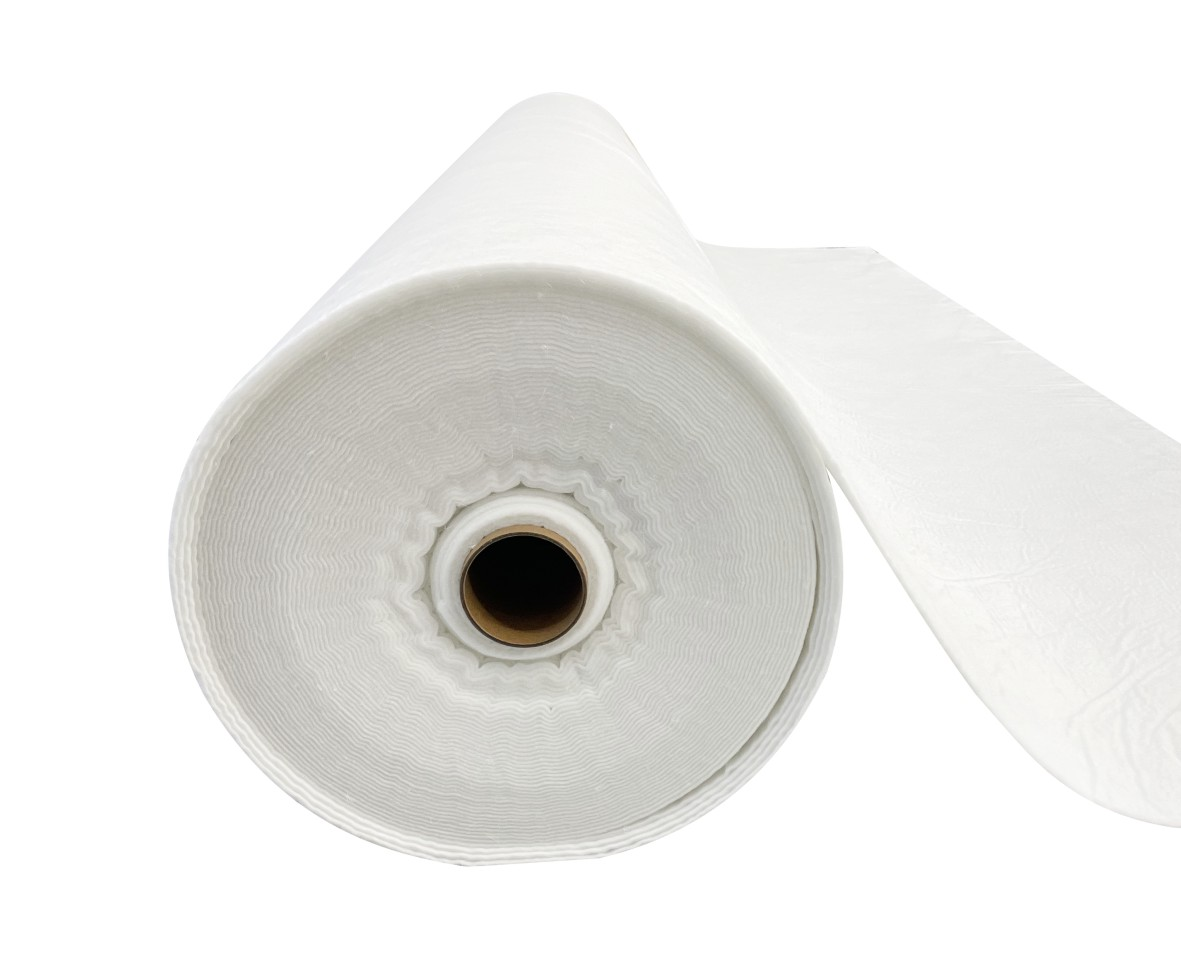
Nonwoven geotextiles have a tangled, felt-like structure that creates thousands of tiny pathways for water while trapping fine soil particles. In a French drain, this balance is critical: water needs to enter the pipe quickly, but silt and clay must stay out. The fabric's random fiber orientation prevents clogging far better than a woven mesh, which can blind over as sediment accumulates. That means the drain keeps moving water even in silty or clay-heavy ground where other filters would choke.
Another reason these fabrics stand out is their toughness during installation and backfilling. Sharp gravel and stone can tear thinner or stiffer materials, but nonwoven geotextiles stretch and conform without losing strength. They wrap easily around perforated pipe and trench walls, reducing gaps where soil could sneak through. This flexibility also lets them handle minor ground movement without splitting, so the drain remains protected season after season.
Over the long run, nonwoven geotextiles lower maintenance by keeping the drain's aggregate clean and preventing pipe perforations from filling with debris. Instead of digging up a clogged system every few years, you get a French drain that quietly does its job. For contractors and homeowners who want a one-time fix rather than a recurring headache, that reliability makes the choice straightforward.
Reading Spec Sheets: What Actually Matters for Drainage
Most spec sheets bury the two numbers that decide whether a drain handles stormwater or backs up: flow capacity at a specific head and the effective inlet open area. Skip the overall dimensions and look for the outlet size, sump depth, and whether the stated flow assumes a grate that is partially blocked. Many drains are rated at zero head or with a perfectly clean grate, conditions that rarely survive an hour of heavy rain. Compare capacities at 1 inch or 2 inches of head rather than trusting the headline gallons per minute.
Only after the hydraulic side checks out should material and load rating come into play. A ductile iron grate on a polymer channel will not rescue a system that gets overwhelmed because the outlet is too small or the slope creates a bottleneck. Check for third-party load test results such as Load Class C, and confirm whether the channel has built-in slope or needs manual bedding. Also match the throat width and sump depth to the expected debris load: a half-inch opening may look fine in the catalog but clog constantly under leaves or gravel.
The Overlooked Role of Geotextiles in Retaining Walls
Most retaining wall failures don't start with the wall itself. They begin behind it, where saturated backfill presses against the structure and fine soil particles slowly clog the drainage system. A geotextile placed between the backfill and the drainage aggregate is what stops that migration. Without it, silt and clay wash into the gravel, block the weep holes, and turn a well-drained wall into a dam. This filter layer is buried and rarely inspected, which is exactly why its role gets overlooked.
The choice between woven and nonwoven geotextiles is not a minor detail. Woven fabrics offer higher tensile strength and are often used where reinforcement is needed, but their small pore openings can restrict water flow if the soil is fine. Nonwoven geotextiles, especially needle-punched ones, excel at filtration and drainage but provide less structural support. Matching the fabric's apparent opening size and permittivity to the surrounding soil gradation prevents both clogging and excessive water pressure. A fabric that looks fine on a spec sheet can fail in the field if it traps more water than it releases.
Installation habits make the difference between a geotextile that lasts decades and one that becomes worthless in a few years. Overlaps of at least 12 to 18 inches keep soil from sneaking through seams during compaction. Wrapping the fabric up the back of the wall and securing it against UV exposure before backfilling stops premature breakdown. Puncture resistance matters when angular crushed stone is dumped directly on the fabric. Skipping these details because the geotextile is hidden is common, but the resulting pressure buildup and wall movement are anything but invisible.
Field Tests That Reveal a Fabric's True Strength
Rub the same swatch against a rough granite ledge twenty times and watch where the fibers start to fuzz. That kind of abrasion tells you more about daily durability than any spec sheet number. A fabric that pills after six passes on stone won't survive a season of scrambling through canyons. Work the surface with a dull knife edge or a carabiner gate to mimic zipper pulls and pack straps eating into the weave.
Then move to snag and tear. Jab a sharpened twig into the center of the fabric and pull sideways. If the hole spreads instantly, the yarns lack tenacity. Better fabrics resist the initial puncture and only elongate slightly before locking. Also fold a sample repeatedly along the same crease for a few minutes, then hold it up to light. Cracks forming at the fold line mean the coating or weave is already fatigued, even before a full day of hard use.
Finally, wet stretch and recovery matter more than dry strength. Soak the swatch, wring it, and stretch it over the edge of a table. If it sags and stays saggy after drying, that fabric will bag at the knees and elbows. Real field testing is about finding these quiet failures early, long before the garment gets a chance to embarrass you on a ridgeline.
When to Spend More on Geotextiles—and When to Save
Spending more on geotextiles makes sense when the project demands long-term structural integrity or the material will be nearly impossible to replace later. Think of a highway base course or a railway subgrade: the fabric sits under constant dynamic loading, surrounded by sharp angular aggregate that can easily puncture a thin, low-grade product. In these scenarios, a higher-cost woven or high-strength nonwoven geotextile with excellent puncture resistance and tensile strength pays for itself by preventing intermixing of soil layers and extending the pavement life. Likewise, in landfill liners or contaminated site caps, chemical compatibility and resistance to biological degradation are non-negotiable. Cheap geotextiles in these environments may fail within a few years, forcing expensive excavation and remediation. Here, the upfront cost is really a form of insurance against far larger future expenses.
On the other hand, there are plenty of situations where saving on geotextiles is the smarter move. Short-term construction access roads, temporary erosion control blankets, or silt fence backing rarely need top-tier specifications. A basic needle-punched nonwoven fabric that meets minimum separation or filtration requirements will handle the job just fine, especially if the site has relatively benign soils—no sharp rocks, no aggressive chemical runoff, no heavy repeated loading. If the geotextile will be buried under a temporary haul road and removed or abandoned within a year or two, spending twice as much for a premium product adds little value. The same logic applies to low-risk drainage applications where occasional clogging or minor deformation won't cause safety hazards or costly failures.
The real skill is matching the geotextile grade to the actual failure consequences, not the project's overall budget. Before specifying a product, ask a few practical questions: How long will this fabric be in service? What kind of stresses, chemical exposures, or installation damage will it face? If it fails, can we access and replace it without major disruption? For a permanent retaining wall drain or a mechanically stabilized earth structure, the answer to that last question is often "no," so a higher-performance geotextile is justified. For a temporary silt fence on a flat construction site with sandy soil, the consequences are minimal, and a lower-cost option is perfectly reasonable. A quick conversation with a geotechnical engineer or an experienced supplier—sharing your specific soil data and loading conditions—can prevent both over-specifying and under-specifying, keeping the budget where it actually matters.
FAQ
Woven monofilament geotextiles often shine here because their single-strand construction resists clogging, letting water pass while holding soil particles back. Nonwoven needle-punched options also work well in finer soils since their felt-like structure traps sediment without blocking the flow.
For retaining walls, a nonwoven needle-punched fabric usually gives better separation and drainage behind the wall, especially with backfill that has a lot of fines. Woven slit-film geotextiles can be too tight for vertical drainage, so I lean toward a heavier nonwoven when the wall is taller than four feet.
Because a strong fabric with tiny pores will still fail if fine silt or clay clogs it. Coarse sandy soil works with almost any geotextile, but silty or clayey ground demands a fabric with high permittivity and a larger apparent opening size, otherwise water backs up and the whole system loses stability.
The 8 oz fabric resists punctures from sharp gravel much better and lasts longer under repeated vehicle loads. The 4 oz version saves money upfront but can tear during stone placement or rut under heavy traffic, so if you plan to drive on it regularly, go with 6 oz or higher.
A single medium-weight nonwoven geotextile can often handle both jobs when the soil is moderately drained and the water flow is not extreme. However, in areas with high groundwater or slow-draining clay, pairing a coarse drainage aggregate with a high-flow nonwoven gives better long-term performance than stacking two fabrics.
Using a woven silt fence fabric instead of a nonwoven drainage fabric. Woven silt fence has tiny openings that trap soil on the surface but quickly clog underground, turning the French drain into a dam. Always choose a nonwoven geotextile with a flow rate at least 10 times higher than the surrounding soil's permeability.
Polypropylene nonwovens degrade in sunlight within a few weeks if left uncovered, so they need immediate burial. For slopes where fabric may sit exposed between construction phases, look for a UV-stabilized polyester woven geotextile or one with carbon black added, which extends outdoor life to several months without losing strength.
Conclusion
Choosing the right geotextile fabric often comes down to how well it balances drainage with structural demands. For road bases and other high-stress areas, woven fabrics shine because their tight, load-bearing weave resists deformation and distributes pressure effectively. Yet that same tightness can restrict water flow, which is why nonwoven fabrics—with their felt-like, permeable structure—are the go-to for French drains and other subsurface drainage systems. The key isn't picking one over the other universally, but reading the spec sheets with a skeptical eye: apparent opening size, permittivity, grab tensile strength, and puncture resistance tell you far more about real-world performance than a marketing label ever will. Too often, spec sheets are skimmed, and the wrong fabric ends up behind a retaining wall, where its overlooked role in preventing soil migration and relieving hydrostatic pressure can mean the difference between a wall that stands for decades and one that bulges after a few heavy rains.
Field tests, rather than lab-only numbers, reveal a fabric's true character. A simple on-site tear test, a water-flow bucket check, or observing how a sample survives a season of UV exposure and construction traffic can expose weaknesses that a datasheet hides. This practical scrutiny also guides spending: you don't need premium, high-strength woven fabric for a shallow residential garden drain, but you absolutely shouldn't cheap out on the geotextile separating a structural fill from native soil under a commercial parking lot. The smart approach is to match the fabric's strengths—woven for reinforcement, nonwoven for filtration and drainage—to the actual stress and water conditions of the project. When that match is made honestly, without relying on generic advice, drainage stays reliable and soil stays put through freeze-thaw cycles, heavy traffic, and the slow, constant pressure of earth against a wall.
Contact Us
Contact Person: Jerry Qiu
Email: [email protected]
Tel/WhatsApp: +65 84265294
Website: https://www.jinseed-geo.com