
Walking Beam Quenching and Tempering Production Line for Oil Well Pipes Key Benefits and Applications
2026-09-11
Oil country tubular goods face a brutal service environment. Getting their quench and temper right isn't just metallurgy—it's the difference between a well that holds and one that fails. The walking beam production line brings controlled, uniform processing that turns pipe steel into dependable downhole armor. Here's a look at why it matters, where it's used, and how THINKING-LONG approaches the challenge.
Why the Walking Beam Design Handles Oil Country Tubular Goods So Well
Oil country tubular goods demand a handling system that respects their weight, length, and surface integrity. The walking beam design excels here because it lifts each pipe slightly off the support rails, moves it forward in a gentle arc, and sets it down without dragging. This vertical lift-and-carry motion prevents the galling, scratching, and thread damage that often plague conventional roller or chain conveyors, especially on premium connections like those found on casing and drill pipe. The result is a product that arrives at the next station with its protective coatings and end finishes intact.
Another reason this design suits OCTG so well is its ability to handle mixed diameters and wall thicknesses on the same line. Unlike fixed-pitch systems, walking beam mechanisms can be tuned to accommodate a range of pipe sizes without retooling. The beams themselves are typically fitted with replaceable, non-metallic pads that cushion the pipe and prevent metal-to-metal contact. This flexibility is critical in pipe mills where production runs shift frequently between 4.5-inch tubing and 13.375-inch casing.
Beyond surface protection and flexibility, the walking beam's cyclic indexing motion creates natural spacing between pipes. This spacing allows for visual inspection, stenciling, or automated measurement without stopping the line. It also reduces the chance of adjacent pipes banging together—a common source of impact damage on sloped gravity conveyors. For operators, this means fewer rejects, less rework, and a smoother transition into hydrostatic testing or final bundling.
From Austenitizing to Tempering: Keeping Every Pipe Section Uniform
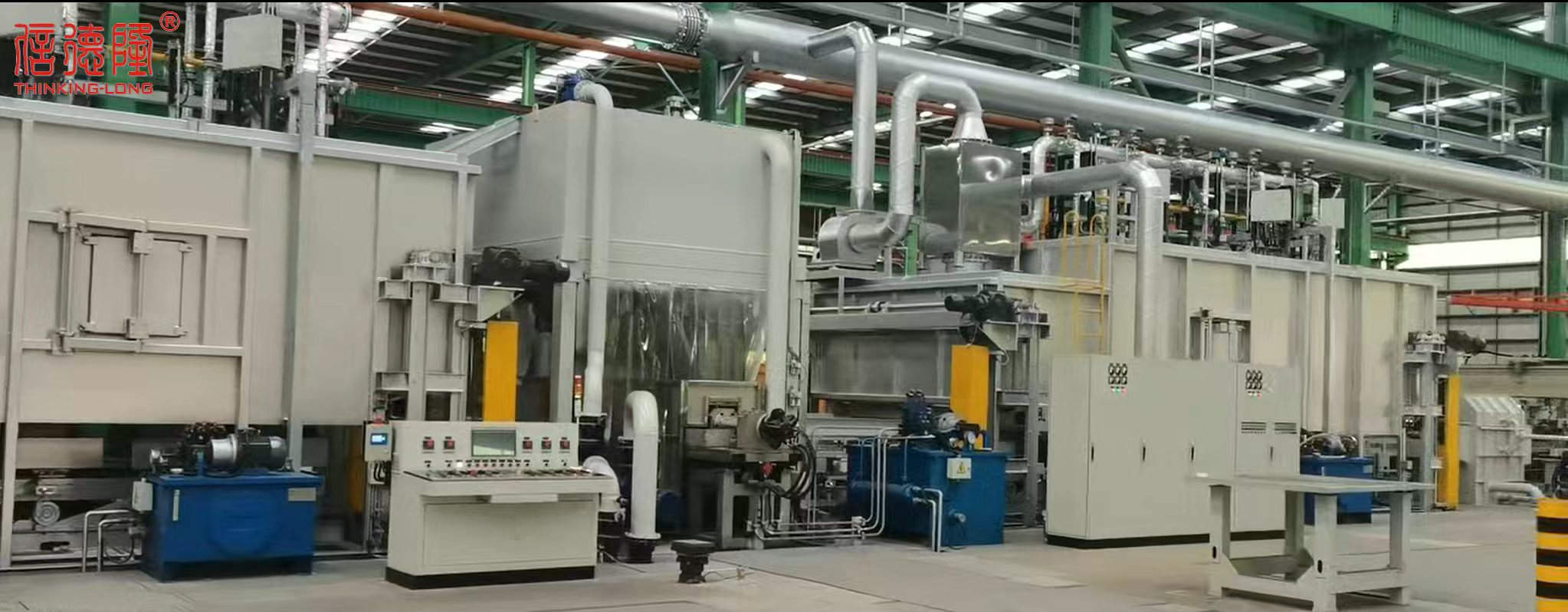
Uniformity in heat treatment begins long before the pipe enters the quench. During austenitizing, wall thickness variations, loading density, and furnace gas circulation can create temperature gradients that linger through the entire process. A well-tuned walking-beam or roller-hearth furnace needs zone-specific setpoints and a deliberate residence time; otherwise, thin sections may over-soak while heavy ends lag behind. Operators often adjust burner ratios or use baffles to redirect hot gases, turning a potentially uneven soak into a controlled transformation.
The quench stage magnifies any earlier inconsistency. Long pipe sections, especially those with non-uniform cross-sections, tend to cool faster at exposed ends and slower at the mid-length where vapor blankets persist. Instead of relying on a single aggressive quench, many shops now fine-tune nozzle pressure, quenchant concentration, or even the angle of entry to break up the steam film more evenly. The goal is to push the entire length through transformation at a similar rate, so the resulting martensite or bainite doesn't come out patchy.
Tempering then acts as the equalizer, but only if the tempering furnace itself avoids edge effects and hot spots. Recirculation fans should sweep the full length, and support rollers may need intermittent rotation to prevent contact cooling on one side. By tracking hardness readings from both ends and the middle—not just a single test coupon—operators can verify that the whole pipe section has reached a consistent tempered condition, ready for service without hidden soft bands or residual stress risers.
The Mechanical Properties That Make Q&T Pipe Reliable in Harsh Wells
Quenched and tempered pipe earns its place in demanding downhole environments through a carefully balanced combination of strength, toughness, and resistance to failure. Unlike conventional grades that may excel in one area but fall short in others, Q&T material undergoes a controlled heating and rapid cooling process followed by tempering, which refines the grain structure and relieves internal stresses. The result is a pipe body that can handle high collapse pressures, axial loads, and bending stresses without sacrificing ductility. This balance matters most in wells where temperature swings, corrosive fluids, and unpredictable formation movement push ordinary tubulars past their limits.
One of the standout mechanical traits is high yield strength paired with excellent fracture toughness. In harsh wells, a pipe that is merely strong can still fail catastrophically if a small crack starts to propagate. Q&T processing creates a fine, uniform microstructure that arrests crack growth, giving operators a wider safety margin against sudden brittle failure. Additionally, the tempering step tunes hardness to a level that resists wear from abrasive proppant or rotating drill strings, while maintaining enough elongation to accommodate thermal expansion and contraction. This combination reduces the likelihood of costly workovers caused by split bodies or parted connections.
Another critical property is resistance to sulfide stress cracking and hydrogen embrittlement, which plague wells with high H2S concentrations. The controlled hardness of Q&T pipe—typically kept below a threshold that invites cracking—combined with its refined grain boundaries, makes it less susceptible to environmental attack. Field experience shows that properly specified Q&T grades maintain integrity even when exposed to wet CO2 and chlorides at elevated temperatures. Rather than relying on a single alloy addition or coating, the reliability comes from the mechanical foundation itself, giving engineers confidence when designing completions for the most unforgiving subsurface conditions.
Increasing Throughput Without Losing Heat Treatment Precision
Modern heat treatment lines often hit a wall when operators push for higher throughput: the fear that faster cycles will sacrifice metallurgical consistency. But throughput and precision aren't mutually exclusive. The key lies in rethinking how energy is delivered to the load, not just cranking up temperatures. For instance, using high-velocity burners with advanced flame shaping can distribute heat more uniformly across dense loads, letting you reduce soak time without creating hot spots or under-treated cores. Similarly, recirculation fans with variable frequency drives allow you to fine-tune atmosphere flow for each part geometry, so you can run shorter cycles while maintaining the exact temperature uniformity specification your process demands.
Another overlooked lever is scheduling and load design. Instead of running mixed loads that force you to use the slowest common denominator, grouping parts by mass and cross-section lets you apply aggressive but precise ramp rates for each batch. Combined with in-situ sensors that track actual part temperature rather than furnace atmosphere, you can shave minutes off every cycle without guessing. Some shops have cut total cycle time by 18–22% simply by switching from time-based to load-based recipes, all while keeping hardness spread within ±1 HRC of the target.
Finally, automation and data logging turn precision into a repeatable outcome. Closed-loop controls that adjust burner firing or quench agitation in real time, based on continuous pyrometry and carbon potential readings, eliminate the human hesitation that often pads cycle times. When your system can prove it hit every critical temperature window within tolerance—even at higher line speeds—quality managers stop treating throughput as a risk. The result is a heat treatment operation that ships more parts per shift, with fewer rejects and less rework, because speed no longer comes at the expense of metallurgical integrity.
Where These Lines Fit into Oilfield Supply Chains
In the upstream sector, these lines enter the supply chain mainly through drilling and completion programs. Purchasing tends to happen around well schedules, with inventory staged at regional oilfield service hubs and then dispatched to rig locations along with casing, tubing, and wellhead equipment. Demand spikes are common when a new pad is added, so suppliers often keep buffer stock at yards close to active basins to shorten lead times.
Midstream operations use the same lines during gathering system expansions and pipeline construction. Procurement is project-driven, meaning orders are placed after front-end engineering and right-of-way issues are mostly resolved. Deliveries follow a staged pattern: early shipments go to contractor laydown yards, while later ones support tie-ins and compressor station work. Because construction crews work on tight schedules, missing a delivery window can stall multiple spreads at once.
In downstream refining and petrochemical facilities, these lines become part of routine maintenance, turnarounds, and smaller capital upgrades. Buyers prioritize material traceability, certification packages, and the ability to source replacement parts quickly from nearby distributors. The supply chain role here shifts from bulk delivery to service reliability, with holding costs weighed against the risk of an unplanned shutdown.
Practical Considerations for Long-Term Operation and Maintenance
Equipment rarely fails on a schedule, but most facilities still plan maintenance as if it does. Tracking runtime hours, cycle counts, and minor fault codes builds a clearer picture of when components actually need attention. Rather than replacing parts on a fixed calendar, adjust intervals around the data you already collect in daily logs and operator notes.
Spare parts strategy is another area where good intentions go wrong. Keeping too much inventory ties up cash and space, while too little forces emergency orders and long downtime. Review consumption twice a year against actual failure rates, and flag any item that has become single-sourced or discontinued so procurement has enough lead time.
Finally, make training and documentation part of routine maintenance rather than an afterthought. Shift handover notes, updated wiring diagrams, and short video clips of tricky procedures save more time than any new tool. When a veteran technician retires, that context goes with them unless it has been captured in a form newer staff will actually use.
FAQ
The walking beam transport keeps each pipe separated and moving at a controlled rhythm, so the entire length gets even exposure in the furnace. This prevents local cold spots or overlapping contact that could cause uneven hardness or straightness issues in high-collapse casing and tubing.
Pipes rest on the beam's fixed and moving supports, and the lift-advance-lower-return cycle rotates the pipe slightly with each step. This rotation exposes different surface lines to the furnace radiation, which reduces shadowing and gives a more consistent cross-sectional temperature profile, especially for heavy-wall oil country tubular goods.
The line is typically laid out for casing and tubing from about 2-3/8 inches up to 13-3/8 inches or larger, covering grades like J55, N80, L80, P110, and some high-collapse or sour-service variants. Maximum wall thickness and length depend on furnace width and beam stroke, but most designs accept API range lengths from 8 to 14 meters.
Water with polymer or brine additions is common, sometimes followed by an air mist stage for heavier walls. Distortion is managed through precise quenching ring alignment, controlled water pressure from both ID and OD, and the walking beam's even support spacing, which limits sagging between supports during the rapid cooling phase.
Fresh martensite from quenching is brittle and carries high residual stress. Tempering relieves that stress, converts some martensite to tempered structures, and brings hardness down to the required range while improving toughness. For sour-service grades, tempering temperature and time are tuned to meet NACE hardness limits and sulfide stress cracking resistance.
The furnace often uses regenerative burners or pulse firing, preheated combustion air, and waste heat recovery from flue gases. The walking beam hearth itself stores heat in its refractory, reducing temperature drop when cold pipes enter. Zoned temperature control also avoids overheating the pipe ends, which saves fuel and reduces scale formation.
Automated loading and unloading, laser or pyrometer temperature checks, and interlocked discharge doors prevent operators from being exposed to hot pipes. The walking beam control software can automatically slow or hold the cycle if a pipe is misaligned, and quench tank level and temperature sensors shut off pumps if cooling capacity is lost.
They are used in downhole casing, tubing, drill pipe, and coupling stock for oil and gas wells, including deep, high-pressure, sour, or geothermal wells. The consistent mechanical properties and straightness also make the pipes suitable for premium connections that require tight dimensional tolerances.
Conclusion
The walking beam quenching and tempering line earns its place in oil country tubular goods production because it moves each pipe through the furnace and quench on a series of lifting and forward-stepping beams. This mechanical handling keeps long, heavy casing and tubing from sagging or developing uneven contact points, which is a constant concern with roller-hearth systems. The result is a consistent thermal profile from the austenitizing soak through the drastic water or polymer quench and into the tempering cycle. Operators can hold tight tolerances along the full length and around the circumference, so yield strength, hardness, and Charpy toughness stay within specification even on 40-foot joints. That uniformity matters most when the pipe ends up in deviated or high-pressure wells, where brittle spots or soft zones can lead to premature failures.
Beyond quality, these lines are built to keep pace with mill output without giving up control. The beam spacing and variable speed drives allow short cycle times while still giving each section enough time at temperature, and modern combustion or induction systems adjust zone by zone to counter skid marks or end cooling. In the supply chain, such equipment typically sits between the stretch-reducing mill and the finishing area, feeding threading and inspection with material that already has the required tempered martensite structure. Long-term, the main practical concerns are beam alignment, quench ring cleanliness, and scale removal from the transfer mechanism, but routine checks keep maintenance predictable. For pipe mills chasing API 5CT grades like L80, C95, or P110, this kind of line delivers the repeatable properties and throughput that justify the capital cost.
Contact Us
Contact Person: Qian Xijun
Email: [email protected]
Tel/WhatsApp: 8613961736750
Website: https://www.thinkinglong.com/